


This guide analyzes opportunities in the tourism sector for investment in Thailand in 2026. It highlights the strongest areas of investment, the foreign investment law and regulations, and the risk factors foreign investors need to consider in this emerging market which is one of the largest in Southeast Asia for hospitality.
Thailand’s Tourism Market in 2026
Thailand’s tourism industry entered 2026 on a more measured recovery path than many investors had anticipated. In 2025, the country welcomed 32.97 million international visitors, down 7.23% year-on-year, while tourism revenue declined 4.71% to 1.54 trillion baht. Although Thailand remains one of Asia’s leading tourism destinations, these figures indicate that the market has shifted from rapid post-pandemic rebound to a more mature growth phase.
Forecasts for 2026 also reflect this uncertainty. The Tourism Authority of Thailand (TAT) expects international arrivals to reach between 34 and 37 million, with some official scenarios targeting as many as 39–40 million under its “quality over volume” strategy. By comparison, Kasikorn Research Center projects a more conservative 34.1 million arrivals, while the Thai Hotels Association expects visitor numbers to remain broadly flat at around 33 million. For investors, planning around the lower end of this range provides a more resilient basis for financial modelling than relying on the most optimistic projections.
The variety of markets helps Thailand catch many opportunities. The largest markets are Malaysia, China, India, Russia, and South Korea. Chinese, Russian, and Indian visitors spend a lot of money compared to others, and so a large part of hotel revenues comes from these countries. Travel behavior from these markets are hard to predict, and this makes pricing and occupancy very difficult as well.
Quality of the tourism investments is what is most important in Thailand now. Asset quality, location and the money that travelers will spend are the metrics that will influence the success of tourism investments in Thailand. This is not the time for investors to focus on the recovery cycle of the tourism markets. Instead, the focus should be on the segments that will cater to the higher spend travelers and the flexible tourism investments.
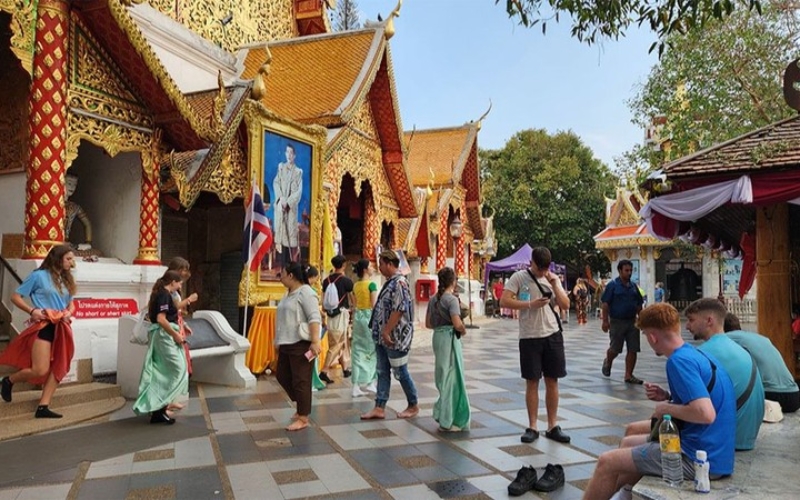
The Key Opportunities in Thailand tourism
Although visitor growth has moderated, investment activity in Thailand’s hospitality sector remains resilient. Hotel transactions are projected to exceed 12 billion baht in 2026, with foreign investors playing an increasingly important role in acquisitions across Bangkok and Phuket. Rather than pursuing traditional buy-and-hold strategies, many investors are targeting value-add opportunities through renovations, repositioning, and brand upgrades to improve long-term returns.
A defining feature of the market is its growing two-tier structure. Luxury and upper-upscale hotels continue to outperform, supported by expansion from international brands including Hyatt, Fairmont, Hilton, and Anantara. By contrast, mid-market properties face increasing competition and pricing pressure, making differentiation through branding, experience, or niche positioning more important than ever.
Investment opportunities are also expanding beyond Thailand’s traditional tourism centers. Koh Samui and Phang Nga have recorded improving visitor performance alongside proposed infrastructure projects such as the Koh Samui Expressway and the planned Andaman International Airport. While these projects have not yet been completed, they could significantly improve accessibility and unlock additional hospitality development over the longer term.
In the long-stay villa market, there is opportunity within this niche, as many visitors from Europe, the UK, the US, Russia and Australia come to Thailand for 2-3 weeks or longer. This creates the demand for high end villas and serviced residences. For places like Koh Samui, industry estimates show that the net rental yields are between 7.2-8.4% and the occupancy rates are over 75%. This makes them much more attractive than the traditional hotel investment.
When looking at the investment opportunity in Thailand as a whole, there are the most promising areas for growth in the East. It is estimated that growth in the East will be 9.68% for the hospitality industry through 2031, while Bangkok and the Central Plains will retain their roughly 40% market share. Investors should place priority on more stable markets, while balancing the newer markets that show promise for better growth.
Legal Framework & Investment Incentives
Thailand provides several incentive mechanisms for hospitality investors, particularly through the Thailand Board of Investment (BOI). Qualifying tourism projects, especially large-scale resorts, integrated developments, and infrastructure-linked investments, may receive corporate income tax holidays, import duty exemptions on eligible equipment, and other investment facilitation measures. These incentives can significantly improve project feasibility for developments aligned with national tourism priorities.
Conditions for financing remain relatively favorable, albeit with more cautious lending practices. Thai banks typically seek a debt service coverage ratio (DSCR) of at least 1.2x for development financing and 1.4–1.5x for financing stabilized hospitality projects. Thai banks also typically take a loan-to-value position of 50% to 60%, which requires hospitality investors to provide at least 40% equity to finance hospitality projects.
Careful consideration is required for foreign investment and ownership structuring in hospitality projects. Although foreign investors can hold ownership of hotel operating companies in Thailand in certain circumstances, Thai law restricts foreign ownership of land. Consequently, hospitality investment projects are mostly undertaken using long-term leasehold with the lessor being a Thai legal person, or through a Wholly Owned Thai Subsidiary Company, depending on the purpose and nature of the project and compliance with Thai law and regulations. Legal advisors locally should be consulted for the appropriate investment ownership structure.
Overall, BOI incentives, disciplined lending practices, and established investment structures provide a workable framework for foreign participation. However, understanding ownership rules and financing requirements early in the investment process remains essential to avoid costly restructuring later.
Risks, Challenges & Practical Guidance
The defining challenge for Thailand’s tourism industry in 2026 is demand uncertainty. Credible forecasts range from approximately 33 million to 40 million international arrivals, reflecting different assumptions about global economic conditions and travel recovery. Investors should therefore build financial models using the more conservative 33–34 million visitor scenario rather than relying on the most optimistic projections.
Another risk is the expanding hotel development pipeline. Luxury and upper-upscale hotels continue to attract new investment, but additional supply may outpace demand growth in certain destinations if visitor numbers recover more slowly than expected. This makes asset selection and market positioning increasingly important, particularly for investors entering highly competitive markets.
Surveys conducted on the industry highlight changes in demand and challenges in the structure of supply. Higher travel costs, key source market uncertainty, increased competition in the region, and the slow development of the secondary market, have all been identified by the Thai Hotels Association and the Bank of Thailand. Constrained growth in tourism seems to imply that the focus of future efforts will be on attracting visitors who provide a higher value, rather than simply trying to increase the number of arrivals.
Before committing capital, investors should:
- Base investment assumptions on conservative visitor forecasts rather than best-case scenarios.
- Assess infrastructure-dependent destinations such as Koh Samui and Phang Nga using realistic development timelines.
- Focus on differentiated segments, including luxury hospitality, branded residences, and long-stay villas, instead of competing directly in the increasingly crowded mid-market.
- Review BOI eligibility, financing conditions, and ownership structures before finalizing acquisitions or development plans.
Thailand’s tourism market remains one of Southeast Asia’s largest, but 2026 favors disciplined, segment-focused investment rather than broad exposure to the overall recovery cycle.
Conclusion
The Thailand tourism & hospitality industry is entering a more balanced phase of development. While international arrivals have stabilized rather than rebounded sharply, hotel investment activity, premium accommodation demand, and infrastructure improvements continue to create attractive opportunities for long-term investors.
Opportunities for investment in long-stay villas, luxury hotels and acquisitions in developing locations with better accessibility are promising. Investors are likely to succeed with these additions and especially if they focus on quality of their assets and their locations along with a realistic assessment of the market, as opposed to an increase in the sheer number of hotel guests.
In Thailand, a successful strategy for investment in hospitality services will require a proper ownership model and well-structured due diligence, along with a good grasp of the local market financing and regulations. Although the tourism growth rate in 2026 will be more moderate, for investors with a long-term view, Thailand will likely still be one of the better investment markets in this area in South East Asia.