


This guide examines Thailand’s logistics market, the most promising investment segments, the regulatory landscape, and the key risks investors should evaluate before entering the market.
Thailand’s Logistics Market in 2026
Thailand’s logistics industry continues to expand despite a more cautious infrastructure environment. According to Mordor Intelligence, the country’s freight and logistics market is projected to grow from US$53.38 billion in 2025 to US$56.56 billion in 2026, reaching US$75.47 billion by 2031 at a 5.95% CAGR. This steady growth indicates that logistics demand remains supported by structural economic drivers rather than short-term market cycles.
A key advantage is Thailand’s position as ASEAN’s leading multimodal transport hub. Its well-established manufacturing base, growing China+1 investment inflows, and continued government spending on transport infrastructure enable the country to serve as a regional gateway connecting industrial estates with neighboring ASEAN markets and international shipping routes. For investors, this creates long-term demand for logistics facilities, integrated transport services, and supply chain technology.
Freight transport will continue to dominate the logistics market, projected to comprise 61.12% of logistics services in 2025. Economic activities in the Eastern Economic Corridor (EEC) help drive logistics activities. These services move bulk cargo across industrial estates, ports, border customs, and export gateways. The concentration of manufacturing and trade in these areas generates added opportunities for investment in warehousing services, freight forwarding, intermodal transport, and value-added logistics services.
Although there are delays in some mass infrastructure projects, the basics of Thailand’s logistics systems are strong. Manufacturing, cross-border trade and increased supply chain development means that growth will depend more on logistics systems, automation, and digital services. Value-added logistics systems will determine the strongest investment opportunities available in the future. These will be explained in further detail in the following chapter.
The Key Opportunities in Thailand’ logistics sector
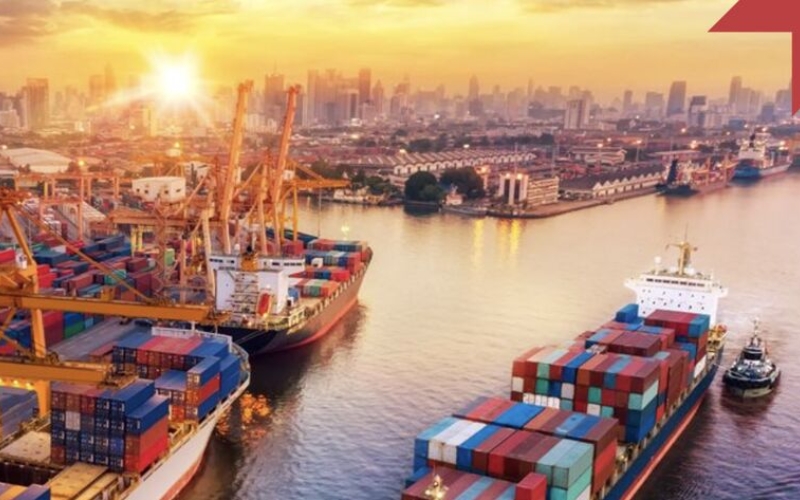
Thailand’s logistics market is evolving beyond traditional freight transportation, with growth increasingly concentrated in higher-value services such as e-commerce fulfillment, third-party logistics (3PL), cold chain, and modern port infrastructure. These segments are benefiting from structural changes in consumer behavior, supply chain digitalization, and continued trade activity, making them more attractive than the broader market average.
E-commerce logistics is expected to remain the fastest-growing demand driver. The Courier, Express, and Parcel (CEP) segment is forecast to expand at a 6.92% CAGR between 2026 and 2031, outpacing the overall logistics market as online retail continues to increase parcel volumes. This trend is encouraging logistics providers to invest in automated sorting centers, AI-powered route optimization, and more efficient last-mile delivery networks. For investors, opportunities extend beyond delivery services to warehouse technology, fulfillment infrastructure, and logistics software.
Another attractive segment is third-party logistics (3PL). Thailand’s 3PL market is projected to grow from US$4.84 billion in 2025 to US$7.43 billion by 2032, representing a 6.32% CAGR. As manufacturers and retailers increasingly outsource logistics operations, demand is rising for integrated warehousing, inventory management, smart fleet solutions, and omnichannel fulfillment. Companies offering technology-enabled logistics services are therefore well positioned to benefit from this long-term outsourcing trend.
Port infrastructure remains a priority for Thailand’s logistics development strategy. The goal of the Laem Chabang Port Phase 3 public-private partnership (PPP), with an investment of 114 billion baht, is to further reduce the cost of logistics from 14% to 12% of GDP, while also increasing the Port’s annual capacity from 11 million to 18 million TEUs. Even with considerable delays, the Phase 3 project will represent one of the largest logistics infrastructure projects in Southeast Asia and continuing investment in the project will support Thailand’s commitment to the development of maritime trade.
Simultaneously, the development of cold chain logistics is emerging in Thailand. SCGJWD, one of the largest market players, is expanding its network of temperature-controlled storage in Thailand and adjacent markets. Increased demand for cold chain logistics is being driven by the food, pharmaceutical, and health care sectors. This market segment is likely to be a good market investment with lower risk and lower demand, particularly in specialized storage, temperature-controlled logistics, and cold chain pharmaceuticals.
Current trade activity also supports a positive market outlook. In the first quarter of 2026, the Port Authority of Thailand reported that container throughput at Laem Chabang Port increased 12.28% year over year to 2.73 million TEUs, indicating that underlying cargo demand remains strong despite delays affecting large infrastructure projects. This suggests that while project timelines may shift, demand for logistics services continues to expand.
Legal Framework & Thailand Investment Incentives
Thailand offers a relatively supportive investment environment for logistics businesses, with the Thailand Board of Investment (BOI) serving as the primary entry point for foreign investors. Eligible logistics, warehousing, freight distribution, and supply chain projects may qualify for corporate income tax holidays, import duty exemptions on machinery and equipment, and other investment incentives, particularly when aligned with national logistics priorities.
The Eastern Economic Corridor (EEC) remains the country’s principal platform for large-scale logistics investment. Most strategic infrastructure, including port expansion, rail connectivity, industrial estates, and logistics parks, is concentrated within the EEC, making it the preferred location for investors seeking to integrate manufacturing with regional distribution networks.
For large transport infrastructure, Thailand primarily relies on Public-Private Partnership (PPP) models. Both Laem Chabang Port Phase 3 and the now-shelved Land Bridge project were structured as long-term PPP concessions, illustrating that institutional investors have opportunities to participate not only through logistics operations but also through infrastructure development. However, PPP investments typically involve longer timelines and greater execution risk than private-sector logistics businesses.
Overall, BOI-promoted logistics activities have relatively simple foreign ownership regulations. However, restrictions under the Foreign Business Act on services such as domestic trucking and some freight forwarding may apply. Investors should check with the BOI, and or qualified local legal counsel, the requirements on ownership and the licensing implications that are relevant for the business model they wish to implement.
Generally positive for investors, the regulatory landscape is most favorable for those who will contribute to Thailand’s modern supply chain. Among the different logistics services, warehousing and smart logistics, intermodal transport, and services related to the EEC, will likely offer the most business incentives while also meeting the requirements of the developing logistics systems of the country.
Risks & Practical Considerations
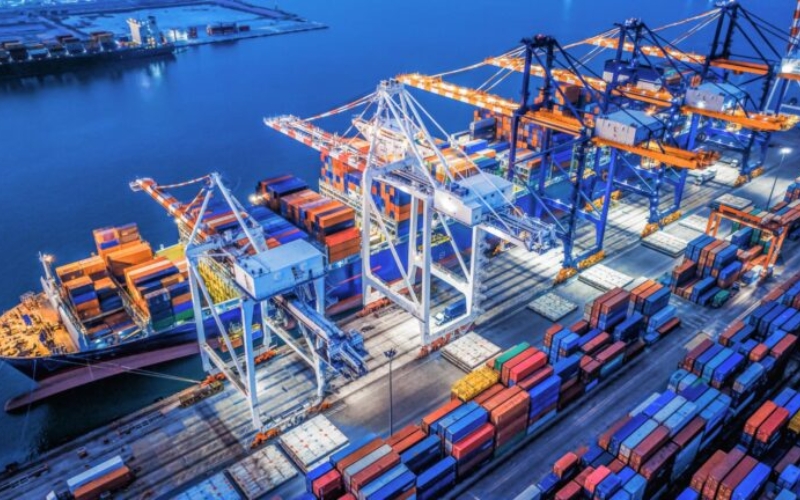
Thailand’s logistics sector continues to benefit from strong trade flows and manufacturing activity, but investors should remain realistic about the execution risks associated with large infrastructure projects. Recent developments demonstrate that while long-term demand is intact, project delivery timelines may not always match initial expectations.
The clearest example is the Land Bridge megaproject. In July 2026, the Thai government effectively shelved the proposed 997-billion-baht corridor linking Ranong and Chumphon, opting instead for a smaller upgrade of Ranong Port. Although earlier feasibility studies projected an internal rate of return of 17.38%, the decision highlights that even strategically important infrastructure projects can be delayed, resized, or reprioritized. Investors should therefore avoid structuring logistics operations around projects that have not reached an advanced implementation stage.
Laem Chabang Port Phase 3 provides a similar lesson. Construction is underway, but the handover for the F1 terminal is delayed due to a dispute over land reclamation between the Port Authority of Thailand and the concessionaire. This has pushed the expected terminal opening from 2028 to 2030. For investors looking to build warehouses or distribution centers in the vicinity of the port, it is advisable to assume that the project timelines will be iffy at best.
Thailand is still struggling with somewhat excessive logistics costs when compared with region peers with more advanced logistics chains. This is a long term issue for Thailand, but does create opportunities for businesses to provide solutions for supply chain logistics. Warehouse automation, digital freight logistics, rail logistics, and intermodal logistics business services focused on Thailand will be in a good position to capture the opportunity as the country looks to reduce logistics costs through a combination of new infrastructure and technology.
Before entering the market, investors should:
- Verify the latest construction progress of ports, rail links, or logistics corridors before committing location-dependent investments.
- Assess BOI incentives for warehousing, logistics technology, or EEC-linked projects.
- Consider high-growth segments such as 3PL, cold chain, and e-commerce logistics, which offer stronger near-term visibility than large infrastructure concessions.
- Confirm licensing and foreign ownership requirements for the specific logistics activity under the Foreign Business Act.
For most foreign investors, a phased market entry focused on logistics services, technology, or warehousing is likely to provide a better balance between growth potential and execution risk than relying on large-scale infrastructure developments alone.
Conclusion
Thailand remains one of Southeast Asia’s most strategically positioned logistics markets, supported by a growing freight and logistics industry, a strong manufacturing base, and its role as a regional gateway connecting ASEAN supply chains. Long-term demand continues to be driven by China+1 investment, cross-border trade, and the rapid expansion of e-commerce.
The strongest investment opportunities are increasingly found in high-growth segments such as 3PL, e-commerce fulfillment, cold chain logistics, and smart warehousing, while the Eastern Economic Corridor and BOI incentives continue to support logistics modernization.
Simultaneously, 2026 demonstrates the need for careful, disciplined due diligence. The cancellation of the Land Bridge project and the postponements of Laem Chabang Phase 3 show how substantial infrastructure projects can lead to changing priorities and prolonged implementation. Individual projects must be assessed by investors, as they cannot rely on announcements made in the headlines.
Thailand continues to be an appealing logistics hub for companies wanting to invest and have a foothold in the supply chains of Southeast Asia. Tapping into the viable segments of the market will encourage success. Utilizing the available investments and having the ability to modify plans as the logistics infrastructure of the country develops is also necessary for success.