


This guide explores the market outlook, investment opportunities, regulatory landscape, and key risks to help investors evaluate the sector.
Thailand’s Renewable Energy Market in 2026
Thailand’s renewable energy market is being reshaped by a new Power Development Plan (PDP) 2026–2050, which targets 60% clean electricity by 2050, including 50% from renewable energy and 10% from advanced clean technologies such as small modular reactors (SMRs). Compared with the scrapped 2024 draft PDP, the new plan reflects a more ambitious long-term strategy and provides a clearer direction for investors.
There is a huge opportunity here since Thailand is early in its energy transition. With solar power generating only 3% of electricity in 2025, investment opportunities are considerable in solar, wind, battery and grid stacks to meet future demand.
Some policy changes have been necessitated by the rapidly growing electricity demand of data centers, as well as the political goal of Thailand to lower imports of LNG. For the investor, these trends suggest that renewable energy is becoming a governmental long-term priority, and is not going to be a short-term policy focus.
Thailand’s Renewable Energy Investment Opportunities
Thailand’s renewable energy strategy is no longer focused solely on increasing installed capacity; it is reshaping where investment capital is expected to flow over the next two decades. Under the draft 2026–2050 Power Development Plan (PDP), utility-scale solar and wind are expected to become the country’s primary sources of new electricity generation, while energy storage, floating solar, and corporate renewable procurement create complementary investment opportunities across the value chain. For foreign investors, the question is increasingly less about whether Thailand will expand renewable energy and more about which segments offer the strongest long-term returns.
Utility-Scale Solar & Wind
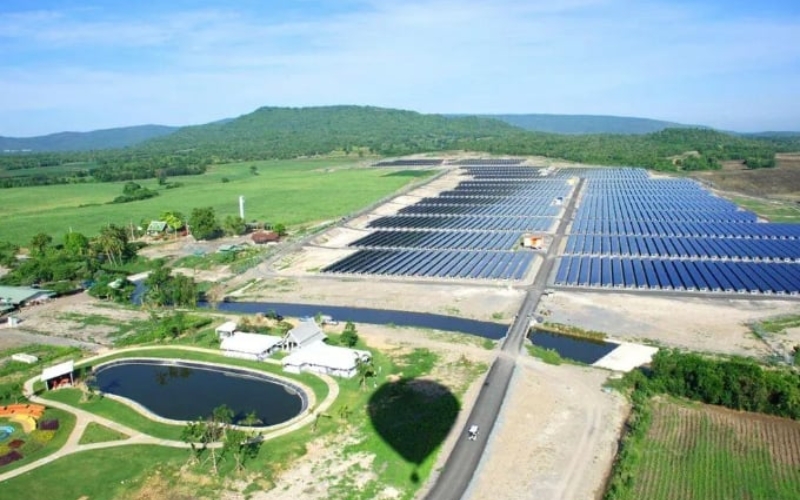
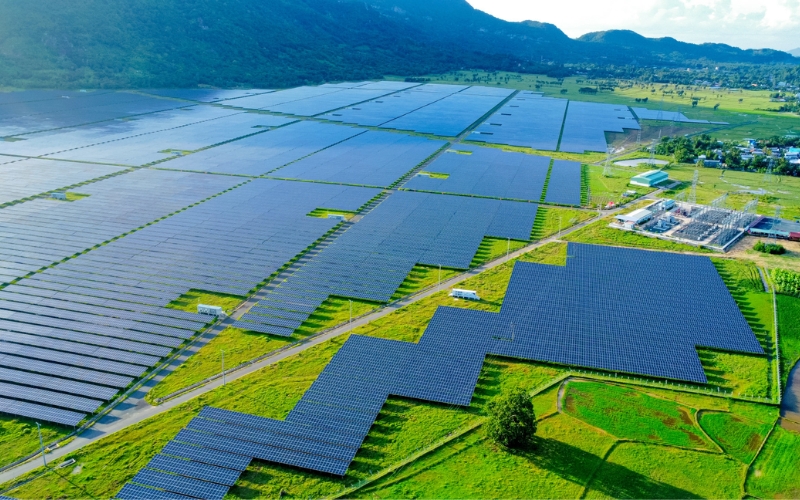
Large-scale solar and wind projects form the backbone of Thailand’s new clean energy roadmap. Rather than treating renewables as supplementary power sources, the government now positions them as future baseload generation capable of reducing dependence on imported LNG and strengthening long-term energy security.
Investors can now be more certain that the expansion of renewable energy will be prioritized as a part of the nation’s policy for the coming decades. Utility-scale developers as well as engineering firms, equipment manufacturers, and infrastruture funds will now have a more aligned with the nation’s long-term strategy concerning a clearer pipeline of upcoming projects.
Floating Solar
Among all renewable segments, floating solar stands out as one of Thailand’s most distinctive investment opportunities. The draft PDP identifies the potential to develop 5,000–10,000 MW of hydro-floating solar on reservoirs managed by the Electricity Generating Authority of Thailand (EGAT), creating significant room for expansion without competing for agricultural or industrial land.
This approach is particularly attractive because it leverages existing hydroelectric infrastructure while improving land-use efficiency. Investors with expertise in floating photovoltaic systems, EPC services, grid integration, or specialized renewable infrastructure may find this segment less crowded than conventional ground-mounted solar while benefiting from strong government support.
Battery Energy Storage
As renewable penetration increases, battery energy storage systems (BESS) are becoming essential rather than optional. Declining battery costs are steadily improving the competitiveness of solar power relative to LNG-fired generation, making storage a critical component of Thailand’s energy transition.
Ember estimates Thailand can save up to 1.8 billion USD on electricity generation from 2026 to 2037 if they increase solar generation with battery storage compared to the draft PDP. In addition to battery projects, these create openings in system integration with the grid, grid management software, and hybrid renewable-storage projects to make the grid stable and allow for more renewable energy beyond the current level.
Rooftop Solar & Corporate Procurement
For investors seeking faster market entry and comparatively smaller project sizes, distributed solar offers an attractive alternative. Thailand has removed the Factory 4 permit requirement for rooftop solar installations and expanded the household electricity buy-back quota from 90 MW to two additional 500 MW allocations, improving the commercial outlook for residential and commercial rooftop projects.
Manufacturers, exporters, and hyperscale data centers are all using Power Purchase Agreements and Thailand’s Utility Green Tariff to secure renewable electricity to satisfy their corporate sustainability commitments. Participants within this ecosystem identify data centers as the current focus for green electricity allocation. However, it is anticipated that a greater focus on eliminating supply chain emissions will result in further multinational manufacturing demand for green electricity. Therefore, the combination of distributed generation and corporate energy solutions will provide the greatest opportunity for investors.
Legal Framework & Investment Incentives
Thailand has established a relatively mature investment framework for renewable energy, with the Thailand Board of Investment (BOI) serving as the primary gateway for foreign investors. BOI-promoted renewable projects may qualify for corporate income tax holidays, import duty exemptions on machinery and renewable energy equipment, and other investment facilitation measures, reducing upfront development costs for eligible projects.
However, incentives alone do not determine project viability. Utility-scale renewable developments must also align with capacity allocations under the national Power Development Plan (PDP), which guides project sequencing, grid connection planning, and electricity procurement. Investors should therefore evaluate not only whether a project qualifies for BOI promotion but also whether it fits within the government’s planned procurement timeline and regional transmission capacity.
Private-sector renewable procurement is expanding through two principal offtake mechanisms. Corporate buyers can secure renewable electricity via direct Power Purchase Agreements (PPAs) where available, while the Utility Green Tariff enables businesses to purchase certified renewable electricity from the national grid. Selecting the appropriate structure depends on project size, customer profile, and long-term pricing objectives.
Most power generation projects promoted by the BOI allow substantial foreign investment. In the majority of the BOI promoted renewable energy projects, foreign investors can also attain majority ownership. However, foreign ownership regulations can depend on the type of project and the license requirements. Therefore, it is advisable to consult with the BOI and/or local counsels with relevant experience and expertise, before determining the investment structure.
Risks & Practical Considerations
Thailand’s renewable energy market offers compelling long-term potential, but investors should also recognize that policy ambition does not eliminate execution risk. Successful market entry will depend on careful project selection, regulatory monitoring, and realistic expectations about implementation timelines.
First, the 2026–2050 Power Development Plan remains under review, with inter-agency consultations continuing ahead of a planned public hearing in August 2026 before eventual Cabinet approval. Capacity allocations, energy efficiency targets, and EGAT’s generation responsibilities may still change, meaning investors should treat current figures as strategic guidance rather than finalized procurement commitments.
Second, grid infrastructure presents an important technical consideration. Integrating a significantly higher share of renewable electricity will require substantial investment in transmission upgrades and energy storage. Industry assessments suggest Thailand may ultimately require three to four times more battery storage than currently planned to achieve its long-term clean energy objectives, creating opportunities for storage investors but also highlighting potential project integration challenges.
Availability of capital is another practical issue. Earlier assessments found that US$22 billion would be needed for investment in renewable energy in Thailand from 2022 to 2037, and around US$28 billion for the improvement of energy efficiency. This funding requirement emphasizes the significant opportunity for private capital, but investors should be cautious and not expect that all financing gaps will be closed by public funding.
Finally, policy consistency is important. While the acceleration of renewables in Thailand is positive, continued government support of pricing for gasoline, diesel, and natural gas will impact energy pricing and may continue to create market segments where renewables are less competitive due to significant fossil fuel subsidies.
Before committing capital, investors should:
- Monitor the final approval and implementation timeline of the 2026–2050 PDP.
- Evaluate floating solar and battery-integrated projects as differentiated investment opportunities.
- Clarify the preferred offtake model, utility green tariff, or corporate PPA, during project planning.
- Assess grid readiness and transmission capacity alongside site selection.
- Confirm BOI incentive eligibility and licensing requirements before structuring investments.
For investors prepared to navigate an evolving regulatory environment, these due diligence steps can significantly improve project execution while reducing long-term investment risk.
Conclusion
Thailand’s renewable energy sector is entering a decisive new phase. The government’s proposed 60% clean electricity target by 2050, together with expanding demand from manufacturers and data centers, signals a long-term commitment to transforming the country’s energy system rather than pursuing incremental renewable additions.
The strongest investment opportunities extend beyond conventional solar farms. Floating solar, battery energy storage, distributed rooftop systems, and corporate renewable energy procurement are emerging as high-value segments supported by structural policy changes and growing commercial demand. At the same time, BOI incentives and expanding private-sector procurement mechanisms provide foreign investors with multiple pathways to participate in the market.
Disciplined execution will determine success. Investors ought to keep a close watch on the finalization of the new Power Development Plan. They ought to assess readiness of the grid and storage and adapt project strategies to Thailand’s regulatory framework as it develops, rather than depend on the set of long-term policy goals.
For firms willing to invest patiently and with the requisite skills focused on the scalable clean energy solutions, Thailand has the potential to be one of the standout countries for renewable energy in Southeast Asia. While the renewable energy share in Thailand is, comparatively, still low, the country holds some of the more aggressive long-term goals in the region. This will create a significant gap in which private investment will be essential in the coming decades.