


This guide looks through the investment lenses at the market, including the transition to electric for the automotive vehicles, the enticements for new investment, and the risks associated with the market.
Thailand’s Automotive Industry in 2026
While Thailand is still ASEAN’s largest automotive production base, and has a reliable manufacturing system with good export channels, the automotive industry is undergoing the largest change in decades. Investors must understand the traditional internal combustion engine (ICE) market is rapidly declining, and that advanced automotive technologies and electric mobility are the new focus.
Production is under pressure
Thailand’s vehicle production fell by around 20% in 2024 to approximately 1.5 million units, marking one of the sharpest declines in recent years. The slowdown continued into early 2025, with the industry recording 18 consecutive months of declining vehicle production, reflecting weak domestic demand, tighter vehicle financing conditions, and changing consumer preferences.
For investors, this downturn indicates the growth opportunities are moving away from traditional cars and their production. Investors need to concentrate on the different segments and areas of opportunities that are aligned with the structural changes occurring across the industry, rather than the historical production volumes and their value.
Traditional manufacturers are restructuring
Subaru, Suzuki, Honda, and Nissan have closed, reduced, or relocated their assembly plants in Thailand in response to the changing market environment. Some examples of these relocations include the shuttering of the assembly plant in Bangkok and the closing of the Rayong manufacturing facility, reductions to manufacturing capacity and assembly plant closures.
These changes show a more extensive trend within the industry. Rather than diminishing Thailand’s role in manufacturing, we see global manufacturers optimizing their production strategies and increasing investment in the manufacturing of electric vehicles, batteries, and more advanced automotive components.
Restructuring conveys shifts in the labor market as well. The Federation of Thai Industries (FTI) has stated more than 100,000 automotive workers may be laid off between 2025 and 2026, creating further potential for competition to attract skilled labor in the newer automotive segments for new entrants to the marketplaces.
Early signs of stabilization
Despite ongoing domestic challenges, export performance has shown signs of improvement. In February 2026, Thailand’s vehicle exports were broadly stable, declining by only 0.05% year-on-year. While this does not yet indicate a full recovery, it suggests external demand remains relatively resilient despite continued weakness in the domestic market.
For investors, this reinforces Thailand’s role as an export-oriented manufacturing hub. Companies targeting regional and global supply chains may find stronger opportunities than those relying primarily on domestic vehicle sales.
What does this transition mean for investors?
Thailand’s automotive industry is not experiencing structural decline; it is undergoing structural transformation. Traditional manufacturing is becoming more competitive, while investment is increasingly directed toward electric vehicles, batteries, advanced components, and localized supply chains.
It is thus necessary to comprehend where government incentives and private capital converge. The proceeding section analyzes the ways Thailand’s EV transition is altering the investment opportunities along the automotive value chain.
EV Investment Opportunities in Thailand
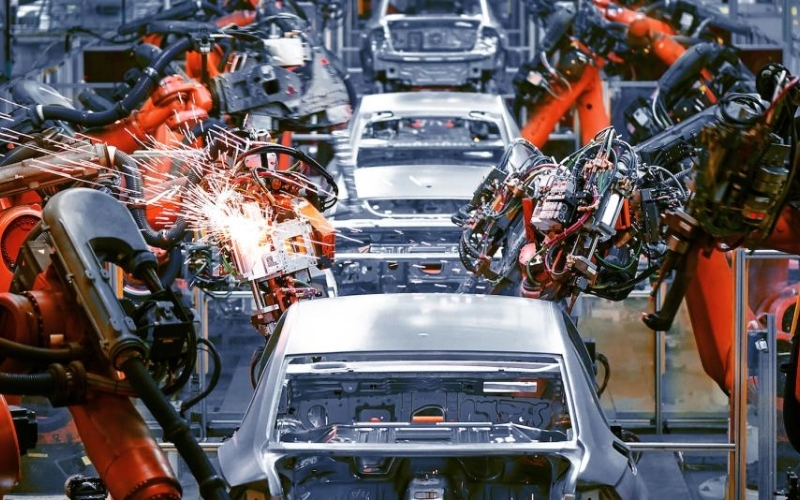
Thailand’s automotive industry is no longer defined by conventional vehicle manufacturing. Instead, investment is shifting rapidly toward electric vehicles (EVs), batteries, smart mobility, and localized supply chains. For foreign investors, the key question is no longer whether Thailand is investing in EVs, but where the most attractive opportunities lie within the ecosystem.
Evidently an integrated electric vehicle (EV) ecosystem, Thailand has attracted more than US$4.1 billion in EV-related investments with 198 Board of Investment (BOI)-approved projects as of now. Thailand is also integrating battery electric vehicles (BEVs), hybrid vehicles, battery manufacturing, construction of charging stations, and manufacturing automotive components.
Expanding EV Manufacturing
Automotive production is increasingly centered on electric vehicles as both established manufacturers and new entrants establish local operations.
Recent milestones include:
- Hyundai Mobility Thailand began local EV production in 2026.
- Chinese brands Omoda & Jaecoo launched Thai production in 2026.
- Changan Auto and EV Primus commenced manufacturing in 2025.
Together, these investments have generated more than 16,000 local jobs, reinforcing Thailand’s role as ASEAN’s leading EV manufacturing base. For investors, this growing production network reduces supplier risk while creating opportunities in contract manufacturing, engineering services, and industrial equipment.
Building a Local Supply Chain
Beyond vehicle assembly, Thailand is actively strengthening domestic supplier capabilities. Through 18 BOI “Sourcing Day” events, more than 800 Thai parts manufacturers have been matched with multinational automakers, producing over 1,200 business partnerships with an estimated THB 65 billion (approximately US$1.79 billion) in procurement value.
Due to this localized strategy, automotive parts, precision engineering, electronics, plastics, and industrial automation investors may benefit, as global manufacturers are looking for local suppliers to meet the BOI production requirements to build more resilient supply chains.
However the EV market continues to change, and the most notable change is how Chinese automakers BYD, MG (SAIC), Changan, Great Wall Motor, Neta, and Chery have taken over more than 70% of Thailand’s battery electric vehicle market, and have taken the place of Japanese automakers who have historically dominated the market. Investors have entered the market and have adapted to the new standards of the supply chain and the policies related to procurement.
Battery Manufacturing
One of Thailand’s most notable investment gaps lies in battery cell production. Although the country has become Southeast Asia’s largest automotive manufacturing hub, it still lacks a domestic battery cell manufacturer.
EV production means more battery cells, the need for recycling centers, energy storage systems, and more battery materials. Investors with battery tech or circular economy solutions will find this one of the least saturated options in Thailand’s automotive sector.
There will be various options to invest, but for effective investments, you will have to understand Thailand’s incentives and regulations, especially from the BOI.
BOI Incentives & Investment Framework in Thailand
Thailand has positioned the Board of Investment (BOI) at the center of its automotive transformation, using tax incentives and investment privileges to attract high-value manufacturing. For foreign investors, understanding these incentives, and the conditions attached to them, is essential when evaluating project feasibility.
BOI Incentives for Automotive Projects
Automotive and EV manufacturers investing under BOI promotion may qualify for a range of benefits, including:
- Corporate income tax exemptions for eligible projects.
- Import duty exemptions on machinery and selected raw materials.
- Faster investment approvals and administrative support.
- Additional incentives for priority EV supply-chain activities.
These measures reduce initial investment costs and encourage manufacturers to establish higher-value production rather than relying solely on vehicle imports.
However, incentive programs all require meeting performance standards. In Thailand’s EV promotion program, government-backed manufacturers have mandatory local production requirements. Projects receiving backing during 2024 – 2025 will have a 1:1 local to imported production ratio. Projects approved in 2026 will have a 1:2 ratio.
This encourages the development of local production, but investors will have to strategically plan production capacity, especially during low demand periods.
Foreign Ownership and Supply Chain Opportunities
Automotive manufacturing generally allows majority foreign ownership when projects receive BOI promotion, making Thailand one of the more accessible manufacturing destinations in Southeast Asia. Nevertheless, ownership rules can vary depending on the specific business activity, so investors should confirm eligibility with the BOI or experienced local advisors before finalizing their investment structure.
Apart from the assembly of vehicles, the government’s industrial strategy focuses on boosting the sustained growth of automotive components. BOI-approved investments are anticipated to grow Thailand’s automotive parts by 1.5–2.5% per year in 2026–2028. This growth would be bolstered by rubber-based components since Thailand has natural rubber resources and a well-established supplier network.
For component manufacturers, engineering firms, consultants, and technology providers, these incentives offer the potential to engage within the Thai EV supply chain, and also the benefits of the Thailand automotive industry.
Risks & Practical Considerations before investing
Thailand’s automotive industry continues to offer compelling long-term potential, but investors entering the market in 2026 should balance that opportunity against several short-term commercial and operational risks. Many of these challenges stem from the industry’s rapid transition toward electric vehicles (EVs), where government incentives, changing consumer demand, and evolving supply chains are reshaping the competitive landscape.
Subsidy Changes and Domestic Demand
The Thai government offered several subsidies as part of their push for electric vehicle adoption. One of the incentives was a subsidy of as much as 150,000 THB per vehicle. Demand surged in the run up to the periphery of the incentive and the program concluded in the summer of 2025. Because of that, several analysts expect to see dwindling EV sales in the months immediately following that abrupt deadline.
Investors should not look at sales numbers in isolation over the short -term. Production planning should factor in demand trends over the medium and long term instead of assuming that subsidy period growth will be sustained and of the same magnitude.
Localization and Supply Chain Risks
Thailand’s BOI incentive program also requires participating manufacturers to meet progressively stricter local production commitments. Projects approved under the EV scheme must transition from a 1:1 local-to-import production ratio during 2024–2025 to a 1:2 ratio from 2026 onward.
The policy makes Thailand’s domestic supply chain stronger over time, and execution risk increases for companies without established local supplier networks. Investigating supplier availability, the ability to localize, and scalable production will be essential before constructing new production facilities.
At the same time, one significant gap remains in Thailand’s EV ecosystem: despite being ASEAN’s largest automotive manufacturing base, the country still lacks a domestic battery cell manufacturer. This presents opportunities for investors specializing in battery production, recycling, battery materials, or related technologies.
External Market and Cost Pressures
The continuing reliance of Thailand’s economy on exports means that investors must consider the potential impact of geopolitical events. One of the main destinations of vehicle exports from Thailand is the Middle East, which means that disruptions in trade in the area (for example with the Strait of Hormuz) may affect the costs and schedules of Thai exports. Trade tensions in the region have impacted exports of motorcycle parts to Cambodia, which shows that export strategies must be regional.
Another emerging consideration is the rising cost of EV ownership. Insurance premiums increased by approximately 20–25% during 2025 as insurers adjusted to higher repair costs, with some providers reporting loss ratios above 100%. Although this does not undermine Thailand’s manufacturing competitiveness, it could moderate domestic EV adoption and should be incorporated into market-demand forecasts.
Practical Recommendations for Investors
Foreign investors can create the synergy of Thailand’s excellent market attributes and investment opportunities with their own stringent due diligence. Companies looking to enter the market ought to:
- Confirming BOI incentive conditions, particularly localization and production-ratio requirements.
- Evaluating opportunities in underserved segments such as battery manufacturing, battery recycling, and advanced EV components.
- Building relationships with qualified local suppliers early to meet future localization targets.
- Diversifying export exposure beyond a limited number of overseas markets.
- Developing demand forecasts based on long-term structural growth rather than temporary policy incentives.
Although the industry is undergoing one of its most significant transformations in decades, investors that align with Thailand’s localization strategy and focus on competitive segments of the EV value chain are likely to be better positioned for sustainable growth.
Conclusion
Thailand’s automotive industry is no longer defined solely by its reputation as the “Detroit of Asia.” Instead, it is entering a new phase driven by electrification, supply-chain localization, and strategic industrial policy. While conventional vehicle production has weakened and several Japanese automakers have reduced their manufacturing footprint, the country continues to attract substantial investment into EV assembly, batteries, components, and supporting infrastructure.
For foreign investors, a more viable opportunity can be found outside of the traditional mass market vehicle production in Thailand: the developments in the EV market. Provided localization requirements and market trends are adhered to, Board of Investment incentives, ready suppliers, and strong exporting systems all position Thailand in the Automotive Investment Hot Spots of ASEAN.
Expansion in 2026 will come from the right choices made in the right segments on the right terms, and the development of flexible supply chains in the region. Investors bringing a long term approach, especially in EVs, will be positioned best to take advantage of opportunities in Thailand’s next generation of automotive systems when combined with smart components and software.