

Why Vietnam’s Logistics Industry Is Attracting Investment in 2026
Vietnam’s logistics industry is expanding because it sits at the intersection of three long-term trends: manufacturing growth, international trade, and supply chain diversification. Rather than being driven by short-term market cycles, demand for logistics services is closely linked to the country’s structural transformation into one of Asia’s leading manufacturing and export economies.
Manufacturing Expansion Is Increasing Demand
Manufacturing remains the primary engine behind demand for freight, warehousing, and distribution services. During the first half of 2026, Vietnam disbursed USD 13.03 billion in foreign direct investment, the highest level recorded in the past 18 years. More importantly, 82.6% of this capital flowed into processing and manufacturing, reinforcing the country’s role as a preferred production base for export-oriented industries.
This influx of investment extends well beyond factory construction. Manufacturers require efficient inbound transportation for raw materials, modern warehouse facilities, customs clearance, inventory management, and reliable outbound shipping to international markets. As production becomes increasingly sophisticated, businesses are seeking integrated supply chain partners capable of managing end-to-end operations rather than standalone transport services.
Industries including electronics, semiconductor components, furniture, consumer goods, and industrial equipment continue expanding their manufacturing footprint across Vietnam. Each new production facility generates additional demand for specialised warehousing, freight forwarding, fulfilment, and inventory management, creating long-term opportunities throughout the supply chain ecosystem.
Supply Chain Diversification
Manufacturers are searching for greater production resilience and less reliance on a singular production base, which is causing global production networks to diversify. Vietnam is benefiting from these networks. Its location, low manufacturing costs, and many free trade agreements position Vietnam well within Asia.
Vietnam is benefiting many businesses as a supply chain competitive advantage. Many businesses are moving away from standard freight and are looking for partners that can manage various aspects of supply chain networks, including multimodal transportation, cross-border logistics, inventory management, and real-time shipment visibility.
These service providers are competing on many aspects of their service, rather than cargo moving capacity. These aspects include, but are not limited to, digital service platforms, automation of warehouses, customs services, and fulfillment services that strengthen production networks in different regions.
A quick look at 2026 supply chain trends, global logistics, and Vietnam’s growing role alongside China and India.
Government Policy Supports Long-Term Sector Development
Public investment is strengthening the long-term view of the sector. Vietnam’s logistics development strategy plans to strengthen the connectivity of its infrastructure, speed up the digital transformation, and decrease logistics costs as a proportion of GDP to between 12% and 15% by 2030. Vietnam’s government understands that efficiency is important for maintaining the competitiveness of Vietnam’s exports.
Projects such as the North-South Expressway, Long Thanh International Airport, and the building up of deep-sea port capacity are projected to strengthen the links between manufacturing centers and the international markets. Better transport infrastructure encourages investment in new industrial sites, outside of the traditional manufacturing hubs.
These projects offer infrastructure and industrial real estate investors opportunities well beyond transportation. Better connectivity raises demand for strategically located distribution centers, bonded warehouses, inland freight hubs, and value-added fulfillment services that support growing industrial clusters.
A Fragmented Market Creates Room for Higher-Value Services
Although Vietnam’s supply chain market is projected to exceed USD 50 billion by the end of 2026, the industry remains relatively fragmented. Many domestic operators continue to specialise in individual services such as trucking or freight forwarding, while multinational manufacturers increasingly prefer integrated partners capable of managing end-to-end operations.
This gap presents significant opportunities for companies with expertise in warehouse automation, digital supply chain platforms, customs management, inventory optimisation, and 3PL or 4PL services. As manufacturers place greater emphasis on operational visibility and efficiency, technological capability is becoming a stronger competitive advantage than transportation capacity alone.
High-Growth Investment Opportunities in Vietnam Manufacturing
Not all logistics investments offer the same growth potential. While overall demand continues to increase, the strongest opportunities are emerging in specialized logistics segments where structural demand is growing faster than available capacity. For foreign investors, understanding these differences is essential when evaluating long-term returns and selecting the most suitable market entry strategy.
Cold Chain Logistics
The future of Cold Chain Logistics looks promising in Vietnam and for good reason. As one of the biggest exporters of agricultural products and seafood, transport and storage services that cater to international standards are essential for the success of the industry.
The cold chain logistics industry not only caters to export services, but also helps meet the demands of the growing population. Cold chain logistics meets the modern needs of retail and supply chain services for the transport of medicines and other health services. Cold storage has a limited capacity even after many are opening up to the opportunities. Investments in cold infrastructure significantly help provide for the missing facilities.
Investing in cold chain services not only encourages competition, but, along with other services such as management, will likely help retain customers.
E-commerce Fulfilment and Urban Logistics
Vietnam’s digital economy continues to reshape logistics requirements. Faster delivery expectations, expanding online retail activity, and growing consumer demand are encouraging businesses to redesign their distribution networks around fulfillment efficiency rather than traditional warehousing.
This transition is increasing demand for automated fulfillment centers, urban distribution facilities, parcel sorting systems, and last-mile delivery infrastructure. Investors are increasingly focusing on facilities located near major metropolitan areas such as Ho Chi Minh City and Hanoi, where delivery speed has become a key competitive advantage for retailers and logistics providers alike.
Technology also plays a central role in this segment. Warehouse Management Systems (WMS), robotics, artificial intelligence, and real-time inventory management are becoming standard features of modern fulfillment operations, creating opportunities for investors that combine logistics infrastructure with digital capabilities.
Smart and Sustainable Warehousing
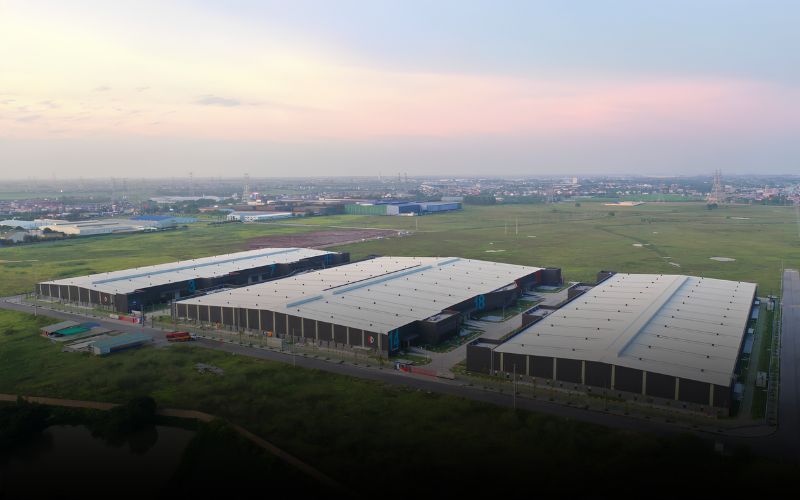
Warehouse space is changing. More and more manufacturers expect their logistics facilities to help them optimize their operations and fulfill their commitments to sustainability. As more sustainability disclosures come to dominate global supply chains, warehouse space is being designed to integrate energy-efficient work designs, automation, and renewable energy sources.
Modern, Ready-Built Warehouses that are designed with LEED building standards, outfitted with solar systems, equipped with automated storage and retrieval systems (ASRS), and outfitted with digital warehouse management software are very appealing to international tenants. These designs optimize business operations and also fulfill “ESG” or environmental, social, and governance, corporate responsibility commitments.
For warehouse developers and investors, these trends have opened new opportunities to fulfill customer needs and create new, more valuable industrial assets.
Integrated Third-Party Logistics (3PL)
Integrated third-party logistics (3PL) continues to gain momentum as international manufacturers expand production in Vietnam. Rather than building in-house supply chain capabilities, many companies are outsourcing transportation, warehousing, customs brokerage, and inventory management to specialised service providers.
This shift creates opportunities for businesses capable of delivering fully integrated solutions that combine digital visibility, operational reliability, and regional supply chain expertise. As manufacturing becomes increasingly complex, value-added services are expected to generate stronger long-term growth than conventional freight operations.
Infrastructure Development in Vietnam
Infrastructure investment has become one of the strongest long-term drivers of Vietnam’s logistics sector. While manufacturing growth creates demand for logistics services, the country’s ability to improve transport connectivity ultimately determines how efficiently goods move between factories, ports, airports, and international markets. For foreign investors, understanding Vietnam’s infrastructure roadmap is essential when selecting warehouse locations, distribution hubs, or logistics service operations.
Over the past decade, Vietnam has significantly increased public investment in transport infrastructure to support industrial development and international trade. Rather than concentrating resources in a single region, the government is strengthening connectivity across northern, central, and southern economic corridors through expressways, deep-sea ports, airports, and inland logistics networks. These projects are gradually reducing transportation bottlenecks while opening new opportunities beyond traditional industrial centers.
One notable development is Long Thanh International Airport, which will soon become Vietnam’s largest airport after completion. Its Phase 1 construction will allow the airport to accommodate 25 million passengers and 1.2 million cargo annually. This strengthens Vietnam’s air cargo capacity. Improved air cargo will offer the electronics, semiconductors, and high-value, time-sensitive manufacturing and pharmaceutical industries, along with others, flexibility in supply chain management and improved circulation times.
Vietnam’s burgeoning export economy is prompting improvements to its seaport infrastructure. Cai Mep – Thi Vai deep seaport, located in the South of Vietnam, is continuing its international development to facilitate direct, transshipment-free trade to the USA and Europe. This encourages exporters and creates a demand for logistics parks, distribution centers, and container depots proximate to the port.
In northern Vietnam, the expansion of Lach Huyen International Gateway Port reinforces Hai Phong’s role as a strategic logistics hub supporting electronics and advanced manufacturing. As global manufacturers continue investing in provinces such as Bac Ninh, Hai Duong, and Quang Ninh, demand for integrated logistics services throughout the northern economic corridor is expected to grow alongside industrial production.
Road infrastructure is undergoing a similar transformation. The continued development of the North–South Expressway is improving connectivity between industrial provinces and reducing travel times across the country. More efficient road transport enables logistics providers to optimize delivery schedules, lower operating costs, and expand distribution networks into emerging manufacturing locations that were previously less accessible.
For investors, infrastructure development should be viewed not only as a public investment program but also as an indicator of future logistics demand. Areas benefiting from new transport links often experience increased industrial activity, warehouse development, and distribution demand over time. Rather than focusing solely on established logistics hubs, investors may also identify opportunities in secondary provinces where improving infrastructure is supporting new manufacturing clusters.
The following table summarizes the strategic role of Vietnam’s major logistics infrastructure developments.
Quality infrastructure and regional differences create challenges for businesses. Northern Vietnam’s strong integration with electronics production and border trade with China contrasts with Southern Vietnam, which houses the largest trading and logistics market due to extensive ports and varied manufacturing. Thus, the focus of relevant industry and trade supply chains determines the best investment location.
Market Entry Considerations for Foreign Investors in Vietnam

Vietnam maintains an open investment environment for logistics, but foreign investors should recognize that market access varies across different supply chain services. Rather than applying a single regulatory framework to the entire sector, Vietnam distinguishes between warehousing, freight forwarding, transportation, and other logistics services, each of which may have different foreign ownership conditions and licensing requirements.
Warehousing and storage services are among the most popular first investments for foreign investors. Within the current state of Vietnam’s investment regulations and its international treaties, foreign companies can set up warehousing and distribution activities. Thus, this sector is very appealing for those companies that are interested in industrial real estate investments in Vietnam for the long term. As the need for related modern logistics structures increases, developing warehouses will be the most convenient way for investors to enter the Vietnam market.
Transport services have more complicated regulations. Particular domestic transport service activities have restrictions on foreign ownership or have to meet operational requirements of Vietnam’s commitments to the World Trade Organization (WTO) and other treaties. Investors who are planning to set up their own fleets of trucks, or who want to provide domestic transport services, should thoroughly understand the laws before deciding on the form of investment.
As a result, choosing the right market entry strategy is just as important as identifying the right investment opportunity. Depending on business objectives, investors typically consider three primary approaches.
A greenfield investment allows companies to establish a wholly new operation, particularly for warehouse development, logistics parks, or distribution centers. This approach provides greater operational control and enables investors to develop facilities according to international standards. However, it also requires longer implementation timelines, regulatory approvals, and higher initial capital expenditure.
A Joint Venture (JV) can be an effective option for companies seeking local market knowledge while complying with sector-specific ownership requirements. Partnering with an established Vietnamese logistics company may provide access to existing customer relationships, experienced management teams, and operational expertise that would otherwise require years to develop independently.
Investors continue to pursue M&A to gain faster access to markets. There are several benefits for an investing company when acquiring an existing logistics operator. Existing infrastructure, operating licenses, a skilled workforce, and customer networks are readily available. Constructing operations from the beginning is tedious and time-consuming for a company. This has been the strategy for many investors in Singapore, Japan, and South Korea in strengthening their footholds in logistics in Vietnam.
Regardless of the strategy, the same diligence is required for all. Several factors need to be evaluated before the investment is made, including land use, the environment, legalities, contracts, finance, and operations. This is most applicable to developments for warehousing, especially for the evaluation of the ownership of the land and the zoning of the land for the protection of legal and operational risks of the investment.
Ultimately, Vietnam’s regulatory environment should not be viewed solely as a compliance requirement but as an important component of investment planning. Foreign investors that align their business model with the appropriate legal structure, conduct thorough due diligence, and select market entry strategies suited to their long-term objectives are generally better positioned to build sustainable logistics operations. As the industry continues to mature, success will depend not only on identifying attractive market opportunities but also on executing investments through a well-informed and commercially viable market entry strategy.
Conclusion
Vietnam’s supply chain sector is entering a new stage of development, supported by sustained manufacturing investment, expanding international trade, and continued improvements in transport infrastructure. Rather than functioning solely as a transportation network, it has become an essential enabler of industrial production, regional distribution, and export competitiveness.
Market growth alone, however, is unlikely to guarantee investment success. Companies should evaluate opportunities based on infrastructure readiness, regional industrial development, regulatory requirements, and the specific business segments where demand is supported by long-term structural trends. Whether focusing on cold chain infrastructure, smart warehousing, fulfilment centres, integrated 3PL services, or digital supply chain solutions, a carefully planned market entry strategy can help reduce execution risks while strengthening long-term competitiveness.
As Vietnam integrates further into worldwide manufacturing networks, efficient distribution networks and value-added supply chain services will be in high demand. In Southeast Asia’s rapidly developing industrial market, businesses that successfully combine those location and operational skills along with technology-based skills will enjoy sustainable growth.