


Cambodia’s investment position in 2026
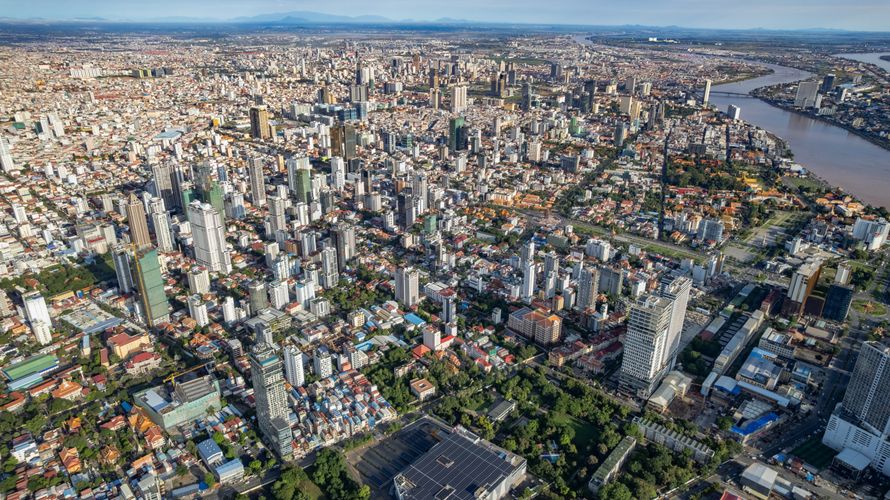
Cambodia’s real GDP grew by 5.3% in 2025, down from 6.0% in 2024. The 2026 outlook is unusually uncertain: the World Bank projects growth of 3.9%, while the IMF’s July 2026 mission placed it at 3.0%. Both institutions identify strong foreign investment and exports as important stabilisers, but also point to softer domestic demand, higher energy and logistics costs, weaker tourism, a property-market correction and financial-sector stress (International Monetary Fund [IMF], 2026; World Bank, 2026).
Foreign direct investment reached USD 5.1 billion in 2025, equivalent to 10.1% of GDP and 15% above the previous year. Investment is also rotating beyond traditional garments into travel goods, footwear, electronics, appliances, vehicle tyres and renewable energy. Goods exports excluding gold increased by 17.7% year on year in the first quarter of 2026. These figures confirm Cambodia’s continuing relevance as an export platform, but they should not obscure its dependence on imported inputs, concentrated export markets and uneven links between foreign-invested factories and local suppliers (World Bank, 2026).
Cambodia’s investment framework is comparatively open. Foreign investors can generally own 100% of a business in most activities, although land ownership is reserved for Cambodian nationals. Eligible projects that obtain Qualified Investment Project status may access income-tax holidays or special depreciation, customs and tax exemptions for qualifying imports, and additional deductions. These benefits are activity-specific and approval-dependent; they should never be treated as automatic assumptions in a financial model (Council for the Development of Cambodia [CDC], 2021, 2026).
Cambodia also benefits from ASEAN integration, the Regional Comprehensive Economic Partnership and several bilateral trade agreements. Preferential access depends on product classification, rules of origin and documentation. Investors should also prepare for Cambodia’s expected graduation from least developed country status in 2029, which will gradually change parts of the preferential trade environment (Ministry of Commerce, n.d.; United Nations Conference on Trade and Development [UNCTAD], 2025a).
Sector overview
The following profiles separate potential entry points from the first checks required before capital is committed.
| Sector | Potential entry points | First feasibility checks |
| manufacturing | Electronics, components, tyres, machinery, packaging, food processing, industrial services | Customer commitments, delivered cost, utilities, skills, certification |
| agriculture | Agro-processing, storage, cold chain, irrigation, mechanisation, testing | Supply volumes, land and water, yields, food safety, offtake |
| garments-textiles | Higher-value apparel, footwear, inputs, recycling, compliance services | Buyer concentration, origin rules, audits, wages, lead times |
| tourism-hospitality | Hotels, eco-tourism, experiences, F&B, management, training, travel tech | Airlift, occupancy, seasonality, title, permits, destination risk |
| logistics | Warehousing, cold chain, forwarding, fulfilment, customs, software | Route density, licences, utilisation, land, fuel and border exposure |
| renewable-energy | Solar, storage, efficiency, grid equipment, biomass, O&M | Power-plan fit, grid, offtake, tariff, curtailment, permits |
| construction | Industrial, logistics, infrastructure, renovation, efficient buildings | Title, planning, end users, financing, contractor capacity |
| consumer-goods | Packaged food, personal care, household goods, local brands, e-commerce | Price segment, channels, product rules, margins, repeat purchase |
| technology | Fintech, SaaS, cybersecurity, e-commerce, agritech, factory and logistics tech | Customer access, data rules, talent, localisation, sales cycles |
Manufacturing
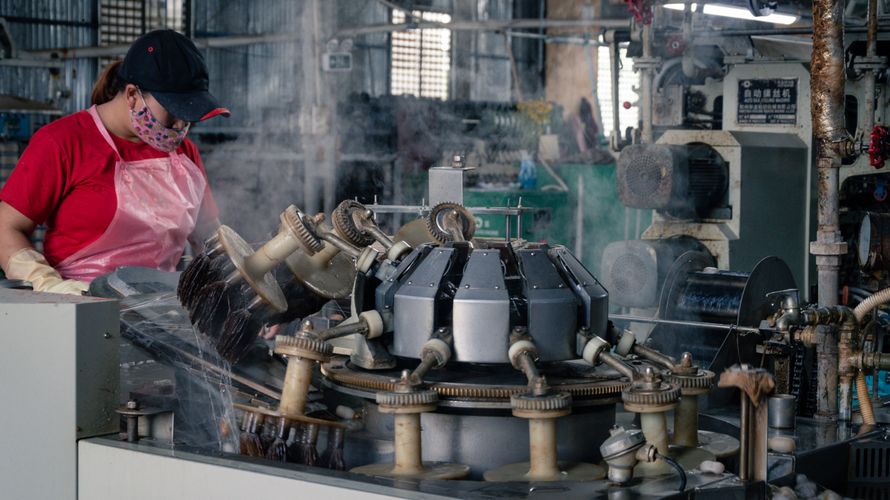
Manufacturing is currently the clearest broad-based investment theme. Foreign investment is moving into a wider product range, while newly approved factories and export demand continue to support employment. Potential entry points include electronics and electrical components, tyres, furniture, machinery, industrial packaging, food processing, assembly, testing, maintenance and contract manufacturing. Supporting services; automation, quality control, traceability, tooling and energy management; can sometimes offer a lower-capital route into the same industrial ecosystem (World Bank, 2026).
The strongest manufacturing projects start with a confirmed customer, transferable production know-how or a capability that is not readily available locally. Cambodia’s wage position may be competitive for selected labour-intensive activities, but labour cost alone is not a sufficient thesis. Investors should calculate the full delivered cost, including imported inputs, power, inland transport, customs, waste treatment, yield losses, certification and management overhead.
Feasibility checks should cover site utilities, workforce availability, supplier depth, environmental approvals, product standards, rules of origin and customer concentration. Special economic zones can simplify parts of the operating environment, but they do not remove the need to test unit economics and logistics. Projects that deepen local sourcing or add processing steps in Cambodia may align better with policy priorities and create more defensible economics.
Agriculture
Agriculture remains central to rural employment and food supply, but the most investable opportunities are generally found after the farm gate. Growth is expected to remain modest, with current forecasts pointing to continued expansion in rice and cashew-related activity rather than a broad agricultural boom. Cambodia is also seeking more investment in agro-processing, packaging, quality systems and farm-to-market infrastructure (Asian Development Bank [ADB], 2026a; Ministry of Agriculture, Forestry and Fisheries [MAFF], 2025).
Potential projects include rice milling and branding, cashew processing, fruit and vegetable packing, animal feed, cold storage, irrigation services, mechanisation, agricultural inputs, laboratory testing, traceability and food-safety systems. The commercial objective should be to reduce post-harvest losses, improve consistency, meet buyer specifications or replace the export of raw commodities with higher-value processed products. The United States Department of Agriculture expects Cambodian milled-rice exports to exceed one million metric tonnes in the 2025/26 marketing year, illustrating the scale of an established export value chain (USDA Foreign Agricultural Service, 2026).
Agricultural feasibility is highly location- and crop-specific. Investors should verify land rights, water access, seasonal volumes, farmer aggregation, input quality, disease risk, processing yields, electricity needs, certification and committed buyers. Climate exposure and environmental impacts also matter. A processing plant without reliable contracted supply can be as risky as a farm without an identified offtaker.
Garments-textiles
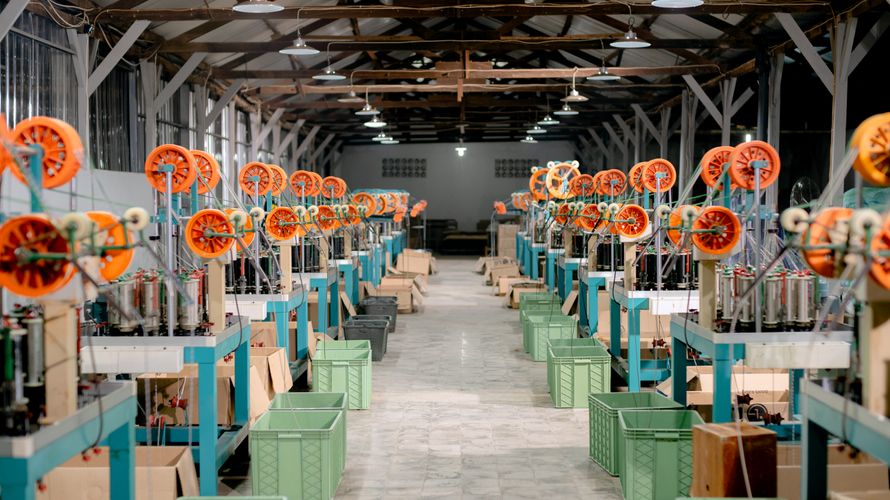
Garments-textiles remains Cambodia’s largest established export manufacturing cluster. In 2025, the garment, footwear and travel-goods sector included about 1,810 firms and 1.11 million workers; women represented roughly three quarters of employment, and the sector generated 51.8% of national exports. Its scale provides an experienced workforce, established compliance systems and a deep base of factories and service providers (International Labour Organization [ILO], 2026).
Opportunities are moving beyond basic cut-make-trim production. Investors can consider higher-value apparel, technical textiles, footwear and travel goods, fabric and accessory supply, recycling, wastewater treatment, digital production planning, compliance services and energy-efficiency solutions. Supplier businesses that shorten lead times or help factories meet buyer requirements may be more differentiated than another standard assembly operation.
Concentration remains the core risk. The United States and European Union absorb a large share of sector exports, while tariff changes, buyer consolidation and stricter environmental and labour requirements can quickly affect orders. Investors should test customer commitments, product specialisation, origin rules, audit requirements, minimum-wage exposure and the cost of moving toward higher-value production.
Tourism-hospitality
Tourism-hospitality offers long-term potential through Angkor, Phnom Penh, coastal destinations and nature-based tourism, but it is not currently a uniform growth story. The recovery remains vulnerable to air connectivity, source-market conditions, regional disruptions and destination perception. Angkor-related revenue fell by around 30% year on year in the first quarter of 2026, underlining the need for conservative demand assumptions (World Bank, 2026).
Potential entry points include professionally managed boutique and mid-market hotels, eco-lodges, destination management, food and beverage concepts, cultural experiences, wellness, hospitality training and travel technology. The strongest concepts extend length of stay, improve service consistency or address a clearly identified customer segment rather than relying only on national arrival targets.
Feasibility should be modelled at property and destination level. Investors need realistic occupancy, average daily rate, seasonality, distribution costs, staffing, licensing, land-title and environmental checks. Projects near sensitive natural or heritage areas require particular care. A phased management contract, lease or renovation may carry less risk than a greenfield resort built on optimistic traffic projections.
Logistics
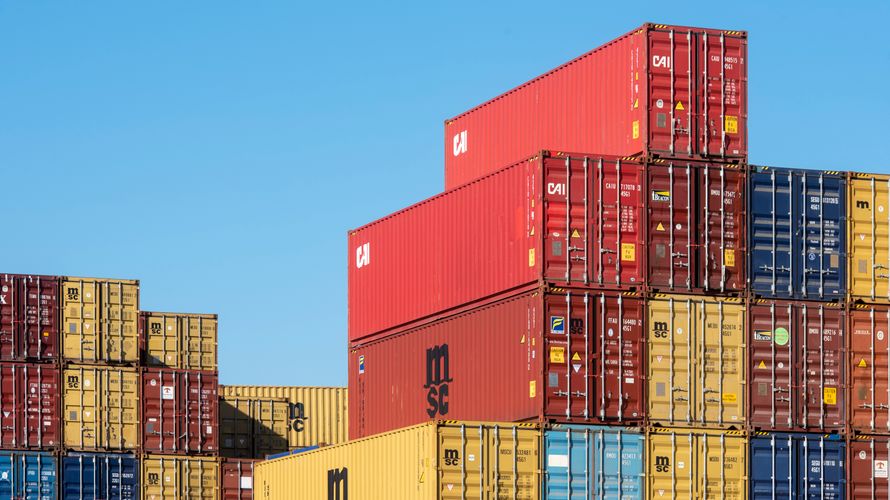
Logistics is supported by manufacturing, agriculture, e-commerce and Cambodia’s regional trade position. The national intermodal transport and logistics master plan for 2023–2033 contains 174 proposed projects, covering roads, rail, ports, waterways, aviation and logistics facilities. This provides a policy direction, but announced infrastructure should not be confused with completed capacity or guaranteed commercial demand (Ministry of Public Works and Transport [MPWT], 2023).
Potential models include industrial warehousing, cold chain, freight forwarding, customs support, cross-border transport, fulfilment, port-related services and supply-chain software. The main feasibility variables are route density, utilisation, border and customs procedures, licence requirements, access to land, customer concentration, empty-return risk and fuel exposure. Cambodia’s relatively high logistics costs create room for improvement, but they can also erode margins for asset-heavy operators (World Bank, 2026).
Renewable-energy
Renewable-energy is becoming more relevant as factories, logistics sites and digital infrastructure seek reliable and lower-carbon power. Cambodia’s system already has a substantial renewable share, led mainly by hydropower, while current policy and development-finance programmes support solar, storage, grid reinforcement, energy efficiency and regional power trade. In June 2026, ADB approved financing that included battery energy storage to improve grid stability (ADB, 2026b).
Investors may consider commercial and industrial rooftop solar, utility-scale solar where planning permits, battery storage, grid equipment, energy-management systems, efficient cooling, biomass and agro-waste solutions, and operations and maintenance. Bankability depends on the exact revenue model, power-plan alignment, grid connection, offtaker, tariff, curtailment risk, equipment standards, land and environmental approvals. A strong resource profile alone is not enough.
Construction
Construction should be approached selectively. The property correction has reduced lending and domestic demand, while economy-wide non-performing loans rose to 8.9% in 2025. This weakens the case for speculative residential or hospitality development based mainly on presales or land appreciation (National Bank of Cambodia [NBC], 2026; World Bank, 2026).
More defensible opportunities may exist in factories, warehouses, cold-storage facilities, energy and transport infrastructure, renovation, efficient building systems, selected affordable housing and specialised construction materials or services. Feasibility depends on verified title, planning and permits, end-user demand, contractor capacity, financing, presales or lease commitments and a realistic completion schedule. Stress tests should cover slower absorption, higher material costs and delayed approvals.
Consumer-goods
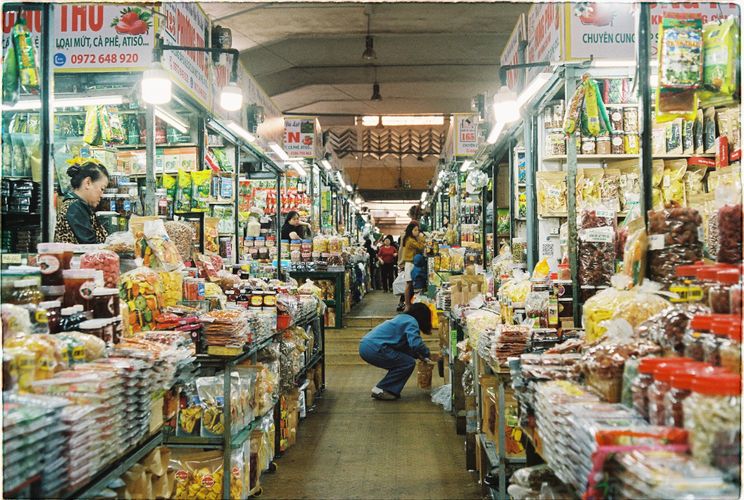
Consumer-goods is a medium-term opportunity rather than an automatic scale play. Rising incomes, urbanisation and digital channels support packaged food, personal care, household goods, affordable convenience products and locally processed brands. However, private consumption weakened in early 2026 as inflation, lower remittances and tighter credit affected household purchasing power (World Bank, 2026).
Entry models include importing through a distributor, modern retail, e-commerce, local packaging, contract manufacturing and full local production. Investors should test the exact price segment, repeat purchase, distributor margins, listing and promotional costs, product registration, labelling, counterfeit exposure and working capital. Cambodia’s large informal retail base makes channel execution and field sales as important as brand positioning.
Technology
Technology is a cross-sector opportunity. Cambodia’s Digital Economy and Society Policy Framework 2021–2035 promotes digital infrastructure, trusted systems, digital businesses and skills, while the government has continued to develop online registration, data exchange and digital-trade tools. Practical opportunities include fintech infrastructure, enterprise software, cybersecurity, e-commerce enablement, cloud services, logistics technology, agritech, travel technology and solutions for factory automation (Ministry of Economy and Finance [MEF], 2021; UNCTAD, 2025b).
The most credible technology investments solve a specific operational problem and have a realistic customer-acquisition model. Investors should assess data and cybersecurity rules, licensing, payment integration, senior talent, Khmer-language localisation, enterprise sales cycles, intellectual-property protection and the willingness of small businesses to pay. Limited technology adoption is a market opportunity, but it can also lengthen implementation and support requirements.
Where the strongest investment cases are likely to sit
Cambodia’s sector opportunities overlap. The most credible projects often combine several investment themes rather than relying on one market label.
Export diversification and local value addition. Manufacturing, garments-textiles and agriculture become more defensible when projects add processing, design, quality, supplier development or local input production rather than only assembly or raw exports.
Operating efficiency and infrastructure. logistics, renewable-energy and technology can improve the cost, reliability and traceability of existing production and distribution networks. These business-to-business models may be less exposed to weak household demand.
Demand-linked construction. construction is more credible when tied to a factory, warehouse, power project, operating hotel or committed tenant than when built speculatively.
Selective domestic-market growth. consumer-goods and tourism-hospitality can work where the customer segment, pricing and distribution are evidenced. National population or visitor targets are not a substitute for property-level or product-level demand validation.
What foreign investors should verify before committing capital
Before choosing an entity, partner, site or asset, investors should test at least the following points:
- Evidence of demand: customer interviews, orders, contracts, usage data or credible comparable projects.
- Foreign-investment conditions, licences, land structure, tax treatment and whether QIP incentives genuinely apply.
- The competitiveness of the full business model at current wage, power, logistics, financing and compliance costs.
- Availability of management, technical staff, suppliers, utilities, suitable sites and reliable transport routes.
- Exposure to one buyer, export market, border crossing, commodity, source country or distributor.
- Environmental and social obligations, including water, waste, labour, community impacts and traceability.
- Working-capital needs, foreign-exchange exposure, financing terms and downside scenarios.
- A staged entry option; pilot, distributor, contract manufacturer, lease, joint venture or acquisition; before major capital is committed.
From sector interest to a feasible Cambodia project
Cambodia offers real opportunities in manufacturing, agriculture, garments-textiles, tourism-hospitality, logistics, renewable-energy, construction, consumer-goods and technology. The current environment nevertheless rewards selectivity. Export capacity and FDI remain strong, while domestic demand, tourism and real estate require more conservative assumptions.
The practical question is not only whether a sector is growing. It is whether a specific company can enter legally, secure customers and inputs, operate at the required quality, finance the project and manage the principal risks. A credible investment process therefore moves from sector screening to customer validation, regulatory review, partner and supplier assessment, site comparison and financial modelling.
At MoveToAsia, we support international companies with market research, regulatory screening, partner and supplier identification, competitor mapping, local stakeholder interviews, site selection and feasibility studies. The objective is to turn broad interest in Cambodia into a project that can be tested, structured and executed on realistic assumptions.