


This guide is designed to explain the new changes in the market, the best investment opportunities, and the regulations as well as considerations concerning the growing renewable energy market in Cambodia.
Cambodia’s Renewable Energy Market in 2026
Cambodia’s renewable energy sector has reached a pivotal stage of development, with solar power expanding far more rapidly than originally anticipated. Supported by government policy, rising electricity demand, and increasing private-sector participation, the country has exceeded several of its renewable energy milestones ahead of schedule, creating a more mature investment environment than many investors may expect.
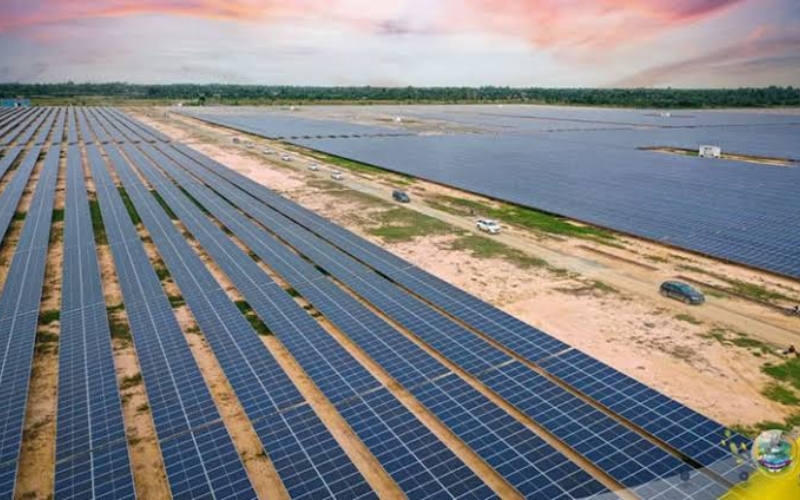
According to the Electricity Authority of Cambodia (EAC) and the Institute for Energy Economics and Financial Analysis (IEEFA), by 2025 Cambodia’s solar capacity was nearly 1.5 GW, exceeding the goal of the Power Development Master Plan in only three years. Projects that are underway are expected to bring the total to 1.87 GW of solar capacity by the end of 2026. As a result of this, solar energy is now considered a major part of the emerging tools of the Cambodian energy system. For investors, this indicates that scaling solar capacity and supporting the grid infrastructure will be the major investment opportunities in Cambodia.
Government policy continues to reinforce this momentum. Cambodia aims to source 70–80% of its electricity from renewable energy by 2030, while continued investment in transmission infrastructure is improving the integration of new renewable projects. These long-term commitments provide greater visibility for developers planning utility-scale investments with multi-year development timelines.
Market activity also remains strong. During the first half of 2026, the Council for the Development of Cambodia (CDC) approved five renewable energy projects worth more than US$1 billion, spanning solar, wind, and biomass technologies. The diversified project pipeline indicates that Cambodia is no longer relying solely on hydropower or solar expansion but is gradually building a broader renewable energy portfolio capable of supporting future industrial growth and rising electricity demand.
Overall, Cambodia’s renewable energy market is shifting from rapid capacity expansion toward a more diversified and investment-ready ecosystem. This creates opportunities not only for power developers but also for companies involved in grid infrastructure, energy storage, engineering services, and industrial decarbonization solutions.
The Key Opportunities
While Cambodia’s renewable energy market is expanding rapidly, investment opportunities vary considerably across technologies. Understanding where government support, electricity demand, and commercial viability are converging is essential for investors seeking to identify the most attractive market segments.
Currently, solar energy at the utility scale is becoming the main opportunity. Most of the capacity additions in the last few years are from large grid integration projects. This trend shows the government’s preference for large, centrally planned developments that can provide significant capacity to the grid after a short construction period. These projects create an established approval pathway and more certainty in terms of connection to the grid. For this reason, institutional investors and independent power producers target these projects.
Utility-scale projects are a reflection of the strong policy support for utility-scale solar. Projects approved in 2025 and 2026 are projected to be the major contributors of new renewable capacity and continue to consolidate solar projects as the main focus of the renewable energy transition in Cambodia.
Wind power represents a newer and less mature opportunity, but one with significant long-term potential. Until recently, Cambodia had no commercial wind generation connected to the national grid. This is beginning to change with the approval of several large-scale projects, including two 150 MW wind farms in Mondulkiri Province that are expected to commence operations during 2026. As the country’s first utility-scale wind developments, these projects are expected to establish an important benchmark for future investors while diversifying Cambodia’s renewable energy portfolio beyond solar and hydropower.
Hydropower and biomass continue to play complementary roles within the national energy mix. Hydropower remains Cambodia’s largest renewable electricity source, led by the 400 MW Lower Sesan 2 Hydropower Station, which continues to provide significant baseload generation. At the same time, biomass is attracting renewed attention as agricultural residues and forestry by-products create opportunities for dispatchable renewable electricity. One example is the 50 MW biomass project approved in Pursat Province during the first half of 2026, demonstrating growing interest in expanding beyond intermittent renewable technologies.
Another emerging opportunity lies in rooftop solar serving commercial and industrial facilities. Although distributed generation remains a relatively small segment compared with utility-scale projects, the government has introduced a 30 MW annual rooftop solar quota for 2026, announced by the Ministry of Mines and Energy (MME) in February 2026. The program primarily targets factories, warehouses, and commercial buildings seeking to reduce electricity costs while improving environmental performance.
Rooftop solar is viewed by many foreign investors as a cheaper and quicker alternative in comparison to utility-scale solar developments. Exporting solar products to manufacturing companies that are decarbonizing and increasing renewable energy sourcing in the EU and the US may be an appealing market niche. Since more than half of Cambodia’s exports go to the EU and the US, there will be more demand for on-site renewable energy as international standards for sustainability will require it.
Solar energy in Cambodia is evolving as the energy systems are diversifying. It will be an expanding market alternative to business as usual energy systems. The investments that follow the National Strategic Development Plan, the expansion of the power grid, and the sustainability goals of exporting manufacturers will likely be the most successful in the future.
Legal Framework & Incentives for Renewable Energy Investors
Cambodia has established an increasingly supportive legal framework for renewable energy investment through the Law on Investment (2021), which is administered by the Council for the Development of Cambodia (CDC). Under this framework, projects related to green energy production, climate adaptation technologies, and environmental sustainability are eligible to apply for Qualified Investment Project (QIP) status, giving investors access to a range of fiscal incentives designed to reduce project costs and improve long-term returns.
The QIP system has two forms of incentive. Under Option 1, projects that satisfy the criteria can enjoy an income tax exemption for a duration of three to nine years, depending on the classification of the project. The maximum duration of the exemption, which is nine years, applies to Group 1 projects. Groups 2 and 3 projects are eligible for six and three years of the exemption, respectively. Following the expiration of the exemption period, the projects are subjected to the gradual tax phase-in, during the first two years of the phase-in, the projects are required to pay 25% of the income tax, during the third and fourth years of the phase-in the projects are required to pay 50% of the income tax, and during the fifth and sixth years of the phase-in the projects are required to pay 75% of the income tax, before the projects are required to pay the normal corporate income tax.
Alternatively, investors may choose Option 2, which provides special depreciation equal to 200% of eligible capital expenditure. This option can be particularly attractive for capital-intensive infrastructure projects where accelerated asset depreciation offers greater financial benefits than a temporary tax holiday.
In addition to these core incentives, renewable energy projects approved as QIPs may qualify for several supplementary benefits. During the incentive period, companies are generally exempt from prepayment tax, minimum tax, and export tax, reducing both operating costs and cash flow pressures during the project’s early years. Investors can also claim a 150% tax deduction on eligible expenditures related to research and development, technological innovation, and supporting infrastructure, encouraging continued investment in more efficient and sustainable energy solutions.
Beyond fiscal incentives, developers should understand Cambodia’s regulatory framework for electricity generation. Utility-scale projects connected to the national grid cannot proceed solely on the basis of private commercial agreements. Instead, proposed developments must either be included in the country’s Power Development Master Plan (PDP) or undergo a feasibility review and approval process conducted by the Ministry of Mines and Energy (MME). Once approved, electricity supplied to the national grid must be sold to Electricité du Cambodge (EDC) through a standardized Power Purchase Agreement (PPA) approved by the Electricity Authority of Cambodia (EAC). This centralized offtake model provides a transparent procurement framework while offering investors greater clarity regarding long-term electricity sales.
There was another advancement in May 2025 after the National Assembly in Cambodia voted to approve legislation providing payment assurances for 24 electricity investment companies. It was implemented in hopes of bolstering confidence in the electricity procurement system by diminishing worries of payment assurance in a time when there is an electricity supply and demand imbalance that is predicted to worsen until 2028. For foreign developers and sponsors, improvements in payment assurance strengthen project bankability and may help secure long-term financing.
Financing alternatives continue to evolve beyond traditional commercial lending. The National Bank of Cambodia (NBC) and the Securities and Exchange Regulator of Cambodia (SERC) are at the outset of rolling out green finance models, such as a framework for possible green bond issuance and sustainable finance. Although these options are very new, and early stage models, they are indicative of a broader strategy within Cambodia to elicit private investment to enable the development of low-carbon infrastructure.
Risks, Challenges & Practical Guidance for Investors
Despite strong market momentum, renewable energy investment in Cambodia also presents a number of operational and regulatory challenges that investors should evaluate carefully before committing capital.
A major area to consider is the electricity costs, which is higher than in some of the neighboring countries. Even with the ease and speed of expanding renewable generation, electricity prices do not decrease because of how the power system is structured, the costs incurred in the construction and maintenance of the electrical transmission infrastructure, and the continued dependence on the importation of electricity to satisfy peak load demand. This situation makes the case for additional renewable generation commercially more viable; however, project developers are pushed to construct projects at a more competitive and lower price.
Investors considering rooftop solar should also be aware of regulatory constraints. In February 2026, the Ministry of Mines and Energy introduced an annual rooftop solar quota of 30 MW, limiting the amount of distributed generation that can be connected to the national grid each year. While the policy provides greater regulatory certainty, it may also become a bottleneck if commercial and industrial demand continues to accelerate. Companies planning rooftop installations should therefore assess available capacity and approval timelines early in the project development process.
Another important consideration is Cambodia’s evolving energy strategy. Although the government has committed to sourcing 70–80% of electricity from renewable sources by 2030, it has also continued approving selected coal-fired power projects to ensure sufficient electricity supply during periods of rapid economic growth. This dual-track approach reflects the practical challenge of balancing energy security with long-term decarbonization objectives. Investors should therefore monitor future updates to the Power Development Master Plan to understand how the generation mix may evolve over the coming decade.
Grid infrastructure also presents both challenges and opportunities. While the national transmission network continues to expand, electricity access remains limited in some remote provinces and offshore islands, particularly around Sihanoukville’s coastal areas. These locations may not yet be suitable for large utility-scale developments but could offer attractive opportunities for off-grid and mini-grid systems, hybrid renewable projects, and decentralized energy solutions serving isolated communities or industrial facilities.
Developers need to carry out thorough regulatory due diligence before starting any development. Construction of utility-scale projects can only begin after the projects are found to be consistent with the latest Power Development Master Plan or after the Ministry of Mines and Energy grants construction approval. Investors also need to assess the technical requirements to connect to the grid and evaluate the conditions of the relevant Power Purchase Agreement with Electricité du Cambodge, as both the Power Purchase Agreement and the conditions of the agreement have a direct impact on the revenue and the financial viability of the project.
Businesses seeking fiscal incentives should submit their applications through the Council for the Development of Cambodia (CDC) under the Qualified Investment Project (QIP) framework. Because tax incentives differ according to the project’s classification under Sub-Decree No. 139, developers should verify their investment category at an early stage to determine the applicable exemption period and available fiscal benefits before making final investment decisions.
Having approved over US$1 billion in renewable energy projects in the first half of 2026 and with the first commercial wind farms about to become operational, it can be said that a new phase in the energy transition of Cambodia has started. The market is no longer driven only by utility-scale solar, but is more balanced with an expanding portfolio of wind, biomass, hydropower, and other forms of distributed generation. For investors ready to navigate the regulatory scheme and structure projects in agreement with the national energy priorities, Cambodia offers the most alluring prospects in the long-term engagement in the clean energy transition in Southeast Asia.
Conclusion
Cambodia’s renewable energy sector is becoming an appealing investment opportunity as a result of government initiatives, solar, wind, and biomass projects, and a diversified energy portfolio. Solar energy provides the greatest market opportunity at large utility scales, but wind, biomass, and other distributed energy solutions are creating opportunities across the value chain. Regulatory requirements, grid interconnection, and the Qualified Investment Project(QIP) eligibility will eventuate investment opportunities in the sector. As Cambodia’s clean energy efforts strengthen the sector, investments are best planned in consideration of the priorities and projects of the government.