


This guide examines Cambodia’s agricultural landscape, highlights the industries with the strongest growth potential, and explores the key considerations for businesses seeking to establish or expand agribusiness operations in one of Southeast Asia’s emerging food production markets.
Cambodia’s Agriculture Sector
One of the most vital areas of the Cambodian economy is agriculture. This is due to the positive impact agriculture has through exports, job presence, rural improvement, and food security. Even though manufacturing and services become more diverse, farming keeps millions of people employed and provides raw materials. These raw materials either support local business or support trade with other countries.
According to Cambodia’s Ministry of Agriculture, Forestry, and Fisheries (MAFF), the sector contributed approximately 16.1% of GDP in 2025, making it one of the country’s largest productive industries. While this share has gradually declined as manufacturing and services expand, the change reflects broader economic diversification rather than a weakening agricultural base.
The figures from employment surveys demonstrate the importance of the sector. About one-third of the total workforce of the country, about 3.1 million people, work in agriculture in Cambodia, making this sector the largest employer. Such a large workforce can help significantly with the establishment of agribusiness, especially with the cultivation of crops, food processing, and production for export.
Agricultural businesses in Cambodia can offer other forms of cultivation and processing besides rice. Within the sector, the production of crops is the largest contributor, with increasing production of cassava, cashew nuts, rubber, along with other fruits and vegetables. The cultivation of livestock, and the industries of fish and forestry also support rural livelihoods and help develop the industries of processing.
Export performance has become one of the strongest indicators of the sector’s evolving competitiveness. In 2025, Cambodia exported agricultural products to more than 90 international markets, reflecting expanding trade relationships across Asia, Europe, and other global destinations. Strong growth in export volumes also suggests increasing demand for Cambodian products despite a more challenging international trading environment.
Instead of just ramping up production, the government’s objective incorporates augmenting the value generated within Cambodia. The adoption of policies for food processing and the industrialization of agriculture combined with an improvement of export processes in order to minimize export reliance on raw commodities seeks to diversify the range of activities. It will allow for value added activities and services to be undertaken. This will provide value added business opportunities and services to producers and other businesses associated with food processing, packing, transport, quality control, and agritech.
Concisely, if investors are to consider the latest developments, the agricultural sector in Cambodia is now commencing a different phase of development. Profit potential covers processing, integration, and export agribusiness beyond primary production and focuses more on the value-added activities that are prevalent in these particular sectors. Companies that will operate in this field are to benefit from enhanced government policy and international markets for trade in processed agricultural products.
High-Opportunity Sub-Sectors for Agricultural Investment
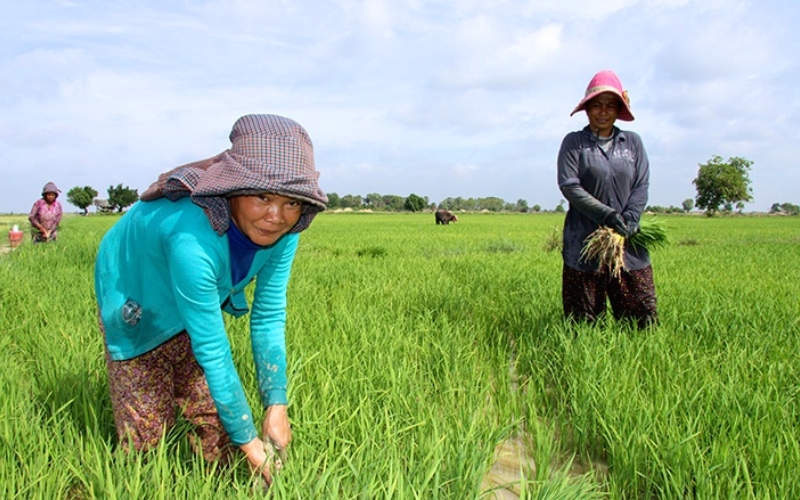
Cambodia’s agricultural sector is becoming increasingly diversified, with government policy shifting beyond traditional crop production towards higher-value processing and export-oriented agribusiness. Rather than viewing the market as a single opportunity, businesses should identify sub-sectors where abundant raw materials are matched by limited domestic processing capacity, creating opportunities to capture additional value within Cambodia instead of exporting unprocessed commodities.
Rice remains Cambodia’s flagship agricultural export and continues to play a central role in rural economic development. The country has established a strong reputation for premium fragrant rice varieties, with exports reaching international markets across Europe, Asia, and North America. However, a significant proportion of harvested rice is still exported in relatively low-value forms. This creates opportunities for businesses specializing in modern milling, branded food products, packaging, and value-added processing aimed at higher-margin export markets.
Cashew represents one of the country’s fastest-growing agribusiness opportunities. Cambodia is now among the world’s leading producers of raw cashew nuts, yet only a relatively small share is processed domestically before export. Recognizing this gap, both the government and private sector have accelerated investment in processing capacity. New facilities, including a major Korean-backed processing plant in Kampong Thom, reflect growing efforts to retain more value within the country. For investors, this presents opportunities across shelling, roasting, packaging, ingredient manufacturing, and export-oriented food processing.
Natural rubber is another priority industry supported by expanding plantation output and increasing international demand. Cambodia exported more than 329,000 tonnes of rubber and latex products during the first four months of 2026, demonstrating continued strength in global markets. While raw rubber exports remain important, long-term growth is expected to come from downstream industries such as industrial rubber products, automotive components, gloves, and specialized manufacturing that generate significantly higher value than primary commodity exports.
Tropical fruit and vegetable production for export is becoming a feasible business opportunity. New trade pacts and infrastructural advancements are expanding the cold chain. Regional demand for processed food is growing. Consider developing a business venture opportunity that targets post-harvest supply chain gaps. This venture may focus on refrigerated storage, food safety systems, dehydration, canning, or packaging.
One opportunity present in these sectors is the chance to boost domestic value addition. Instead of focusing on expanding cultivated areas, the strategy of the Cambodian government is to process agricultural products to a higher degree before they are exported. This captures greater value for both farmers and processors. The MAFF Strategic Plan aims for a higher level of processed food exports by the year 2027, and adds more government support to investments in agribusiness activities.
Consequently, for foreign businesses, the greatest opportunities are where there is sufficient raw material, and minimal local added value. Businesses that are able to invest modern processing and post-harvest technologies, quality control and assessment systems, and produce with an export focus can greatly aid the transition of Cambodia from a low value agribusiness and a commodity exporter, while also profiting from the integration of Cambodia into regional and global agrifood value chains.
Operating Environment
Beyond production potential, the success of an agribusiness project depends on the operating environment. Land availability, workforce access, transport infrastructure, financing, and export connectivity all influence long-term profitability. Cambodia continues to improve these fundamentals through infrastructure investment, preferential trade agreements, and targeted support for rural industries, although several structural constraints remain.
Access to land is one of the first considerations for international businesses. While foreign companies cannot own land under Cambodia’s Constitution, they can secure long-term land use through renewable lease agreements of up to 50 years. This structure is widely used by international agribusinesses developing plantations, food processing facilities, warehouses, and export-oriented production sites. As of February 2025, registered land transactions exceeded US$1.74 billion, reflecting continued activity within the country’s property market.
Labor availability remains another competitive advantage. Farming and related industries employ approximately 3.1 million people, representing around one-third of the national workforce. The relatively young labor force provides an important foundation for food processing, packaging, and post-harvest operations. However, businesses entering technology-intensive activities should anticipate additional investment in workforce training to improve technical capabilities and quality management standards.
Access to finance has also improved in recent years. Through institutions such as the Agricultural and Rural Development Bank (ARDB) and government-supported financing programs, businesses operating in priority industries can access credit for farm modernization, processing equipment, storage facilities, and export-oriented projects. These initiatives are intended to accelerate value addition while encouraging greater private-sector participation in downstream industries.
Market access is a large comparative advantage for Cambodia, as Cambodia is a part of a large number of trade agreements. This includes trade agreements like RCEP, the Cambodia–China Free Trade Agreement, the Cambodia–Korea Free Trade Agreement, the ASEAN Free Trade Agreements, and the Cambodia–UAE Comprehensive Economic Partnership Agreement (CEPA). Cambodia has an advantage for exporting foods and other agricultural products because the agreements providing Cambodia access to markets makes Cambodia one of the largest and most favorable consumer markets around the World.
Cambodia is overcoming some supply chain issues that have slowed trade for years with infrastructure improvements. Some of the major improvements are the Expressway connecting Phnom Penh to Sihanoukville, the Sihanoukville autonomous port expansion, and the new Techo International Airport. These projects are improving connections and increasing Cambodia’s ability to trade to the outside world. There are many other projects underway to expand Cambodia’s ability to trade even more. These mostly trade related projects are cold chain facilities, logistics networks, and food processing infrastructure, but some of these are still lacking capacity.
For investors, these developments indicate that Cambodia’s operating environment is becoming increasingly supportive of export-oriented agribusiness. While some infrastructure gaps remain, particularly in rural logistics and cold storage, ongoing public and private investment is steadily improving the conditions required for large-scale processing and international trade.
Investment Framework
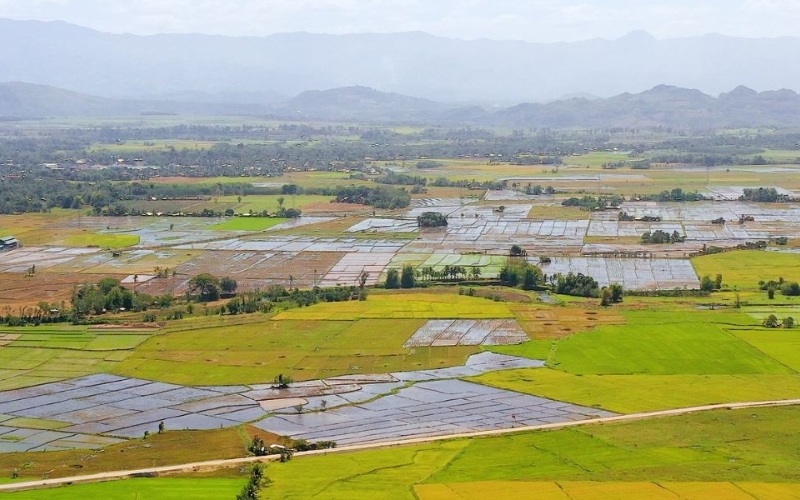
Once a company has identified a suitable market opportunity, the next step is determining the most effective entry strategy. Cambodia has introduced a range of fiscal incentives and policy initiatives to encourage greater investment in food processing, downstream production, and export-oriented agribusiness. Understanding how these programs operate is essential for reducing project costs and improving long-term commercial viability.
Qualified Investment Projects (QIPs) are the primary means of gaining access to government incentives. The Council for the Development of Cambodia (CDC) administers QIPs. Corporate income tax exemptions of up to nine years and exemptions from import duties for production equipment, machinery, construction materials, and production inputs approved for import are available to eligible projects. Projects located in priority sectors that also meet additional requirements may be granted other incentives, such as accelerated depreciation, special deductions, and assistance for employee training.
Beyond the QIP framework, Cambodia has identified several strategic commodities for industrial development. Through the Hand in Hand Initiative, products such as rice, cashew nuts, cassava, and fisheries have been prioritized for investment due to their strong export potential and opportunities for domestic processing. These priorities align with the government’s broader objective of increasing value-added exports rather than relying on shipments of raw commodities.
The Cambodia Agriculture Forum and Exhibition (CAFE) 2025 further reinforced this strategy by highlighting nine priority agricultural products for commercial development while encouraging stronger collaboration between producers, processors, exporters, and technology providers. For international businesses, these initiatives provide a clearer indication of where government support is likely to remain concentrated over the coming years.
The process of establishing an agribusiness generally begins with company registration, followed by project approval through either the CDC or the relevant provincial or municipal investment sub-committee, depending on the scale of the proposed investment. Businesses intending to develop processing facilities or export-oriented operations should assess eligibility for QIP status during the planning stage to maximize available incentives before construction begins.
Despite these advantages, companies should also consider several operational risks when evaluating market entry.
Climate variability remains one of the most significant challenges. Seasonal flooding and drought continue to affect agricultural production in some regions, influencing crop yields and raw material availability. Although weather conditions are expected to improve following the 2025–2026 El Niño period, climate resilience will remain an important consideration for businesses dependent on consistent agricultural supply.
Land access requires careful planning, as foreign entities cannot directly own land. While long-term lease arrangements are well established, investors should conduct comprehensive legal due diligence to ensure that land use rights, lease structures, and regulatory approvals are fully compliant before committing capital.
Infrastructure quality also varies considerably between regions. While major transport corridors continue to improve, cold storage facilities, rural logistics, and post-harvest handling capacity remain less developed outside key production areas. Businesses relying on temperature-controlled supply chains or high-value perishables may therefore need to incorporate additional infrastructure investment into their project planning.
Cambodia aims to develop more valuable agribusiness investments, differentiating them from primary production businesses. Projects in Cambodia that align with national interests and development goals and use available incentives and concessions along with well considered supply chain strategies will have improved odds of success in Cambodia’s changing environment of food business.
Conclusion
Cambodia’s agricultural sector is transitioning from a traditional commodity producer to a more diversified agribusiness economy supported by processing, export expansion, and value-added production. While farming continues to underpin rural employment and food security, government policy is increasingly focused on strengthening downstream industries that can generate higher export earnings and greater domestic value creation.
For global commerce, there are major chances beyond first-stage production. Due to increased trade agreements, favorable investment regulations, and increasing demand for processed food, there are opportunities in food processing, (cashew and rice) milling, rubber-based production, cold chain, packing, agri-tech, and export logistics.
Though there are multiple cost-related advantages, there are other requirements for success. Before determining an entry strategy for a market, raw material accessibility and regulation, workforce skill-set and availability, infrastructure, packing, agri-tech, cold chain, and logistics should be considered. The knowledge of these areas will help minimize risk while improving competitive advantage.
As Cambodia continues to modernize its agricultural value chains and deepen integration into international food markets, businesses that combine local resource advantages with processing expertise and export-oriented capabilities will be well positioned to capture sustainable growth in one of Southeast Asia’s emerging agribusiness destinations.