


This guide examines the latest market trends, explores the infrastructure projects transforming Cambodia’s logistics landscape, identifies high-potential investment opportunities, and outlines the regulatory considerations that foreign investors should evaluate before entering the market.
Cambodia’s Logistics Market Size & Growth in 2026
Cambodia’s logistics sector continues to expand alongside the country’s growing role in regional manufacturing and international trade. Although market valuations vary depending on how logistics services are defined, industry forecasts consistently point to steady long-term growth supported by exports, industrial development, and infrastructure investment.
According to Mordor Intelligence, Cambodia’s freight and logistics market is valued at approximately US$2.27 billion in 2026 and is projected to reach US$2.74 billion by 2031, representing a CAGR of 3.88%. Some research firms estimate a significantly larger market by including a broader range of supply chain and value-added logistics services. Regardless of methodology, the overall direction remains consistent: logistics demand is expected to grow alongside Cambodia’s expanding industrial economy.
Trade performance reinforces this outlook. Cambodia’s total merchandise trade reached approximately US$65.2 billion in 2025, up 18% year on year, while approved investment projects climbed to around US$10 billion, reflecting continued growth in manufacturing and export-oriented industries. For investors, these figures indicate that demand for logistics services is increasingly being driven by structural economic expansion rather than short-term freight cycles.
Road transport continues to dominate the sector, accounting for almost 70% of industry revenue, reflecting Cambodia’s reliance on trucking for domestic distribution and cross-border trade. At the same time, manufacturing is expected to become one of the fastest-growing customer segments as production expands across electronics, garments, food processing, and consumer goods. This shift is increasing demand not only for transportation but also for higher-value services such as warehousing, inventory management, and integrated supply chain solutions.
Overall, Cambodia’s logistics market is evolving beyond traditional freight movement. As industrial production and regional trade continue to expand, investors are likely to find the strongest opportunities in value-added logistics services that support the country’s transition into a more sophisticated manufacturing and export hub.
Infrastructure Megaprojects Reshaping Cambodia’s Logistics Map
Infrastructure development is one of the strongest drivers behind Cambodia’s logistics growth. Over the past few years, the government has launched a series of large-scale transport projects designed to improve domestic connectivity, strengthen international trade routes, and reduce transportation costs. For investors, these developments are reshaping where future logistics demand is likely to emerge and which regions may become the country’s next distribution hubs.
One notable project is the Funan Techo Canal, a US$1.7 billion, 180-kilometer-long, inland waterway from Phnom Penh to the Gulf of Thailand near Kep. Estimated to significantly lower domestic shipping costs by up to 70% by eliminating the need to ship through neighboring countries to connect to the sea, construction continues to progress. It is no longer a proposal on paper. Construction on Section 2, which is approximately 151 km long and runs through Kandal to Kep, began on 11 April 2026.
Logistically, the Funan Techo Canal and the associated developments present a unique opportunity to fundamentally change the way freight moves through the region. Transport distances will be decreased and new distribution and warehousing infrastructures will be established, resulting in a greatly improved system of inland water transport and reduced reliance on road transport. While the financing structure of the canal project is also important to consider, the future of the canal project and distribution network is linked to the Belt and Road Initiative and a report on the project suggests there will be long-term operational rights of the Chinese partners of the project. While providing a source of large scale infrastructure construction funds, there are many geopolitical uncertainties that must be considered for any logistics assets that will be linked to the project.
Another transformational project is Techo International Airport, located approximately 20 kilometers south of Phnom Penh. Built on a 2,600-hectare site, the airport is designed to accommodate 13–15 million passengers annually during its initial phase while incorporating a dedicated 200,000-tonne air cargo terminal. Beyond supporting passenger traffic, the new cargo facilities are expected to strengthen Cambodia’s role in regional air freight, particularly for high-value manufacturing, pharmaceuticals, electronics, and time-sensitive exports.
The project has also attracted broader international interest. In June 2026, the United States announced plans to contribute US$100 million toward airport development while exploring additional investment opportunities linked to canal-connected port infrastructure. This signals that Cambodia’s logistics expansion is increasingly attracting diverse international partners rather than relying exclusively on Chinese financing.
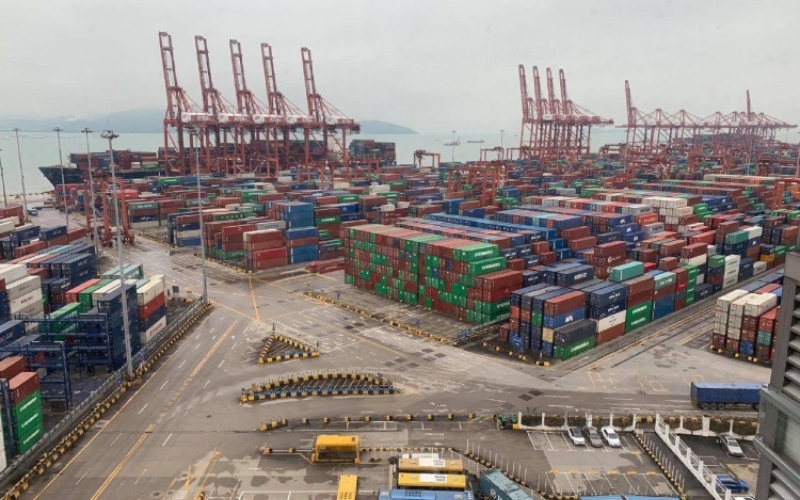
Maritime infrastructure is also undergoing significant expansion. At Sihanoukville Autonomous Port, construction of the new deep-water container terminal was approximately 65% complete as of March 2026. Once operational, the port’s handling capacity is expected to increase from approximately 1 million TEUs today to 2.63 million TEUs by 2029, with a longer-term objective of reaching 3 million TEUs by 2032. Greater capacity will enable Cambodia to accommodate larger container vessels directly, reducing dependence on transshipment through neighboring ports and improving the country’s competitiveness as an export platform.
Road infrastructure is improving in parallel. The Phnom Penh–Sihanoukville Expressway, Cambodia’s first expressway, has significantly reduced travel times between the capital and the country’s principal seaport, strengthening the movement of containers and industrial goods. Meanwhile, the Phnom Penh–Bavet Expressway, currently under development, will establish a faster transport corridor linking Cambodia with southern Vietnam, creating new opportunities for cross-border logistics, regional distribution centers, and manufacturing supply chains serving both markets.
The cumulative effects of the projects are an alteration of the logistics geography of Cambodia. As transport costs and delivery times decrease, new distribution and storage opportunities will be created. Investors who are interested in long-term opportunities will need to focus just as much on the future freight costs and flows of these logistics projects as they do on the current state of logistics in a region.
Key Logistics Segments & Opportunities
Cambodia’s expanding transport infrastructure is creating opportunities across multiple segments of the logistics value chain. While freight transportation remains the backbone of the industry, the strongest long-term growth is expected in warehousing, cross-border distribution, e-commerce fulfillment, and value-added supply chain services. Rather than competing in highly commoditized transport services, foreign investors may find greater potential in specialized facilities and integrated logistics solutions that support the country’s growing manufacturing and export sectors.
Special Economic Zones (SEZs) provide one of the most appealing opportunities for investment. As of 2026, there are 57 SEZs in Cambodia, of which 24 are operational. Cumulatively, they have attracted investments of more than US$ 1.65 Billion and have generated close to 161,000 jobs. Manufacturing firms located in the SEZs attract suppliers, customs, and freight transport companies. Because of this mix, there is high demand for services related to storage and management of inventory, as well as freight forwarding and distribution.
In this context, the Sihanoukville Special Economic Zone (SSEZ) is the largest and most successful of all of Cambodia’s Special Economic Zones. The SSEZ covers an area of more than 11 square kilometers and hosts around 170 firms from varying sectors, such as electronics, textiles, machinery, automotive parts, and consumer goods. This concentration of manufacturing firms that mainly deal with exports provides logistics firms with the unique opportunity to supply many firms with shipping services and other elements of an integrated supply chain, especially in relation to the new deep-sea port being constructed in close proximity.
Bonded warehousing and freight forwarding also present attractive opportunities. As Cambodia continues integrating into regional production networks, manufacturers increasingly require efficient storage solutions that minimise customs delays and reduce inventory costs. Bonded warehouses enable imported materials to be stored without immediate duty payments, making them particularly valuable for export-oriented industries such as apparel, electronics, and consumer goods. Industry analysts also note that investors may benefit from focusing on asset-light freight forwarding businesses supported by established depot networks around Phnom Penh and greater integration with the ASEAN Single Window customs platform.
Rapid growth in e-commerce is creating another promising market. Although domestic courier, express, and parcel (CEP) services accounted for approximately 64.05% of the market in 2025, international CEP is projected to be the fastest-growing segment through 2031, expanding at an estimated 5.02% CAGR. Government initiatives such as Go4eCAM, which promotes digital commerce among small and medium-sized enterprises, are expected to further increase demand for fulfillment centers, parcel sorting facilities, and technology-enabled delivery services.
Investors must explore new areas in addition to Cambodia’s primary logistics centers. Recently many have recognized the Kampot–Koh Kong Corridor as a logistics corridor and industrial zone of great potential. Finding alternatives to the southern corridor of trade to ease the increasing congestion of Sihanoukville would be a huge improvement. Using this corridor to ease trade congestion would be extremely beneficial to the Sihanoukville corridor of trade.
Location selection remains one of the most important strategic decisions for logistics operators.
This will help investors define their location preferences based on their customers, the mode of transport, and the supply chain.
Legal Framework, Incentives & Practical Guidance
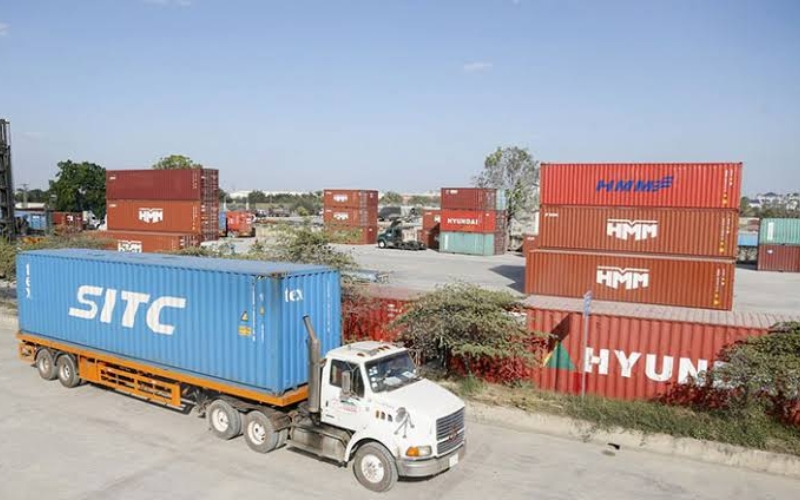
Cambodia maintains one of Southeast Asia’s more open investment regimes, supported by the Law on Investment (2021) and administered by the Council for the Development of Cambodia (CDC). Logistics-related activities, including warehousing, transport infrastructure, distribution centers, and supporting industrial services, may qualify for investment incentives under the Qualified Investment Project (QIP) framework, provided they meet the eligibility criteria established by the government.
Approved QIPs can benefit from a range of fiscal incentives designed to reduce project costs during the early stages of operation. Depending on the project category, investors may receive corporate income tax exemptions of up to nine years, together with exemptions from customs duties and value-added tax on imported machinery, construction materials, and selected production equipment. These incentives can significantly improve project viability, particularly for capital-intensive warehouse developments and integrated distribution facilities.
Establishing operations in a Special Economic Zone (SEZ) may provide additional opportunities beyond typical Qualified Investment Project (QIP) incentives. Many SEZs provide a corporate income tax exemption for as long as eight years, a subsequent reduction in corporate income tax rates, and exemption from customs duties and VAT on raw materials and equipment. SEZs also provide one-stop administrative services by consolidating customs, labor, and commercial services in one management authority. The operational benefits of SEZs can equate to the value of QIP fiscal incentives for investors who want their projects implemented quickly.
Cambodia is also working to modernize customs administration in order to facilitate more efficient supply chains. With the Cambodia National Single Window (CNSW) and the ASYHUB digital platform, customs will be less labor intensive as more agencies communicate electronically. Integrating with the ASW is expected to help cross-border trade by lessening the amount of time needed to clear customs and making the process more transparent. The remaining customs operations of the WTO Trade Facilitation Agreement will help modernize customs administration and should also be monitored by investors.
Despite these positive developments, businesses should consider several operational challenges before entering the market.
Infrastructure quality remains uneven outside Phnom Penh, Sihanoukville, and the country’s principal trade corridors. Secondary road networks, rail connectivity, and supporting logistics facilities continue to require further development, particularly in rural provinces. At the same time, neighboring countries such as Vietnam and Thailand offer more mature logistics ecosystems and larger domestic markets, creating increasing competitive pressure for regional distribution projects.
Given the pace of infrastructure development from the Funan Techo Canal, Techo International Airport, and the expansion of Sihanoukville Autonomous Port, investors need to be more careful in the locations of their projects. Once these developments are in use, the flow, demand and trade will only change traffic, commerce, and business, therefore changing the efficiency of various logistics corridors.
Investors need to be cautious before establishing operations in Cambodia to make sure they do not engage in illegal activities on the government’s negative list, and to make sure their business goals support developing in an SEZ or Standalone Development. Investors will benefit from the assistance of local lawyers and logistics advisers to help them understand the regulations, and the structure of their projects to the greatest benefit of, and to become eligible for, the incentives offered.
As Cambodia continues strengthening its position within regional supply chains, companies that combine strategic site selection, modern logistics capabilities, and a clear understanding of the country’s evolving regulatory framework will be better positioned to capture long-term growth opportunities.
Conclusion
Cambodia’s logistics industry is entering a period of structural transformation driven by expanding international trade, rising manufacturing activity, and significant investment in transport infrastructure. Major projects such as the Funan Techo Canal, Techo International Airport, and the expansion of Sihanoukville Autonomous Port are expected to strengthen regional connectivity, improve supply chain efficiency, and create new opportunities across warehousing, freight forwarding, cross-border distribution, and value-added logistics services.
Compared to the normal means of trade and transportation, there is far more that foreign investors can exploit from this market. Continuous progress in the development of Special Economic Zones (SEZs), an increasing need for bonded warehousing, rapid growth in e-commerce fulfillment, and improvements in customs will lead to more advanced logistics and supply chains to support local and global businesses.
Moreover, entering the market successfully will require more effort and planning. Investors must consider the readiness of the required infrastructure, the proximity of the project or investment to key corridors of trade, the regulations of the specific country, and the demand over time for that investment or project. In addition, the decision between investing in a Special Economic Zone (SEZ) or a private facility, the qualifications for the Qualified Investment Project (QIP) incentives, and the assessment of rapid growth and development of vital infrastructure will greatly determine the success of the project or investment.
As Cambodia continues to strengthen its position within ASEAN supply chains, the logistics sector is expected to become an increasingly important enabler of trade and industrial growth. Businesses that adopt a long-term perspective, invest in modern supply chain capabilities, and align their operations with the country’s evolving infrastructure network will be well positioned to benefit from Cambodia’s next phase of economic development.