


This guide examines the latest market outlook, highlights the sectors generating the strongest demand, and explains the regulatory framework and investment considerations for companies looking to participate in Cambodia’s expanding construction market.
Cambodia’s Construction Market Size & Growth in 2026
Cambodia’s construction sector is entering a more balanced growth phase in 2026, supported by stronger public infrastructure spending, rising foreign investment, and expanding industrial development. While residential construction has slowed compared with the pre-pandemic boom, infrastructure and manufacturing projects are becoming the primary engines of demand, creating opportunities across engineering, construction materials, and industrial facilities.
According to GlobalData and ResearchAndMarkets, the construction industry is projected to grow by 6.6% in real terms in 2026, with average annual growth expected to remain around 7.7% through 2029. This suggests that the market is shifting from cyclical property-driven expansion toward longer-term investment supported by public infrastructure and industrial development.
Investment activity is already strengthening. During the first nine months of 2025, the Council for the Development of Cambodia (CDC) approved 546 investment projects worth nearly US$8 billion, indicating a robust pipeline of developments that will translate into sustained demand for contractors, engineering firms, and building-material suppliers over the coming years.
Probably Cambodia’s Transport and Logistics System Master Plan (2023–2033) is the strongest long-term driver. It lists 174 priority infrastructure projects and is estimated to cost $36.7 billion. While other plans may focus on the short-term, this plan stretches across the entire decade, allowing investors to see and plan for future opportunities, such as transport and logistics infrastructure, as well as the construction of industrial parks and the facilities and services which support them.
The construction market in Cambodia is showing greater variety. As the main focus for long-term growth, speculative real estate is being replaced by infrastructure and industrial investment.
Key Growth Segments & Infrastructure Drivers
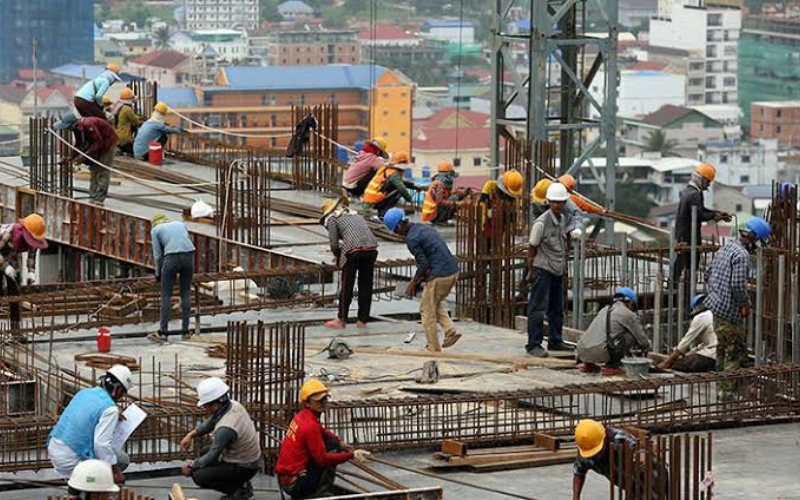
While residential development remains an important component of Cambodia’s construction market, future growth is increasingly being driven by infrastructure, industrial expansion, and public investment. Understanding which segments are attracting capital is essential for investors seeking long-term opportunities.
There is always likely to be demand for infrastructure development. The Government’s Transport and Logistics System Master Plan (2023-2033) identifies 174 priority projects worth about US$36.7 billion. The Master Plan is one of the most important documents for the country’s long term development. The projects will likely create demand for civil engineering contractors and construction materials as well as demand for heavy equipment and project management services during the decade.
Cambodia’s flagship projects are changing the infrastructure of the country. The US$1.7 billion Funan Techo Canal construction continues to create a new way for shipping in Phonm Penh to the Gulf of Thailand. Techo International Airport is being built to have separate facilities for passengers and cargo. Sihanoukville Autonomous Port is also expanding to deepen its water for larger shipping for trading. The projects will create demand for all construction products and trade, especially cement, steel, aggregates, mechanical engineering, and other supporting infrastructure.
Industrial development represents another important growth segment. As Cambodia continues attracting manufacturers seeking to diversify regional supply chains, demand for factories, warehouses, industrial parks, and supporting infrastructure is increasing. In June 2025 alone, the CDC approved 12 industrial and energy projects with a combined investment value of approximately US$155 million, highlighting the steady pipeline of factory and energy-related developments entering the market.
Residential real estate presents a more balanced outlook than in previous years. Phnom Penh’s condominium market continues to experience oversupply, with average occupancy estimated at around 58%. While this limits the potential for rapid price growth in the near term, market analysts expect gradual recovery as existing inventory is absorbed. Residential prices are projected to increase by approximately 2–5% annually during 2026–2027, suggesting that opportunities may increasingly lie in selective, well-located developments rather than large-scale speculative projects.
Commercial and mixed-use developments also continue to benefit from urbanization and rising foreign investment. As multinational companies expand operations in Cambodia, demand for Grade A office space, retail developments, serviced apartments, and business-oriented mixed-use projects is expected to strengthen, particularly in Phnom Penh and other major economic centers. Growth in logistics, tourism, and manufacturing is also supporting demand for supporting commercial facilities, creating additional opportunities for developers targeting long-term urban expansion.
Overall, the diversification of Cambodia’s construction market can expected. The growth of construction projects related to infrastructure is expected to remain strongest. However, industrial facilities, the development of renewable energy, and other selective commercial projects are predicted to create opportunities that will be more attractive for investors that seek more sustainable and long-term development, rather than short-term speculative profit related to property.
Legal Framework
Understanding Cambodia’s legal framework is essential before investing in construction or real estate projects. While the country offers an open investment environment for foreign businesses, regulations governing land ownership, property rights, and project incentives differ significantly from those in many other Southeast Asian markets. Selecting the appropriate ownership structure at the outset can help investors avoid costly legal complications later.
The most important rule is that foreign individuals and foreign-owned entities cannot own land in Cambodia under Article 44 of the Constitution and the Land Law 2001. This restriction applies regardless of the type or value of the property and should be considered the starting point for any investment strategy involving land or real estate.
Foreign ownership is permitted, however, under Cambodia’s Law on Providing Foreigners with Ownership Rights in Private Units of Co-Owned Buildings (2010). The legislation allows foreign buyers to own strata-titled condominium units outright, provided the units are located on the first floor or above. In addition, foreign ownership is limited to 70% of the total floor area within a condominium building, with the remaining 30% reserved for Cambodian ownership. For investors seeking exposure to the residential property market without acquiring land rights, condominiums remain the most straightforward legal option.
For projects involving villas, industrial sites, or commercial developments, long-term lease arrangements are generally the preferred approach. Leasehold agreements of up to 50 years, with the possibility of renewal, are commonly used by foreign investors seeking long-term control over land. Some projects are also structured through Cambodian-incorporated companies where permitted by law. However, investors should avoid nominee ownership arrangements, which continue to be marketed in some cases despite offering little legal protection. Because nominee agreements are not formally recognized under Cambodian law, they may be difficult or impossible to enforce if disputes arise.
Developers working in logistics parks, industrial facilities, energy infrastructure, and other sectors that work with investments will find added opportunities in Cambodia under the Qualified Investment Project (QIP) provisions as set out in the Investment Law 2021. For projects that the Council for the Development of Cambodia (CDC) approves, the law provides exemptions from corporate income tax for a period of 3-9 years as well as exemptions for customs duties and VAT. They will also provide incentives that will positively affect projects in manufacturing, infrastructure, renewable energy, and industrial development as opposed to speculative residential projects.
Another important due diligence consideration is land title verification. Cambodia currently recognizes both hard titles and soft titles, which offer different levels of legal security. Hard titles are registered within the national cadastral system and provide the strongest ownership protection, while soft titles are recorded only at the local authority level and may present greater legal uncertainty. Since 2024, the government has accelerated a nationwide program to convert soft titles into hard titles, aiming to improve land administration and strengthen investor confidence.
Investors must check the title status of the property at the respective land office and with the cadastral authorities of the Ministry of Land Management, Urban Planning and Construction (MLMUPC) before signing any lease agreements or property transactions. Before risk mitigation and engineering activities are carried out in the field, ownership, title type and status, and any encumbrances of the property must be verified.
Risks, Challenges & Practical Guidance for Investors
Although Cambodia’s construction market offers strong long-term growth potential, investors should carefully evaluate project-specific risks rather than relying solely on favorable macroeconomic trends.
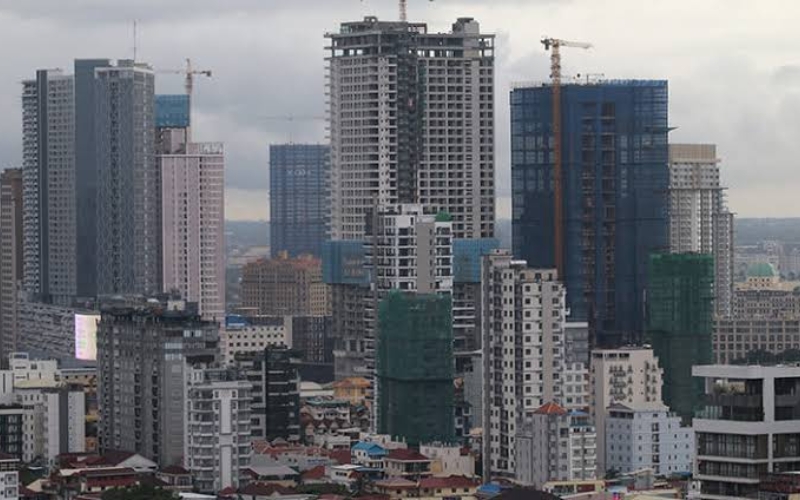
One persistent challenge is the residential property market. Phnom Penh has an oversupply of completed condominiums with an average occupancy of around 58%. Oversupply may be gradually absorbed in the short to medium term; therefore, selective investment is advised when assessing planned condominium developments. For companies with developed and established track records, the execution risks of planned developments of this nature may be lower, and speculative developments may be at higher risk. Resale liquidity of foreign-owned condominiums may also be lower than liquidity in the primary market.
Construction quality is another area requiring careful assessment. Standards can vary considerably between developers, contractors, and individual projects. Independent technical inspections, engineering assessments, and comprehensive due diligence are therefore recommended before purchasing completed properties or committing capital to off-plan developments. This is particularly important for large commercial or industrial assets where construction quality directly affects long-term operating costs and asset value.
Land title verification also deserves close attention. While hard titles provide the strongest legal protection, soft-title properties can present greater uncertainty regarding ownership history and future transferability. Investors should exercise particular caution when evaluating land in heritage zones, coastal areas, or border provinces, including locations near Angkor, Kep, and Sihanoukville, where zoning regulations and land-use restrictions may be more complex. Whenever possible, projects should be based on hard-title or legally recognized strata-title properties.
During project planning, considering financing conditions is vital. Lending to Cambodia’s construction sector was up around 5% year-on-year in 2025. However, foreign investors were facing comparatively more stringent lending conditions. As a result, companies depending on local financing need to examine the lending environment, collateral, and financing availability during the early investment stages.
From a long-term perspective, the construction sector is expected to be one of the fastest expanding industries in Cambodia, with an average annual expansion of 7.7% targeted, coupled with a long-term construction pipeline of $36.7 billion. For foreign investors, the year 2026 is a time to take advantage of a growing, though developing, market, with an increasing government focus on construction, an expanding manufacturing sector, and better infrastructure. Entering the market will be the best determinant of success, and large growth opportunities are expected, but they will be equally reliant on selecting the proper legal framework and performing due diligence to support the legal framework and especially to ascertain the rights of the properties to be developed.
Conclusion
Cambodia’s construction industry is entering a new phase of development, driven by large-scale infrastructure investment, expanding industrial activity, and supportive government policies. While residential property continues to adjust to oversupply, opportunities are becoming increasingly diversified across transport infrastructure, industrial facilities, energy projects, and commercial developments. For foreign investors, success depends on selecting the right market segment, understanding Cambodia’s legal framework for land and property ownership, and conducting thorough due diligence before committing capital. With a strong long-term project pipeline and sustained growth forecast through 2029, Cambodia offers compelling opportunities for investors seeking long-term participation in one of Southeast Asia’s emerging construction markets.