


The policy direction is clear. The New Industrial Master Plan 2030 prioritises greater economic complexity, technology adoption, net-zero transition and resilient supply chains. For an investor, however, policy alignment is only a starting point. Commercial feasibility still depends on customer access, the exact licensing category, location, utilities, talent, operating costs and the ability to execute within the Malaysian regulatory environment.
Regulations and market-entry routes in Malaysia
Company structure and local governance
A Malaysian private company may be incorporated with at least one director who ordinarily resides in Malaysia and one promoter. The first company secretary must be appointed within 30 days of incorporation and must meet Malaysian residence and professional requirements. These are incorporation requirements, not a substitute for the operating licences attached to a specific activity.
International investors commonly use a locally incorporated private company, but a branch, representative or regional structure may be relevant in narrower situations. The choice should follow the commercial objective: local contracting, hiring, importing, regulated services, manufacturing, holding intellectual property or testing demand. Tax, liability, transfer-pricing and repatriation consequences should be reviewed before the structure is selected.
Foreign ownership and sector licences

Malaysia generally allows 100% foreign equity in new manufacturing projects and in expansion or diversification projects. Services are more activity-specific: the Companies Act does not create one universal foreign-equity limit, but licences, permits, concessions and sector regulators may impose ownership, governance, capital or local-participation conditions (MIDA, n.d.-a). Financial services, transport, distributive trade, education, healthcare, telecommunications and other regulated fields therefore require an activity-level review.
Manufacturing companies with shareholders’ funds of RM2.5 million or more, or at least 75 full-time paid employees, must apply for a manufacturing licence under the Industrial Co-ordination Act. Smaller manufacturers may apply for an exemption confirmation. Product approvals, environmental permissions, local-authority approvals, customs registrations and construction or occupancy requirements may still apply independently (MIDA, n.d.-b).
Capital flows and trade access
Bank Negara Malaysia’s foreign-exchange framework allows non-residents to invest in ringgit or foreign-currency assets and to repatriate divestment proceeds, profits, dividends and other income, subject to applicable rules and banking documentation (Bank Negara Malaysia [BNM], n.d.-a). Malaysia has implemented 17 free-trade agreements, including RCEP and the CPTPP. Preferential tariffs are not automatic: the product classification, originating inputs, production process and documentary evidence must satisfy the relevant rules of origin (MITI, 2026).
Tax and investment incentives
The standard corporate income-tax rate is 24%. Lower rates apply to qualifying smaller companies on specified income bands, but eligibility is subject to paid-up capital, income and ownership conditions and may not be available to foreign-controlled groups. Malaysia has also implemented Domestic Top-up Tax and Multinational Top-up Tax for financial years beginning on or after 1 January 2025, affecting in-scope multinational groups under the 15% global minimum-tax framework (Inland Revenue Board of Malaysia [HASiL], n.d.-a, n.d.-b).
Malaysia’s New Incentive Framework changes how new incentives are assessed. For manufacturing, applications from 1 March 2026 are evaluated through an outcome-based approach linked to six objectives: economic complexity, high-value employment, domestic supply-chain linkages, industrial clusters, inclusivity and sustainability. Incentive value is therefore tied more closely to what a project delivers than to a sector label alone (MIDA, 2026b).
At the time of writing, MIDA’s public guidance still described the services-sector rollout as a Q2 2026 phase whose exact implementation date would be announced separately. Service investors should confirm the applicable framework directly at filing. In all sectors, an incentive should be modelled as a conditional improvement to project economics; not as the reason an otherwise weak project becomes viable. Approved incentives can carry investment, employment, technology, reporting or sustainability commitments that must be monitored over time.
Malaysia investment sectors at a glance

The profiles below focus on realistic entry points and the first issues to test before capital is committed.
| Sector | Potential entry points | First feasibility checks |
| Electronics & semiconductors | IC design, advanced packaging and testing, equipment, materials, precision components, automation | Customer qualification, talent, utilities, export controls, cleanroom economics, technology protection |
| Manufacturing | Machinery, medical devices, food processing, specialty chemicals, contract manufacturing, industrial services | Manufacturing licence, site, inputs, certifications, environmental approvals, full delivered cost |
| Technology | Enterprise software, AI, cybersecurity, cloud, industrial tech, data services, digital platforms | Customer acquisition, senior talent, data rules, sector licences, localisation, power and water for infrastructure |
| Renewable energy | Solar, storage, grid equipment, energy efficiency, bioenergy, corporate green-power solutions | Grid access, land, permits, offtake, charges, curtailment, bankability and equipment standards |
| Logistics | Warehousing, cold chain, fulfilment, freight forwarding, regional distribution, supply-chain technology | Mode-specific licences, ownership rules, route density, utilisation, customs, land and service levels |
| Consumer goods | Food and beverages, personal care, household products, health and wellness, e-commerce brands | Registration, labelling, halal claims, channel margins, pricing, working capital and repeat purchase |
| Financial services | Fintech, regtech, payments infrastructure, wealth technology, Islamic finance and capital-market services | BNM or SC authorisation, capital, AML/CFT, governance, data security, consumer protection |
| Halal industry | Food ingredients, cosmetics, pharmaceuticals, medical devices, logistics, traceability and certification services | Certification route, ingredients, segregation, audits, traceability, recognised foreign bodies, export-market standards |
Electronics and Semiconductors
Malaysia is already integrated into global electronics supply chains, particularly in assembly, packaging and testing, but its current strategy aims to capture more value in integrated-circuit design, advanced packaging, manufacturing equipment and selected wafer-fabrication activities. The National Semiconductor Strategy targets at least RM500 billion in investment and the training or upskilling of 60,000 engineers. In 2025, approved investments in electrical and electronics manufacturing reached RM28.5 billion (MITI, 2024; MIDA, 2026a).
Potential entry points include chip design services, design verification, advanced test solutions, automation, precision tooling, specialty materials, power electronics, sensors and supplier services for established clusters. A smaller technology provider may enter through a customer-led engineering or service model before committing to a plant.
Feasibility depends on customer qualification cycles, export-control exposure, intellectual-property safeguards, access to experienced engineers, stable electricity and water, cleanroom requirements and the utilisation needed to justify specialised equipment. Headline investment targets do not remove the risks of rapid technology change, customer concentration or global semiconductor cycles.
Manufacturing

Manufacturing remains central to Malaysia’s export and investment model. The sector expanded by 4.5% in 2025; electronics-related manufacturing grew more strongly, while food processing also recorded solid growth. Approved manufacturing investments totalled RM131.3 billion, with foreign sources representing 76.6% of that approved amount.
Opportunities extend beyond large factories. International companies can consider machinery and equipment, medical devices, industrial automation, precision engineering, food processing, specialty chemicals, packaging, maintenance, testing and contract manufacturing. Projects that add process know-how, quality systems or local supplier capability align more closely with NIMP 2030 and the New Incentive Framework.
The investment case should be built from a confirmed customer need and a full delivered-cost model. Investors need to test industrial-site availability, electricity and water, imported and local inputs, labour skills, certification, environmental obligations, customs treatment, rules of origin, yield and logistics. Low wages or an incentive cannot compensate for weak utilisation, quality failures or a site that does not match the operating process.
Technology and Digital Services
Digital activity is already material to the economy. ICT and e-commerce contributed RM451.3 billion, or 23.4% of GDP, in 2024. In 2025, approved investments in information and communication reached RM152.9 billion, driven mainly by AI, big data, data centres and cloud computing. Again, approvals describe a pipeline rather than realised capacity or revenue.
Market-entry models include an engineering centre for regional clients, enterprise software for Malaysian companies, cybersecurity, cloud management, AI applications, industrial technology, data services and digital platforms. The most credible offers solve a defined operational problem and have a clear sales route; a generic “regional tech hub” proposition is not a business model.
Investors should test local demand, procurement cycles, access to senior talent, salary pressure, data-protection obligations, cybersecurity, intellectual-property arrangements and any licence attached to the underlying industry. Data-centre projects require additional scrutiny of power availability, renewable-energy sourcing, water, network redundancy, PUE and WUE performance, land, construction timelines and committed customers. Malaysia’s amended personal-data framework also makes privacy governance, breach response and data-officer requirements more important for data-intensive businesses.
Renewable Energy
Malaysia’s energy transition creates demand for renewable generation, storage, grid equipment and energy-management services. The Malaysia Renewable Energy Roadmap set capacity targets of 31% by 2025 and 40% by 2035, while the National Energy Transition Roadmap raised the longer-term ambition to 70% renewable generation capacity by 2050.
Entry points include utility-scale and commercial solar, battery energy storage, inverters and grid equipment, industrial energy efficiency, energy-management software, bioenergy, engineering services and corporate green-power solutions. Suppliers may also serve manufacturers and data centres seeking lower-carbon electricity and stronger energy reporting.
The core question is the revenue model. Investors should verify grid connection, programme eligibility, land rights, environmental and planning approvals, equipment standards, offtake arrangements, network charges, curtailment exposure and foreign-exchange risk. Resource quality alone does not make a project bankable. Timelines and return assumptions should be stress-tested against permitting, interconnection and financing delays.
Logistics
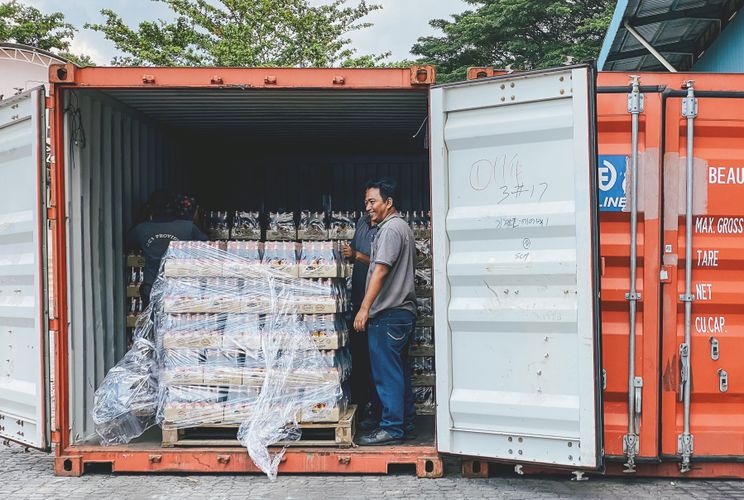
Malaysia’s ports, airports, industrial corridors and regional trade agreements support logistics demand, while manufacturing, e-commerce and cold-chain requirements create specialised service opportunities. Potential models include contract logistics, warehousing, fulfilment, cold chain, freight forwarding, customs support, regional distribution and supply-chain software.
Foreign participation depends on the exact service. MIDA’s International Integrated Logistics Services status allows 100% foreign equity for qualified integrated operators that combine warehousing, transportation and freight forwarding with distribution, supply-chain management or another value-added activity. The eligibility framework also includes scale, Malaysian employment, hub use and ICT requirements (MIDA, n.d.-c). This status should not be confused with a blanket rule for every road-transport, courier, customs, port or airport activity.
Feasibility is driven by network economics: shipment density, facility utilisation, empty returns, customer concentration, peak volumes and the cost of meeting service levels. Cold chain and regulated goods add traceability, temperature control and safety requirements. Investors should map each licence and operating asset separately before selecting a joint venture, acquisition, asset-light launch or owned-facility model.
Consumer Goods
Malaysia offers a sizeable consumption base alongside modern retail, traditional trade and e-commerce. Private consumption represented 60.5% of GDP expenditure in 2025, supporting demand for packaged food and beverages, personal care, household products, health and wellness, affordable premium goods and products adapted to multicultural consumer segments.
Entry can begin through a distributor, retail listing, marketplace test, licensing arrangement or local partner before moving to local production. The best route depends on shelf life, import duties, product claims, cold-chain needs, channel concentration and how much control the brand requires over pricing and customer data.
A national population figure does not establish product-market fit. Companies should test registration, labelling, food or product-safety rules, advertising claims, halal positioning, distributor margins, listing fees, promotions, e-commerce acquisition costs, working capital and repeat purchase. Localisation should be based on consumer evidence, not assumptions about a single “Malaysian consumer”.
Financial Services
Malaysia has a developed banking and capital-market ecosystem, with particular depth in Islamic finance. The Securities Commission’s Capital Market Masterplan 2026–2030 starts from a market size of RM4.3 trillion in 2025 and projects RM5.8–6.3 trillion by 2030. The plan emphasises market vibrancy, inclusion, sustainability and regional opportunities, while leveraging Malaysia’s bond, sukuk and Islamic-capital-market capabilities.
Potential entry points include regtech, cybersecurity, payment infrastructure, wealth technology, capital-market software, risk analytics, SME-finance platforms, Shariah-compliant products and specialist services for sukuk, takaful or Islamic asset management. The opportunity is strongest where technology improves compliance, access, cost or risk management for licensed institutions.
Banking, insurance, takaful, payment and other financial activities may require BNM approval; capital-market activities fall under SC licensing or registration. The regulatory sandbox can support testing of genuinely innovative solutions, but it is not a substitute for authorisation. Investors must plan for capital, governance, fit-and-proper standards, AML/CFT, operational resilience, outsourcing, consumer protection, data security and local management requirements.
Halal Industry
Malaysia’s halal proposition extends beyond food. Halal exports reached RM61.79 billion in 2024, up 15% year on year. The Halal Industry Master Plan 2030 covers food and beverages, cosmetics and personal care, pharmaceuticals and emerging fields such as medical devices, modest fashion and medical tourism, supported by logistics, traceability, standards and Islamic finance.
Investment opportunities include halal ingredients, processed food, cosmetics, pharmaceuticals, medical products, dedicated logistics, laboratory and compliance services, traceability software and export-oriented production. Malaysia can also be used as a product-development and certification base for selected Muslim consumer markets, provided the target market recognises the relevant certification and standards.
Certification is an operating system, not a logo added at launch. Investors need to verify the applicable JAKIM or state pathway, ingredient sources, approved suppliers, facility segregation, cleaning, storage, transport, traceability, documentation and audit readiness. Imported products may depend on recognised foreign certification bodies. Requirements should also be checked against each export market, because Malaysian certification does not automatically resolve every foreign regulatory rule.
Cross-sector investment directions in Malaysia

Several themes connect Malaysia’s sector opportunities and help explain which projects are more likely to receive policy support and build durable economics.
1. Moving up the manufacturing value chain
Malaysia is seeking more design, engineering, automation, advanced production, local supplier development and high-value services. Projects are stronger when they bring a transferable capability or solve a recognised industrial gap, rather than relying only on low operating costs.
Relevant sectors: Electronics & semiconductors • Manufacturing • Technology • Logistics
2. Digital infrastructure with resource discipline
AI, cloud and data infrastructure are attracting large approved investments, but power, water, network resilience and local ecosystem value are becoming decisive. Software and services can often enter with less capital, provided they have a defined customer and compliant data model.
Relevant sectors: Technology • Financial services • Logistics • Consumer goods
3. Energy transition and industrial competitiveness
Renewable power, storage and efficiency are not isolated themes. They increasingly affect the location and competitiveness of manufacturing, semiconductor and data-centre projects. Energy strategy should therefore be integrated into site selection and financial modelling.
Relevant sectors: Renewable energy • Manufacturing • Electronics & semiconductors • Technology
4. Regional platforms built on verified access
Malaysia can support ASEAN and wider Asia-Pacific strategies through its trade agreements, logistics assets and service capabilities. Regional ambition still needs product-level rules-of-origin analysis, customer validation and a realistic operating footprint.
Relevant sectors: Logistics • Manufacturing • Consumer goods • Halal industry • Financial services
What to know and verify before investing in Malaysia
- Evidence of demand: customer interviews, orders, tenders, usage data or credible comparable projects.
- The exact regulated activity, foreign-equity position, licence, minimum capital and local governance requirements.
- Whether a local partner is legally necessary, commercially useful or a source of governance and control risk.
- The full tax position, including transfer pricing, withholding taxes, indirect taxes, incentive conditions and global minimum tax.
- Site-level availability of land, power, water, connectivity, labour, suppliers and environmental capacity.
- The complete cost to serve the target customer, not only factory wages, rent or headline tax rates.
- Data, cybersecurity, intellectual-property, export-control, product-registration and certification obligations.
- A staged entry route; pilot, distributor, commercial office, partnership, acquisition or greenfield investment; and clear stop criteria.
The practical output of a feasibility review should be a decision, not a generic market description: proceed, redesign, pilot, partner, acquire or stop. Regulated and capital-intensive projects should include a documented licensing map, implementation schedule, sensitivity analysis and governance plan before the investor relies on an incentive approval or announced infrastructure project.
From market opportunity to execution gap in Malaysia
Malaysia offers a credible combination of industrial capability, domestic demand, digital growth, financial depth and regional access. Its current policy framework favours projects that create higher-value jobs, deepen local supply chains, develop clusters and improve sustainability. Those advantages are meaningful, but they do not guarantee customers, licences or returns.
At MoveToAsia, we help international companies move from broad market interest to a practical Malaysia investment assessment. Support can include market research, regulatory screening, competitor and partner mapping, supplier identification, stakeholder interviews, site comparison and feasibility modelling. The objective is to determine whether a specific project has a realistic route to entry, compliance and profitable execution in Malaysia.