


Is Malaysia’s technology sector worth investing in?
For many international companies, the answer is yes, provided the project is matched to Malaysia’s strongest capabilities. The country is especially credible as an ASEAN operating base, a location for regional digital infrastructure, a delivery centre for technology-enabled services and a commercialisation market for enterprise solutions.
Malaysia is less compelling when an investment thesis depends only on low-cost labour, unrestricted access to regulated markets or incentives that have not been secured before operations begin. The strongest projects combine a proven regional customer base, a clear regulatory route, an executable talent plan and realistic infrastructure requirements.
Table 1. Technology investment opportunities in Malaysia
| Subsector | Investment rationale | Practical entry model | Main feasibility test |
| Data centres and cloud | Strong regional demand, established clusters and large approved capital inflows | Greenfield facility, joint venture, infrastructure supply or managed cloud services | Power allocation, water, renewable-energy access, land and customer commitments |
| AI and enterprise software | Growing corporate demand for automation, analytics and localised solutions | Malaysian sales and delivery hub, product localisation, acquisition or channel partnership | Ability to secure technical talent and convert pilots into recurring revenue |
| Cybersecurity and global business services | Expanding compliance obligations and demand for managed operations | Regional service centre, managed security operations, specialist outsourcing | Talent retention, service quality and licensing exposure under cyber rules |
| Fintech | High digital adoption and a mature regulated financial ecosystem | Bank partnership, regulatory sandbox, licensed entity or B2B infrastructure provider | Regulatory classification, consumer-protection obligations and data governance |
| Industrial technology and IoT | Large manufacturing base creates demand for automation, monitoring and productivity tools | Systems integration, local technical team, distributor or manufacturing partnership | Customer-specific integration, after-sales capability and long sales cycles |
Why Malaysia is a strategic technology location
A large, connected domestic market
Malaysia offers a digitally active customer base. In 2025, 97.1% of households had internet access and 98.3% of individuals used the internet. Urban household access reached 99.0%, although rural access remained lower at 90.7%. This supports digital payments, online distribution, cloud-based services and consumer technology adoption.
High connectivity does not automatically guarantee commercial success. Foreign technology companies still need to localise pricing, onboarding, customer support and, where relevant, Bahasa Malaysia content. The market is sophisticated enough to adopt digital solutions, but buyers, particularly small and medium-sized enterprises, remain sensitive to implementation cost and measurable return on investment.
A platform for ASEAN operations

Malaysia’s location, multilingual business environment and established services sector make it suitable for regional functions. Kuala Lumpur and Selangor are the main centres for headquarters, software, financial technology and global business services. Johor is developing as a digital-infrastructure and cross-border investment location linked to Singapore. Penang and the northern corridor offer engineering depth and proximity to advanced manufacturing, while Cyberjaya remains an established technology and data-centre cluster.
This regional proposition is strongest when investors design the Malaysian entity to serve multiple ASEAN markets. A domestic-only software model may face scale limits, whereas a regional support, engineering, cybersecurity or product-management centre can combine Malaysian operating capacity with wider ASEAN revenue.
Sustained investment momentum
Approved digital investment reached RM163.6 billion (US$40,5 billion), up from RM46.8 billion (US$11,6 billion) in 2023. However, data centres and cloud infrastructure represented 76.8% of the total. The concentration is important: Malaysia’s digital investment boom is real, but it is not evenly distributed across the technology ecosystem.
The first half of 2025 illustrates the difference between capital-intensive and talent-intensive models. Data centre and cloud projects accounted for RM30.95 billion (US$7,7 billion) of approved investment and an estimated 1,440 knowledge-worker positions. AI projects attracted RM3.29 billion (US$0,814 billion) but were expected to create 6,920 jobs, while global business services attracted RM4.99 billion (US$1,2 billion) and were expected to create 5,632 jobs. For investors, the relevant question is not only how much capital enters a subsector, but what capabilities, suppliers and customers that capital creates.
Where the strongest opportunities are
Data centres, cloud and the infrastructure supply chain
Malaysia has become a major destination for regional data infrastructure. Between 2021 and mid-2025, MIDA approved RM144.4 billion (US$35,7 billion) in data-centre and cloud-computing investment. The opportunity extends beyond facility ownership. It includes cooling systems, electrical equipment, energy management, cybersecurity, connectivity, maintenance, engineering services and specialist construction.
The investment case is strongest for operators with contracted demand, credible power planning and a sustainability strategy. Malaysia’s sustainable data-centre guidelines require attention to power usage effectiveness, carbon usage effectiveness and water usage effectiveness. They recommend avoiding water-stressed locations and set a recommended design water usage effectiveness of 2.2 cubic metres per megawatt-hour or lower.
This means site selection cannot be separated from utility due diligence. Investors should verify grid-connection timing, backup-power design, renewable-energy procurement, water availability and expansion capacity before committing to land. The availability of incentives does not compensate for an unbankable infrastructure plan.
AI, software and enterprise digitalisation
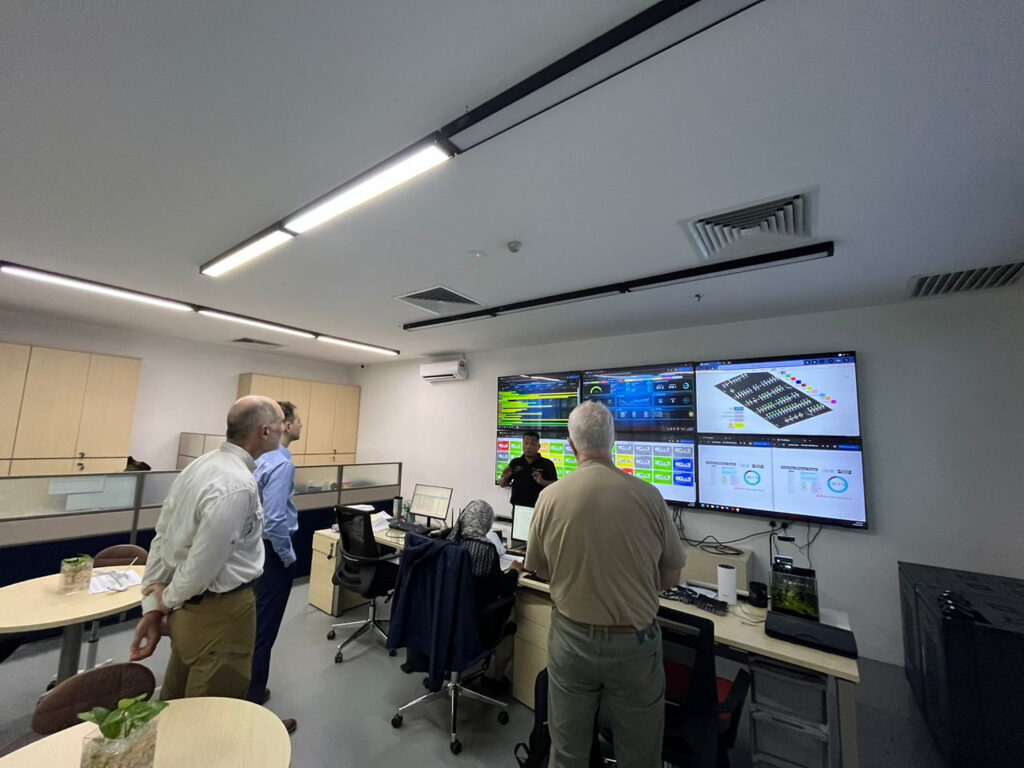
AI and enterprise software offer a less capital-intensive route into Malaysia’s technology market. Demand is developing across banking, manufacturing, logistics, healthcare, retail and government-linked organisations. The most investable products are usually those that solve a defined operating problem: predictive maintenance, fraud detection, customer-service automation, supply-chain visibility, document processing, cybersecurity or sector-specific analytics.
Malaysia’s National Guidelines on AI Governance and Ethics promote responsible adoption through principles including fairness, reliability and safety, privacy and security, inclusiveness, transparency and accountability. The guidelines are not a substitute for sector regulation, but they indicate the direction of procurement and governance expectations.
Foreign AI companies should treat local data access, model governance and implementation capacity as commercial issues, not only compliance matters. A local delivery team and sector partner can be more valuable than a large general sales operation. Investors also need to decide where intellectual property will be developed, owned and commercialised, because this affects tax-incentive eligibility and transfer-pricing design.
Cybersecurity and managed technology services
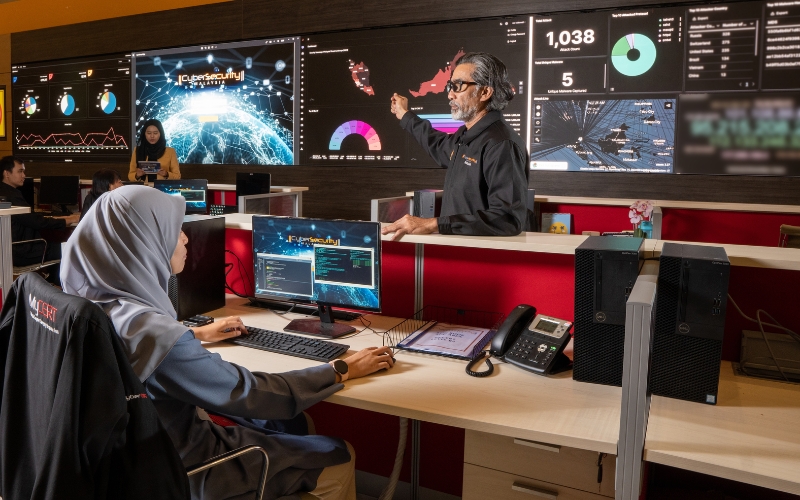
Cybersecurity demand is supported by cloud migration, financial digitalisation and new legal obligations. The Cyber Security Act, establishes duties for national critical information infrastructure entities and regulates specified cybersecurity service providers through licensing.
This creates opportunities in managed detection and response, security operations, incident response, compliance assessments, identity management and cloud security. It also raises the market-entry threshold. A provider must determine whether its services fall within a licensed category and whether customers operate in critical sectors.
Malaysia is also suitable for global business services, including technical support, software operations, finance technology, analytics and regional customer experience. The opportunity is strongest for higher-value work rather than basic labour arbitrage. Investors should benchmark salary inflation, language requirements, shift coverage and attrition before selecting a delivery model.
Fintech and digital financial infrastructure
Malaysia has a mature banking system, widespread digital usage and an active regulatory framework. By the end of 2025, all five licensed digital banks had begun operations and collectively served 2.4 million customers. This expands partnership opportunities in payments, identity, fraud prevention, credit analytics, embedded finance and infrastructure supplied to regulated institutions.
Fintech remains a controlled market. Bank Negara Malaysia’s regulatory sandbox can support testing, but it does not remove the need to identify the applicable licence, prudential requirements or consumer-protection obligations. Some business models may also fall under the Securities Commission rather than BNM. Foreign investors should obtain regulatory classification before finalising their product, partnership and capital structure.
Industrial technology and manufacturing digitalisation
Malaysia’s industrial base creates demand for robotics, industrial IoT, machine vision, manufacturing execution systems, energy optimisation and digital supply-chain tools. This opportunity is especially relevant around Penang, Kedah, Selangor and Johor, where foreign manufacturers and local suppliers require productivity improvements and traceability.
Market entry is usually relationship-driven. Customers often need integration with existing equipment, local technical support and evidence of uptime or cost savings. A distributor-only model may be insufficient for complex industrial solutions. Foreign companies should identify whether they need an engineering team, demonstration facility or local systems integrator before scaling sales.
Choosing the right location
Table 2. Main technology locations for foreign investors
| Location | Best suited to | Strategic advantage | Key diligence point |
| Kuala Lumpur and Selangor | Regional headquarters, software, fintech, AI, GBS and enterprise sales | Largest corporate customer base and deepest professional-services ecosystem | Talent competition, office costs and commuting patterns |
| Cyberjaya | Data centres, cloud operations, shared services and government-facing technology | Established digital infrastructure and technology-company base | Customer proximity and specialist talent availability |
| Johor | Hyperscale data centres, infrastructure suppliers and Singapore-linked operations | Land availability and cross-border economic integration | Power, water, project sequencing and dependence on infrastructure build-out |
| Penang and Kedah | Industrial technology, embedded software, engineering and automation | Proximity to E&E and advanced-manufacturing clusters | Competition for engineers and need for sector-specific technical capability |
| Sarawak and Sabah | Selected data, connectivity, energy-linked and regional digital projects | Potential access to distinct energy and local-market opportunities | Smaller talent pools, logistics and state-level requirements |
The correct location depends on the operating model. A fintech sales hub and a hyperscale data centre should not use the same site-selection criteria. Investors should score locations against customers, talent, utilities, regulatory interfaces, suppliers and future expansion rather than relying on headline rental or land costs.
Incentives, ownership and regulation
Malaysia permits 100% foreign equity in manufacturing projects and selected services, but regulated activities may carry licence-specific conditions. A standard technology company can often be incorporated as a wholly foreign-owned Malaysian subsidiary; this does not mean every product can be offered without sector approval.
Table 3. Key incentives and regulatory requirements
| Area | Framework | Investor implication |
| Malaysia Digital tax incentive | Eligible new MD investments may choose a 0% rate on qualifying IP income and a 5% or 10% rate on qualifying non-IP income for up to 10 years, or an investment tax allowance of 60% or 100% for up to five years | Apply before commencing the qualifying activity and confirm substance, IP and employment conditions |
| Digital infrastructure incentives | The DESAC scheme covers qualifying data-centre, data-hosting, cloud and submarine-cable activities, using investment tax allowances or special tax rates depending on the project tier | Incentive modelling should follow site, utility and sustainability feasibility, not precede it |
| Personal data | The Personal Data Protection Act 2010 was amended in 2024, with new compliance mechanisms including data-breach notification and data-protection-officer requirements | Map data flows, vendors, cross-border transfers, breach response and DPO obligations before launch |
| Cybersecurity | The Cyber Security Act 2024 regulates national critical information infrastructure and licenses specified cybersecurity services | Determine whether the company, service or customer creates direct obligations |
| Financial technology | BNM and the Securities Commission regulate activities according to product function; BNM also operates a regulatory sandbox | Secure regulatory classification before committing to a market-entry structure |
| Telecommunications and connectivity | Network, facilities and application services may require Malaysian Communications and Multimedia Commission licences | Review licence scope, technical obligations and any equity conditions at the project level |
Incentives should be treated as part of the investment structure, not as the investment thesis. Applications are outcome-based and may depend on capital expenditure, local employment, technology use, business substance and timing. Starting revenue-generating activity too early can affect eligibility. Tax, legal and operational workstreams therefore need to be coordinated from the beginning.
Principal risks for foreign technology investors
The first risk is concentration. Data-centre investment has strengthened the ecosystem, but it can also distort market perceptions. Capital inflow does not necessarily mean deep local demand for every software category or an abundant supply of specialised talent.
The second risk is infrastructure execution. Data centres and compute-intensive projects depend on power, water, fibre, land approvals and equipment lead times. Sustainability standards and customer decarbonisation commitments are becoming commercial requirements.
The third risk is talent. Malaysia offers strong engineering and services capabilities, but demand for AI, cloud, cybersecurity and data-centre skills is rising quickly. Investors should model recruitment time, compensation, retention and training rather than assuming immediate access to a low-cost workforce.
The fourth risk is regulatory overlap. A technology product may simultaneously involve personal data, cybersecurity, telecommunications, financial regulation, consumer protection and sector-specific rules. Classification errors can delay launch or require a redesign of the business model.
Finally, investors should distinguish approved investment from realised operations. Large announcements may take several years to deploy. Supplier and customer forecasts should be based on verified project schedules, procurement plans and operational capacity, not only approval values.
A practical market-entry strategy

A disciplined entry process should begin with customer and regulatory validation. Investors should identify named customer segments, purchasing criteria, expected contract values and implementation barriers. At the same time, they should determine whether the product requires licensing, local hosting, data-transfer controls or a regulated partner.
The next step is to select an entry model. A representative sales function may suit enterprise software; a Malaysian subsidiary may be necessary for hiring, contracting and incentive applications; a joint venture can help in regulated or infrastructure-heavy activities; and an acquisition may provide customers, licences and technical talent more quickly than organic entry.
Site selection and talent planning should follow the operating model. Incentive applications, tax structure, expatriate positions, employment policies and data governance should then be aligned before commercial launch. For most new entrants, a staged approach, pilot customers, a small delivery team and defined expansion milestones, reduces execution risk.
How MTA supports technology investment in Malaysia
Malaysia offers a credible platform for technology investment, but the opportunity is not uniform. Digital infrastructure requires utility and sustainability discipline. Software and AI require sector access and local implementation. Fintech and cybersecurity require early regulatory classification. Across all models, investors need evidence that the location, talent base, incentives and customer strategy work together.
MoveToAsia supports foreign technology companies with market sizing, competitor analysis, customer validation, partner and acquisition searches, regulatory mapping, location assessment, incentive screening and end-to-end market-entry feasibility. The objective is to convert Malaysia’s strong technology momentum into an investment plan that is commercially defensible, compliant and scalable across Southeast Asia.
Conclusion
Malaysia offers a strong platform for technology investment, supported by digital adoption, growing infrastructure and regional connectivity. However, opportunities vary across subsectors, and successful market entry requires more than simply choosing Malaysia as a location. Investors should align their business model with local demand, regulatory requirements, talent availability, infrastructure and incentive conditions. A structured, staged approach can help reduce execution risks while validating commercial potential. With the right preparation and local expertise, Malaysia can serve not only as a domestic technology market but also as a strategic base for expanding across Southeast Asia.