


Investor takeaway: Malaysia is investable where a project secures the correct procurement route, grid capacity and bankable demand. Solar is the volume opportunity; storage, grid services and corporate energy solutions are the higher-value execution themes.
Is renewable energy in Malaysia worth investing in?
For most international investors, the answer is yes, provided that the entry model is aligned with the market’s regulated structure. Malaysia combines a clear long-term capacity target with substantial corporate demand and a growing pipeline of grid and storage investment. The country recorded RM20.8 billion (US$5,1 billion) in approved green investments across 943 projects, with renewable energy among the leading segments.
The market is also shifting from a single-buyer model towards more varied corporate procurement. Competitive Large Scale Solar (LSS) tenders remain an important route for utility-scale development, while the Corporate Renewable Energy Supply Scheme (CRESS) enables eligible corporate consumers in Peninsular Malaysia to procure electricity directly from renewable-energy developers through open access to the grid. Solar ATAP, launched in January 2026 after the Net Energy Metering programme ended, creates a new framework for rooftop solar with self-consumption and export offsets.
However, installed-capacity targets should not be confused with guaranteed project returns. Solar generation is variable, grid capacity is location-specific, and policy programmes use different commercial and technical rules. Returns will depend on the quality of the offtaker, connection studies, land readiness, financing terms and the ability to manage curtailment or imbalance risk.
Table 1. Malaysia renewable-energy investment signals
| Market signal | Latest evidence | Investor interpretation |
| Renewable capacity | More than 13.3 GW installed by 2025; solar was the fastest-growing source. | The market has scale, but capacity share does not guarantee generation or returns. |
| National target | 40% renewable capacity by 2035 and 70% by 2050. | Long-term demand is credible; projects still need a permitted route and grid capacity. |
| Green investment | RM20.8 billion (US$5,1 billion) of approved green investments across 943 projects. | Capital is entering the sector, increasing both ecosystem depth and competition. |
| Grid and storage | RM43 billion (US$10,6 billion) grid programme for 2025–2027; 100 MW/400 MWh Santong BESS commissioned in 2026. | Storage, grid services and digital energy are becoming investable adjacent segments. |
Why Malaysia is a strategic renewable-energy market
Industrial demand creates a commercial pull for green power
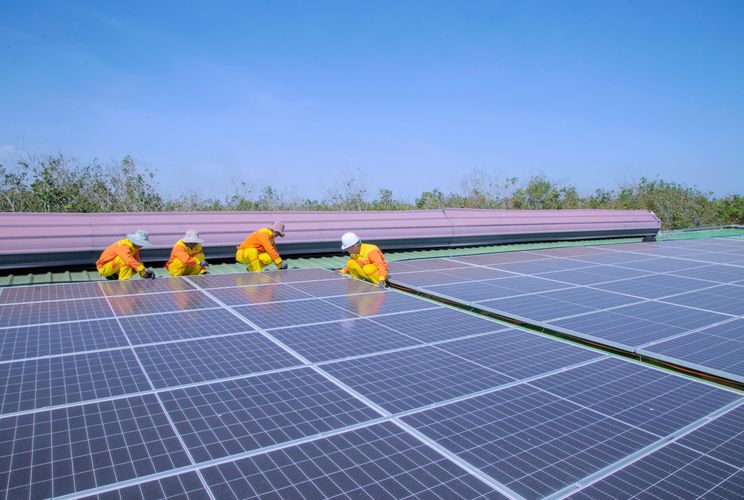
Malaysia is a major manufacturing and digital-infrastructure location in Southeast Asia. Electronics, electrical equipment, data centres, logistics parks and multinational supply chains increasingly require traceable renewable electricity to meet internal decarbonisation targets and customer expectations. This creates demand for long-term power-purchase agreements, renewable-energy certificates, rooftop systems and energy-management services.
Corporate demand is particularly relevant because it can improve bankability. A project anchored by a creditworthy industrial consumer is easier to finance than one based only on merchant exposure. CRESS is designed around this logic, although the regulatory framework remains detailed and the developer must manage several contracts, grid agreements and settlement interfaces.
Policy direction is clear, but implementation is programme-specific
The National Energy Transition Roadmap sets a long-term direction around renewable capacity, energy efficiency, hydrogen, bioenergy, green mobility and grid development. The direction is credible because implementation is increasingly visible through LSS tenders, CRESS, rooftop programmes and storage projects. Yet each route has its own eligibility conditions, ownership rules, tariff treatment and approval sequence.
Investors should therefore treat the national target as a demand signal, not as a substitute for project due diligence. The relevant question is not whether Malaysia wants more renewable energy; it is whether a specific project can secure land, grid capacity, a permitted commercial structure and a risk-adjusted tariff.
Grid investment and storage are becoming investable themes
Grid capacity is one of the sector’s principal constraints and one of its strongest adjacent opportunities. Tenaga Nasional Berhad has committed RM43 billion (US$10,6 billion) between 2025 and 2027 to strengthen and modernise the grid. Malaysia also commissioned the 100 MW/400 MWh Santong battery energy storage system in 2026, an early utility-scale project intended to support renewable integration and system resilience.
This creates opportunities beyond generation: battery systems, power electronics, forecasting, energy-management software, grid studies, engineering services and long-term maintenance. These segments can offer attractive entry points for international companies that have strong technical capabilities but do not want to assume full development and offtake risk.
Where the strongest investment opportunities are in Malaysia
Malaysia offers several entry routes, but they are not interchangeable. The table below compares the principal models before the detailed analysis.
Table 2. Comparison of renewable-energy entry routes
| Entry route | Best suited to | Core commercial advantage | Main constraint |
| LSS competitive tender | Utility-scale solar developers | Tender-backed route to large projects | Bid timing, delivery security, land and grid competition |
| CRESS | Developers serving large industrial or digital consumers | Direct corporate procurement through the grid | 30 MW minimum, 51% local ownership, SAC and firming requirements |
| Solar ATAP / rooftop PPA | C&I sites and portfolio investors | Customer savings and lower development scale | 1 MW account cap, site quality and localisation rules |
| SELCO | High daytime-load facilities | Simple self-consumption economics without export dependence | Value limited by on-site load and roof/land availability |
| Bioenergy / small hydro | Feedstock owners and resource-led developers | Dispatchable or resource-specific generation | Feedstock, hydrology, civil works and environmental risk |
Utility-scale solar and corporate power procurement
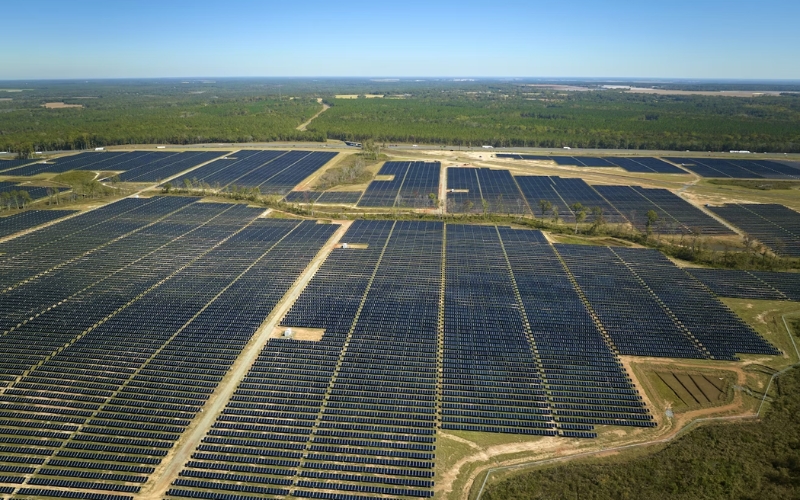
Solar is the most scalable near-term technology in Peninsular Malaysia. The LSS programme uses competitive bidding for developers to construct and operate large solar plants, which can support predictable revenue when a project wins a tender and meets its delivery obligations. The latest Energy Commission platform includes LSS bidding cycles 5, 5+ and 6, confirming that competitive procurement remains active.
CRESS opens a different route. It allows a renewable-energy developer to supply one or more eligible high- or medium-voltage corporate consumers through the grid. The current rules require the green energy plant to be at least 30 MW and the renewable-energy developer to have at least 51% local ownership. Developers must also register within the relevant market arrangements, complete power-system studies and execute multiple contracts with consumers, the grid owner, the utility and the Single Buyer.
CRESS can create bankable bilateral demand, but investors must model its system-access charge and output rules carefully. A developer that cannot meet firm-output requirements may need storage equal to at least 50% of plant capacity for four consecutive hours or face a higher system-access charge. Energy produced above consumer demand because of normal generation-demand imbalance is generally not compensated. These rules make portfolio design, storage sizing and consumer load matching central to project economics.
Commercial and industrial rooftop solar
Rooftop solar remains one of the most accessible opportunities because it uses existing sites and directly addresses electricity costs and corporate sustainability targets. Solar ATAP permits non-domestic consumers in Peninsular Malaysia to install capacity up to 100% of maximum demand, subject to technical assessment, with an overall cap of 1 MW per account. The programme allows excess solar electricity to be exported for an energy offset and has a ten-year contract period, after which the system operates on a self-consumption basis.
The commercial models include outright purchase, solar leasing and power-purchase agreements. For foreign solar investors, the route is possible but local establishment and localisation requirements are material. Under the 2026 rules for registered solar PV investors, a foreign participant must provide projects above 250 kWac, maintain at least RM10 million (US$2,5 million) in paid-up capital, employ at least 80% local workers and use a fully local engineering, procurement and construction team.
This favours joint ventures, platform acquisitions and partnerships with established Malaysian EPC contractors. The strongest portfolios will focus on creditworthy customers with suitable roof condition, daytime load, clear building ownership and limited relocation risk.
Battery storage, digital energy and grid services in Malaysia
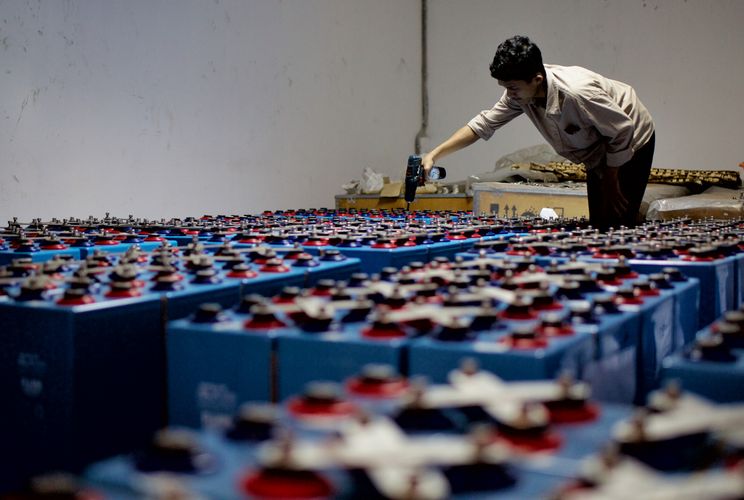
Battery storage is moving from a future requirement to a commercial necessity. It can firm solar output, reduce peak demand, improve power quality and support critical industrial or digital loads. The opportunity spans utility-scale systems, behind-the-meter storage, energy-management platforms, forecasting and maintenance.
The challenge is revenue stacking. A battery should not be financed on a generic assumption that grid services will emerge. Investors need a clearly permitted revenue model tied to a CRESS project, a customer’s demand profile, backup requirements or a utility procurement. Technology warranties, thermal conditions, fire safety, replacement reserves and end-of-life obligations should be included in the financial model.
Bioenergy, biogas and small hydropower
Malaysia’s palm-oil, agricultural and municipal-waste base creates opportunities for biomass, biogas and waste-to-energy projects. These technologies can provide dispatchable generation and solve a waste-management problem at the same time. Small hydropower can also be viable in suitable locations, especially where resource quality and grid proximity are proven.
These projects are more operationally complex than solar. Feedstock quantity, moisture, transport cost, competing uses and long-term supply contracts determine whether a biomass or biogas plant is bankable. Small hydro requires hydrology, land access, civil works and environmental assessment. Investors should favour projects with captive feedstock or a tightly controlled supply radius rather than relying on broad national resource estimates.
Regulations, ownership and incentives in Malaysia foreign investors should know
The regulatory map differs by geography and business model
Malaysia does not operate as one uniform electricity market. CRESS, Solar ATAP and the Energy Commission’s LSS framework cited in this guide apply to Peninsular Malaysia. Sabah and Sarawak have distinct utility and state-level arrangements, so a model that works with Tenaga Nasional Berhad cannot be transferred automatically to East Malaysia.
In Peninsular Malaysia, the principal approval stack can include an Energy Commission generation licence, grid or connection studies, programme registration, land rights and conversion, planning approval, local-authority permits and environmental approvals. The exact sequence depends on technology, capacity, connection voltage and location. Investors should map the critical path before land acquisition or equipment orders, because grid and land timelines can run in parallel but are not interchangeable.
Local participation is commercially important
Foreign ownership is not treated identically across every renewable-energy route. CRESS requires at least 51% local ownership at the renewable-energy developer level. Solar ATAP permits foreign registered investors but imposes local incorporation, capital, employment and EPC conditions. Tender programmes may also set bidder-specific technical, financial and local-participation requirements.
A local partner should therefore contribute more than nominee ownership. The most valuable partners bring land access, permitting capacity, utility relationships, EPC delivery, operations capability and a credible compliance record. Governance rights, reserved matters, procurement controls and exit provisions should be agreed before the project enters a binding bid or power-purchase process.
Green tax incentives can improve returns—but timing matters
Malaysia’s green technology incentives have been extended for qualifying applications through 31 December 2026. For renewable-energy projects undertaken for business purposes, the Green Investment Tax Allowance provides an allowance equal to 100% of qualifying capital expenditure incurred over five years, which can be set off against 70% of statutory income. Qualifying solar-leasing activities may receive a Green Income Tax Exemption of 70% of statutory income for up to ten years, depending on capacity and eligibility.
The critical point is procedural: eligible companies must apply before incurring qualifying capital expenditure. Investors should not include the incentive in the base-case return until eligibility, application timing, project scope and tax capacity have been reviewed. An incentive has limited value if the project company cannot use the allowance or if capital expenditure is committed too early.
Key risks and how investors should manage them in Malaysia

Grid and curtailment risk. Connection capacity is site-specific, and renewable output may be constrained by system conditions. Power-system studies and realistic loss, curtailment and storage assumptions should be completed before the investment case is finalised.
Policy and tariff risk. Programme rules, system-access charges, export-credit mechanisms and tariff structures can change between regulatory periods. Under CRESS, the system-access charge is fixed for a three-year regulatory period but may vary by up to 15% when a new period begins. Contracts should allocate change-in-law and tariff risk explicitly.
Offtake and settlement risk. A long-term agreement is only as strong as the customer’s credit profile, load stability and payment obligations. Investors should test termination payments, replacement-customer rights, security packages and the treatment of excess or shortfall energy.
Land and permitting risk. Utility-scale solar needs suitable land, clear title, acceptable zoning, access roads and a technically viable grid connection. Early land commitments without grid evidence can create stranded development costs.
Execution and supply-chain risk. Malaysia has a capable solar ecosystem, but equipment quality, warranty enforceability, contractor capacity and traceability remain important. Procurement should address module degradation, inverter replacement, battery augmentation, extreme weather and end-of-life disposal.
Technology-selection risk. Solar has the clearest near-term route, while wind, biomass, biogas and small hydro are more resource- or site-specific. Investors should avoid importing a regional strategy without proving the local resource and regulatory route.
A practical market-entry strategy in Malaysia
- Start with the revenue route. Decide whether the project will compete in an LSS tender, serve a corporate customer through CRESS, supply an on-site customer through Solar ATAP or SELCO, or operate under another state or utility framework.
- Validate the customer and the grid together. For corporate projects, match the generation profile to actual load and test the customer’s creditworthiness. For utility-scale projects, obtain preliminary connection evidence before committing to land and development expenditure.
- Select the local operating model. Compare a joint venture, acquisition, minority partnership, EPC alliance or service-led entry. Ownership percentages matter, but delivery capability and governance matter more.
- Build a fully loaded financial model. Include system-access charges, grid studies, land conversion, development security, degradation, curtailment, storage augmentation, insurance, taxes and decommissioning—not only equipment cost and headline tariff.
- Stage capital commitment. A development partnership, pilot rooftop portfolio or technical-services contract can generate local evidence before a large greenfield commitment. This reduces the risk of learning about permitting, contractor performance or customer behaviour after capital has become irreversible.
How MTA supports renewable-energy market entry in Malaysia
MoveToAsia supports international investors and energy companies with market-entry strategy, project and partner screening, customer validation, regulatory mapping, site and supplier assessment, and investment feasibility across Southeast Asia.
For Malaysia, MTA can help compare entry routes, identify credible developers or EPC partners, assess corporate offtakers, map licensing and incentive requirements, and build a risk-adjusted business case. The objective is not to confirm that renewable energy is attractive in general. It is to determine which technology, location, customer and ownership structure can produce a bankable project for the investor.
Conclusion
Malaysia offers one of Southeast Asia’s more structured renewable-energy investment landscapes. Clear capacity targets, expanding corporate demand, active solar procurement, new open-access mechanisms and major grid investment create a credible medium-term opportunity. Solar will remain the principal growth engine, while storage, digital energy, grid services and selected bioenergy projects provide adjacent value pools.
The market is not frictionless. Grid access, programme design, local ownership, permitting and offtake quality can materially change returns. Investors that enter with a defined revenue route, a capable local partner and a fully loaded risk model will be better positioned than those relying on national targets alone.
Companies evaluating renewable-energy investment in Malaysia can contact MoveToAsia for market validation, partner identification and feasibility support before committing capital or entering binding negotiations.