


This guide assesses the investment case, priority niches, regulations, incentives and the steps required for a bankable entry.
Malaysia is a credible logistics investment destination, but the attractive thesis is value-added integration rather than undifferentiated capacity. Investors should prioritise specialist handling, regional control functions, smart warehousing and customer-backed facilities.
Is Malaysia’s logistics sector worth investing in ?
The sector merits serious consideration. Malaysia combines a large trade base, export-oriented manufacturing, established ports and regional operating capability. In the World Bank’s latest comparable survey-based Logistics Performance Index, it ranked 26th with a score of 3.6. International shipments ranked eighth, while customs and infrastructure ranked 31st and 30th.
The profile suggests that international connectivity is an advantage, while customs coordination, data integration and inland execution still offer room for improvement. Investors can participate both in trade volume and in the efficiency gap around it.
The investment pipeline indicates a mature ecosystem. MIDA had approved 111 Integrated Logistics Services projects worth RM12.85 billion (US$3,2 billion) and granted International Integrated Logistics Services status to 301 companies. A new entrant therefore needs sector expertise, regional customers, proprietary technology or a differentiated cost position.
| Indicator | Latest evidence | Investor implication |
| Sector momentum | Transportation and storage grew 9.0% in 2025. | Growth is strong, but demand must be tested by segment and corridor. |
| Trade base | Total merchandise trade reached RM3.061 trillion (US$758,3 billion) in 2025, up 6.3%. | Scale supports forwarding, distribution and control-tower services. |
| Port Klang | 15.14 million TEUs in 2025, up about 3.4%. | Supports port-centric warehousing and Klang Valley distribution. |
| Tanjung Pelepas | 14.02 million TEUs in 2025, versus 12.3 million in 2024. | Supports transshipment and Singapore-linked supply chains. |
| Logistics performance | LPI rank 26; overall score 3.6. | Connectivity is strong; inland execution remains an improvement area. |
| Approved ecosystem | 111 ILS projects worth RM12.85 billion (US$3,2 billion); 301 IILS-status companies. | Market validation is clear; differentiation and utilisation are essential. |
Why Malaysia has strategic advantages for logistics investors
A maritime platform between regional production and global shipping
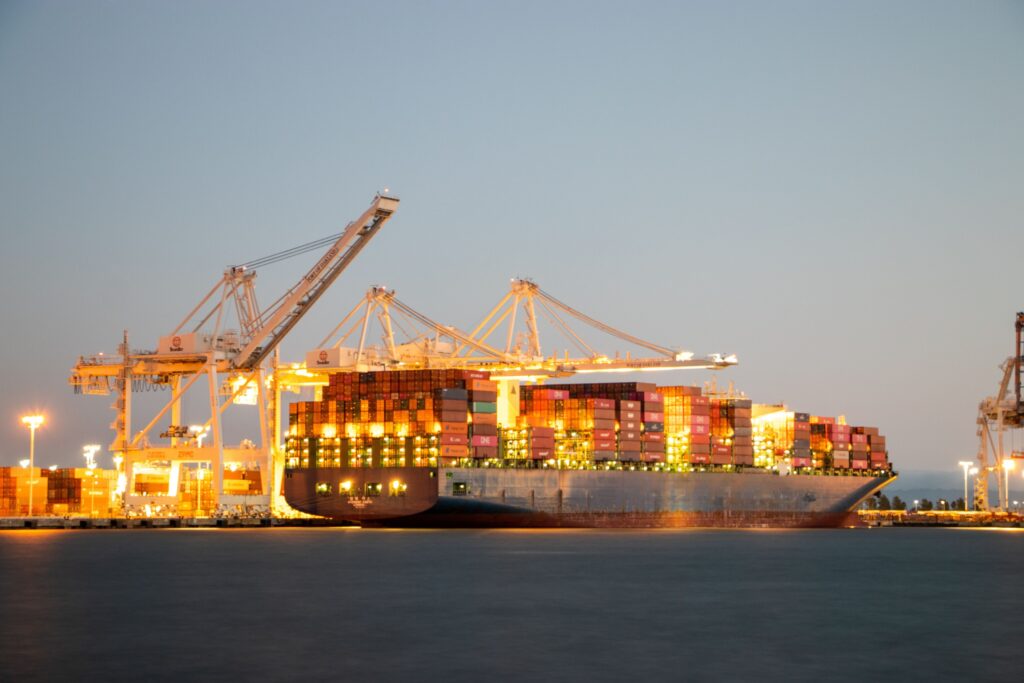
Malaysia sits on the Strait of Malacca and links Southeast Asian production with east-west shipping routes. Port Klang serves the country’s largest consumer and industrial region, while Tanjung Pelepas anchors a southern cluster close to Singapore. Together, they support separate roles for national distribution, transshipment and regional consolidation.
Cargo diversity is another advantage. Electrical and electronics, medical devices, chemicals, machinery, agrifood and consumer products support specialist warehouses, temperature control, dangerous-goods capability and manufacturing logistics.
Established manufacturing clusters create repeat B2B demand
Industrial clusters around Penang and Kulim, the Klang Valley and Johor create repeat B2B demand for inbound components, controlled storage, production sequencing, reverse logistics and export documentation.
These clusters support an anchor-customer model. A facility designed around committed manufacturer, distributor or retailer volumes is more defensible than speculative capacity. Diligence should focus on whether named customers will outsource enough functions for long enough to support the investment.
A policy direction favouring smarter and higher-value logistics
Malaysia’s policy framework increasingly favours automated, digital and integrated services. The Smart Logistics Complex incentive targets large warehouses using Industry 4.0 and green technologies, while the International Integrated Logistics Services framework supports end-to-end regional or global solutions.
Where the strongest investment opportunities are in Malaysia
Smart warehousing and e-fulfilment
Automated Grade-A warehousing is a clear investment theme. Customers need inventory accuracy, faster picking, labour productivity, energy management and real-time visibility. Solutions include warehouse and transport systems, robotics, automated storage, sortation and Internet-of-Things monitoring.
The risk is overbuilding. Automation improves unit economics only when throughput and service-level agreements justify the capital. Investors should model utilisation, order velocity, peaks and legacy-system integration. Build-to-suit or pre-committed multi-client facilities are more credible than speculative smart warehouses.
Regional distribution and contract logistics
Malaysia can serve as a regional distribution base for companies seeking proximity to Singapore without placing all inventory and operating costs there. Opportunities include regional distribution centres, spare-parts hubs, consolidation, postponement, customs coordination and control towers.
The strongest clients are manufacturers and brands with multi-country flows or complex inventory. Investors should verify that Malaysia improves landed cost and resilience compared with Singapore, Thailand or Vietnam, modelling customs, re-export, inventory ownership and lead-time variability at product level.
Cold chain and regulated-product logistics
Food, pharmaceuticals, healthcare products and selected chemicals create demand for temperature control, traceability and qualified handling. These services can earn higher margins, but refrigeration failure, weak validation or poor last-mile hand-off can undermine the proposition.
Investors should target a defined product category and design around customer standards. Pharmaceutical and frozen-food facilities require different validation, backup power and documentation. Customers should be secured before the technical specification is finalised.
Port-centric and cross-border logistics in Johor
Johor is becoming a distinct corridor. Tanjung Pelepas recorded strong container growth in 2025, while the Johor-Singapore Special Economic Zone includes smart logistics in the Tanjung Pelepas flagship area. The location can support transshipment, Singapore-facing distribution and manufacturing supply chains.
Execution still matters. Cross-border congestion, land, workforce competition and the division of functions between Malaysia and Singapore can change project economics. Investors should map checkpoint and port flows, test labour, and decide which activities belong on each side of the border.
Digital freight, visibility and control-tower services
Technology-enabled logistics can offer a lower-asset entry route. Freight marketplaces, transport management, route optimisation, customs-document workflows, yard management, predictive maintenance, carbon reporting and supply-chain visibility can address fragmentation across carriers, warehouses and customers.
Success depends less on features than on integration and adoption. Investors need local implementation, data governance, cybersecurity and a practical plan for onboarding subcontractors. Platforms tied to an existing customer network or operator have a stronger route to scale.
| Opportunity | Suitable entry model | Critical proof before investment |
| Smart warehouse / fulfilment | Build-to-suit, developer joint venture or automation integration. | Anchor volumes, integration and downside utilisation. |
| Regional distribution | IILS platform, acquisition or multi-client 3PL. | Landed cost, customs design and contracted multi-country demand. |
| Cold chain / regulated goods | Specialist facility with long-term contracts. | Standards, backup power, validation and product approvals. |
| Johor / JS-SEZ logistics | Smart complex, port-centric warehouse or Singapore-linked hub. | Eligibility, cross-border flows, labour and land economics. |
| Digital logistics services | Asset-light software, control tower or operator partnership. | Data access, integration, adoption and cybersecurity. |
| East Malaysia networks | Route partnership, consolidation hub or customer-backed solution. | Cargo density, backhaul, geography and local approvals. |
MTA analysis based on the regulatory and market evidence cited in this guide.
Regulations and incentives in Malaysia foreign investors should know
International Integrated Logistics Services status
Malaysia permits 100% foreign equity under the International Integrated Logistics Services (IILS) framework for end-to-end regional or global providers. MIDA’s published criteria include warehousing, transportation and freight forwarding, at least one additional value-added activity, 20 commercial vehicles, 5,000 square metres of warehouse space, substantial ICT use and a majority Malaysian workforce.
IILS can suit established international providers, but not every entrant. A technology company, niche forwarder or specialist operator may prefer a partnership, acquisition or separate licence structure. The approval path should be confirmed before assets are committed.
Road freight and operating licences for Malaysia

For Peninsular Malaysia, APAD divides goods-vehicle services into Carrier A and Carrier C licences. Carrier A covers carriage for hire or reward; Carrier C covers an operator’s own goods. Both operate subject to the relevant licence and permit conditions.
Licensing is service- and geography-specific. Haulage, forwarding, warehousing, customs agency, dangerous goods, bonded and free-zone activity, and operations in Sabah or Sarawak can involve different authorities. Investors need an approval matrix covering entity, activity, vehicles, site, building, safety, customs and local permissions before signing for land or space.
Smart Logistics Complex incentive
The national Smart Logistics Complex incentive provides an income-tax exemption equivalent to a 60% Investment Tax Allowance on qualifying capital expenditure within five years, offset against 70% of statutory income. Applications are stated to run from 1 January 2025 to 31 December 2027 and must precede project commencement.
Eligibility is conditional. The guideline requires at least 30,000 square metres, three Industry 4.0 technologies, one green technology and at least 80% Malaysian full-time employees, alongside local procurement, partnership and skilled-employment conditions. Incentive value should remain outside the base case until eligibility is validated.
Enhanced JS-SEZ logistics incentive
A separate JS-SEZ package offers qualifying Smart Logistics Complex projects in the Tanjung Pelepas flagship area a 100% Investment Tax Allowance on qualifying expenditure within five years, offset against 100% of statutory income. It requires at least RM500 million (US$123,9 million) of capital expenditure excluding land and 50,000 square metres of built-up area, plus technology and workforce conditions.
This applies to large regional platforms, not ordinary warehouses. Investors need location confirmation and should test expenditure, employment and operating conditions over the incentive period. Tax structuring and project sequencing should begin with site selection.
Key risks investors should consider in Malaysia
Capacity can grow faster than contracted demand
Record trade and port volumes can encourage speculative construction, but returns depend on catchment, contracts and usable throughput. A facility with the wrong specification or location can remain underutilised in a growing market. Customer-backed demand should be the main capacity trigger.
Road dependence, congestion and network imbalance
Malaysia remains road-dependent. Congestion near industrial clusters, ports and borders affects reliability, while backhaul imbalance affects trucking economics. Rail may improve selected corridors, but benefits should not be modelled before services are operational. The East Coast Rail Link is intended to carry freight between the east coast and Klang Valley, yet timing and ramp-up remain execution variables.

Labour and technology implementation
Automation reduces manual handling but raises demand for technicians, integrators and disciplined maintenance. Incentives also impose Malaysian employment and skilled-position requirements. Wage assumptions, training and local technical support must therefore be tested by site.
Regulatory and tax complexity by service bundle
A logistics contract can combine transport, forwarding, warehousing, management, rental, customs and value-added services with different approval and tax treatment. Investors should map each revenue line and subcontracted activity, including ownership, related-party pricing, expatriate roles and data requirements.
Exposure to global trade and shipping cycles
Malaysia’s trade exposure also creates risk from tariffs, carrier-network changes, inventory corrections and geopolitical disruption. Transshipment can move when alliances or port calls change. Projects should diversify customers, cargo and routes, with clear cost and service adjustments for lower volumes or higher dwell time.
Where to locate a logistics investment in Malaysia
Klang Valley and Port Klang suit national distribution, import-export consolidation, large consumer catchments and port-centric warehousing. Land and congestion costs are material, so site selection should compare travel time to customers and ports rather than straight-line distance.
Johor and Tanjung Pelepas suit Singapore-linked operations, transshipment services, southern manufacturing and large JS-SEZ projects. The location is especially relevant when functions can be separated between higher-cost coordination in Singapore and scalable physical operations in Malaysia.
Penang and the northern corridor suit high-value manufacturing logistics, especially services linked to electrical and electronics, medical devices and industrial supply chains. These customers typically place greater weight on quality, reliability and production continuity than on the lowest transport price.
The east coast, Sabah and Sarawak can offer selective industrial, agrifood and project-logistics opportunities, but not as extensions of a Klang Valley model. Cargo density, sea or air dependence, backhaul and local approvals create different economics, so entry should be corridor-specific and customer-backed.
From sector interest to sustainable market-entry plan in Malaysia
A Malaysia logistics opportunity should pass five tests before capital is committed:
- Verified demand. Identify named customers, volumes, service requirements, contract duration and willingness to switch providers. Market-size estimates are not a substitute for commercially testable demand.
- Network economics. Model origin-destination flows, port and border processes, empty kilometres, dwell time, labour, energy, rent, maintenance and peak-capacity requirements under base and downside scenarios.
- Approval path. Confirm foreign ownership, entity structure, operating licences, vehicle permits, site approvals, customs arrangements, incentive eligibility and the timing of every application before committing assets.
- Operating capability. Test technology integration, local management, technical maintenance, subcontractor controls, cybersecurity, quality systems and the ability to meet customer service levels from day one.
- Staged capital commitment. Use a pilot, leased facility, build-to-suit agreement, acquisition earn-out or anchor-customer condition before funding large irreversible capacity. Define exit and expansion triggers in advance.
Conclusion: Malaysia is attractive when the investment solves a specific supply-chain problem
Malaysia offers a substantial logistics platform: trade exceeded RM3 trillion (US$743,2 billion) in 2025, transportation and storage grew strongly, and both Port Klang and Tanjung Pelepas handled record container volumes. Its combination of maritime access, manufacturing clusters, regional proximity and investment frameworks makes it a credible destination for foreign logistics capital.
The opportunity is not uniform. Generic trucking and warehouse capacity face competition and utilisation risk. The stronger cases are smart facilities tied to contracted volumes, regional distribution with a measurable landed-cost advantage, cold chain and regulated logistics, manufacturing-focused contract services, and technology that improves visibility or asset productivity. Incentives can strengthen returns, but only where the project genuinely satisfies the qualifying conditions.
MoveToAsia supports international companies with market sizing, customer and route validation, partner screening, licence and incentive mapping, site and warehouse assessment, cost modelling and market-entry execution across Malaysia and Southeast Asia. The objective is not simply to confirm that Malaysia is a logistics hub. It is to identify which corridor, customer segment, operating model and approval path can produce a commercially defensible investment.
MTA MARKET-ENTRY SUPPORT : Planning a Malaysia logistics investment? MTA can structure a corridor-level feasibility study, validate potential customers and partners, compare locations, map approvals and incentives, and convert the findings into a staged market-entry plan.