


Malaysia overview of the consumer market in 2026
Malaysia combines a sizeable consumer base with relatively strong household spending, modern retail infrastructure and high digital adoption. The population reached 34.4 million in the first quarter of 2026. Median monthly household income was RM7,017 (US$ 1735), while mean monthly household consumption expenditure reached RM5,566 (US$ 1376). These indicators give international brands a broader addressable middle-income segment than in many emerging Southeast Asian markets.
Demand conditions also remain supportive. Wholesale and retail trade sales reached RM171.3 billion (US$ 42,4 billion) in May 2026, 11.0% above the same month a year earlier, while headline inflation was 1.9% in June 2026. These figures do not represent the size of the consumer-goods market itself, but they indicate active commerce and comparatively contained economy-wide price growth.
The strategic conclusion is more nuanced than “large market equals easy growth”. Malaysia is already served by established local groups, multinational brands, private labels, convenience formats, specialist chains and online marketplaces. Consumers can compare prices quickly, retailers expect promotional support, and regulations vary by product category. Investment is most credible when a company has a differentiated product, a defensible cost-to-serve model and a local compliance plan before launch.
Malaysia consumer-goods market signals
| Indicator | Latest evidence | Investor interpretation |
| Population | 34.4 million, Q1 2026 | Meaningful national scale, but launch potential varies substantially by state, income and channel. |
| Household income | Median RM7,017 (US$ 1735); mean RM9,155 (US$ 2264) per month. | Supports mass-market and selected premium demand; the mean–median gap reinforces the need for tiered pricing. |
| Household spending | Mean RM5,566 (US$ 1376) per month. | Consumers allocate significant budgets to food, dining, housing and transport; discretionary propositions still need clear value. |
| Trade activity | Wholesale and retail sales RM171.3 billion (US$ 42,4 billion), May 2026 | A deep commercial system exists, although the total includes categories beyond consumer goods. |
| Digital access | 97.1% of households had internet access in 2025 | Digital discovery and omnichannel execution are core capabilities, not optional add-ons. |
| Payments | 8.44 billion digital payment transactions processed in 2025 | Cashless checkout, social commerce and direct-to-consumer models can scale efficiently. |
| Inflation | 1.9% year on year, June 2026 | Stable headline inflation helps planning, but product-level input and tax changes still require scenario analysis. |
Why Malaysia is a strategic consumer-goods destination
Purchasing power exists, but segmentation determines the real market
Malaysia’s national income averages can obscure important differences. Mean household income is RM13,985 (US$ 3458) in Kuala Lumpur and RM13,296 (US$ 3288) in Selangor, compared with lower averages in several other states. A foreign brand should therefore define its initial serviceable market by city cluster, retail format, household profile and usage occasion rather than applying one national sales assumption.
This matters for portfolio architecture. A single global pack size or price point may underperform across the market. Smaller packs can widen trial and affordability, while premium variants may fit affluent urban catchments. Product formulation, fragrance, flavour, language, religious sensitivities and promotional timing also influence conversion. Malaysia’s multi-ethnic consumer base is a source of innovation opportunity, but it raises the cost of getting localisation wrong.
Digital maturity lowers the cost of testing and learning
Household internet access reached 97.1% in 2025, and individual internet use reached 98.3%. PayNet processed 8.44 billion digital payment transactions during 2025. These conditions allow entrants to test demand through marketplaces, social commerce, retailer media and direct-to-consumer channels before committing to a full national rollout.
However, digital reach should not be confused with frictionless profitability. Platform fees, fulfilment costs, returns, paid acquisition and discounting can erode contribution margins. DOSM reported RM1.15 trillion (US$ 284,4 billion) of domestic e-commerce transaction income, but this economy-wide establishment measure includes business-to-business activity and should not be used as a retail market-size estimate. Investors need SKU-level online economics, not headline digital-economy figures.
Malaysia can support both market entry and regional production

Malaysia’s manufacturing ecosystem, ports, standards infrastructure and trade agreements can support a broader ASEAN or Asia-Pacific role. The Regional Comprehensive Economic Partnership entered into force for Malaysia in March 2022, and the Comprehensive and Progressive Agreement for Trans-Pacific Partnership entered into force for Malaysia in November 2022. The value of these agreements depends on tariff classification, rules of origin and product-specific non-tariff requirements; they do not automatically make every Malaysian-made product duty-free.
Manufacturing investment remains active: Malaysia approved RM131.3 billion (US$ 32,5 billion) across 1,354 manufacturing projects in 2025. For consumer-goods companies, this provides evidence of an established industrial base, but the investment decision should still be driven by total landed cost, supplier quality, automation, utilities, labour availability, tax treatment and export-market access.
Where the strongest opportunities are emerging
Packaged food and beverages: convenience, trust and halal-ready growth
Food remains one of the most defensible consumer categories because purchases are recurring and products can be adapted to local tastes. Opportunities include convenient meals, functional and lower-sugar formulations, affordable nutrition, premium local flavours, modernised traditional products, food-service formats and products designed for halal-sensitive regional markets. Local processing can improve responsiveness and reduce exposure to long import lead times, particularly where ingredients and packaging are available domestically.
The opportunity is not simply to import a successful product unchanged. Food investors must validate shelf life under local conditions, labelling, permissible ingredients and additives, nutrition claims, importer registration, cold-chain needs and retailer margins. Under Malaysia’s Food Act 1983 and Food Regulations 1985, food standards and labelling requirements apply to locally sold products, and imported food is controlled at entry points using a risk-based approach.
Personal care and cosmetics: attractive demand with visible compliance risk
Malaysia offers room for skincare, haircare, sun protection, personal hygiene and products tailored to tropical conditions and diverse consumer needs. Digital discovery can accelerate niche brands, while pharmacies, health-and-beauty chains and marketplaces provide multiple routes to market. Brand trust, transparent ingredients and credible efficacy claims are central to repeat purchase.
Cosmetics cannot be treated as ordinary merchandise. The National Pharmaceutical Regulatory Agency requires cosmetics to be notified before manufacture, sale, supply or import. An overseas company must appoint a Malaysian-registered local agent to act as the Cosmetic Notification Holder, which is responsible for notification and compliance. Product claims, ingredients, labelling, safety documentation and post-market responsibility should therefore be resolved before commercial orders are placed.
Household care: localisation and value engineering
Cleaning products, laundry care, air care, paper products and practical household consumables benefit from repeat demand. The most investable propositions either solve a clear local problem, such as humidity, odour, space constraints or concentrated urban living, or deliver superior cost per use. Refill systems, concentrates and packaging reduction may improve both price architecture and sustainability performance, provided consumers understand the proposition and the supply chain can maintain quality.
Household care is also a category where local contract manufacturing may be more attractive than importing finished goods. The decision depends on formula ownership, minimum order quantities, quality assurance, packaging availability, hazardous-substance rules where relevant, and whether the local plant can serve export markets. A low ex-factory price is not sufficient if rework, claims risk or inconsistent batches damage the brand.
Affordable premium and health-oriented propositions
Malaysia’s income distribution creates space between basic mass products and high-end luxury. “Affordable premium” can work when benefits are easy to understand, packaging is credible and price gaps remain justifiable. Health-oriented demand can support better-for-you foods, hygiene, ageing-related products and selected wellness propositions, but companies must distinguish food, cosmetic, medical-device and pharmaceutical claims carefully. A product’s commercial positioning does not determine its legal classification; regulators do.
Choosing the right market-entry model in Malaysia
The preferred entry model depends on whether the company is testing demand, seeking brand control, localising cost, or building a regional platform. Most first-time entrants should preserve flexibility until repeat purchase, channel economics and regulatory execution are proven.
| Entry model | Best fit | Advantages | Main risks and controls |
| Importer–distributor | Initial launch; limited local team | Lower fixed cost; access to retailer relationships, warehousing and local execution | Dependence on distributor capability and transparency. Set channel KPIs, audit rights, territory rules and inventory reporting. |
| Malaysian sales subsidiary | Brands needing direct control | Closer management of pricing, key accounts, marketing and data | Higher overhead and regulatory responsibilities. Confirm foreign-participation rules and build local compliance capacity. |
| Contract manufacturing | Validated demand; localisation of cost or formulation | Faster than greenfield production; lower capital commitment; potential origin benefits | Quality, IP and capacity risks. Qualify the plant, lock specifications and establish batch-release controls. |
| Joint venture or acquisition | Need for brands, licences, facilities or distribution | Immediate market knowledge and operating platform | Valuation, governance, hidden liabilities and partner alignment. Conduct commercial, legal, tax, regulatory and beneficial-ownership due diligence. |
| Greenfield manufacturing | Regional-scale volume and long-term commitment | Maximum process control; automation and export-platform potential | High irreversible capital and execution risk. Secure demand, site, incentives, permits, utilities, talent and exit scenarios before investment. |
Regulations foreign investors should resolve before launch
Foreign participation in distribution
Foreign-owned businesses engaged in wholesale, retail and other distributive-trade activities should assess their proposed format under KPDN’s Guidelines on Foreign Participation in the Distributive Trade Services in Malaysia. Approval processes, capital expectations and restrictions can differ by business model and retail format. Investors should not assume that incorporating a company automatically permits every distribution activity.
Food safety, labelling and halal claims
Food importers and manufacturers need product-by-product checks under the Food Act 1983, Food Regulations 1985 and related food-hygiene requirements. Labels, additives, compositional standards, nutrition information and claims should be reviewed before printing or shipment. Regulatory review should include the actual formula and artwork, not only a global specification sheet.
Halal certification is commercially important in many categories, but companies must be precise about the legal and marketing implications. Imported food or goods marketed as halal must comply with Malaysian requirements or be certified by a foreign halal certification body recognised by the Department of Islamic Development Malaysia. Recognition status can change, so it should be verified for the specific certifier before production and import.
Cosmetics, consumer protection and e-commerce
Cosmetic notification, the local Notification Holder and product-information responsibilities should be integrated into launch timing. Across consumer categories, advertising and product claims must also be supportable. Malaysia’s Consumer Protection Act 1999 and the Electronic Trade Transaction Regulations extend the compliance perimeter to online selling, including information presented to consumers in digital transactions. Marketplace listings should therefore receive the same legal review as physical packaging and advertising.
Personal data and digital operations
Brands collecting customer, loyalty, employee or website data must map their obligations under the Personal Data Protection Act and the amendments. Data Protection Officer requirements took effect on 1 June 2025 for organisations meeting specified thresholds, including large-scale personal-data processing, certain sensitive-data volumes or regular and systematic monitoring. Data governance should be designed before launching loyalty programmes or behaviour-based marketing.
Sales tax and investment incentives
Malaysia’s sales tax is a single-stage tax on taxable locally manufactured and imported goods. Rates may be 5%, 10% or a specific rate, and revised orders took effect on 1 July 2025. If a tariff code is not listed under the 5%/specific-rate or exemption orders, it may be subject to 10%; classification should be confirmed for each SKU.
Manufacturing investors should also avoid building a financial case around legacy incentive assumptions. Malaysia’s New Incentive Framework took effect for new manufacturing-sector incentive applications on 1 March 2026 and uses an outcome-based, value-driven assessment. Eligibility depends on the project’s activities and contributions, so incentives should be modelled as a verified scenario, not guaranteed value.
Key risks in Malaysia and how investors can reduce them
| Risk | Why it matters | Practical mitigation |
| Overestimating addressable demand | National averages mask differences in income, geography and channel access. | Build bottom-up demand by city, retailer, price tier and repeat-purchase rate; test before national expansion. |
| Weak channel economics | Listings, rebates, promotions, returns and platform fees can consume gross margin. | Model contribution margin by SKU and channel; negotiate data access and define promotional guardrails. |
| Regulatory rework | Incorrect classification, labels, claims or halal documentation can delay launch or trigger withdrawal. | Complete formula, artwork and claims review before production; assign a local regulatory owner. |
| Distributor dependency | A partner may provide coverage without active sell-through or transparent inventory data. | Use milestone-based exclusivity, stock-age reporting, audit rights and termination provisions. |
| Supply-chain fragmentation | Peninsular Malaysia and East Malaysia may require different inventory and delivery plans. | Design regional stock policies, validate lead times and use service-level agreements with logistics partners. |
| Currency and input volatility | Imported ingredients, packaging or finished goods can move margins quickly. | Use sensitivity analysis, local sourcing options, price-review clauses and working-capital buffers. |
| Brand and data risk | Counterfeits, unsupported online claims or weak customer-data controls can damage trust. | Register IP, monitor channels, govern marketplace content and implement PDPA-aligned data controls. |
A disciplined route from market interest to investment in Malaysia
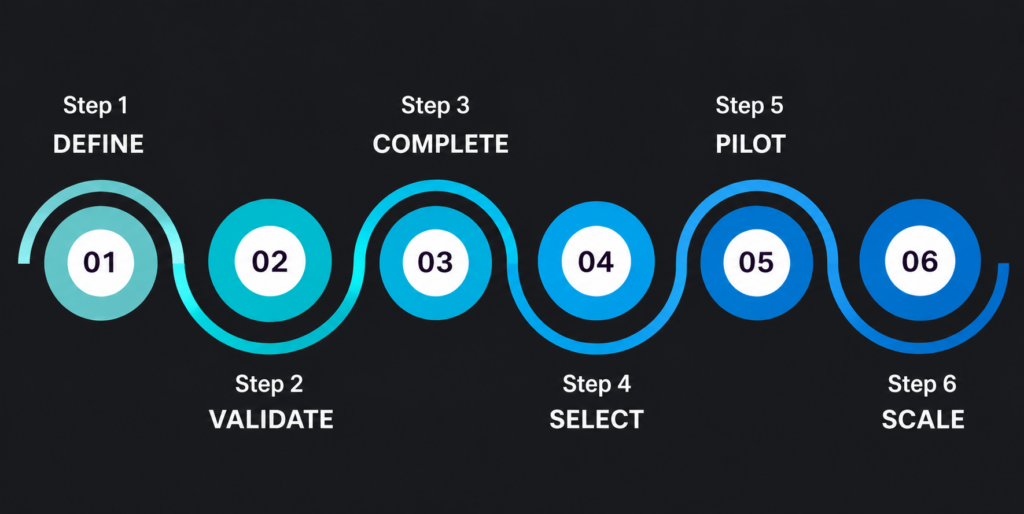
A credible Malaysia consumer-goods project should progress through evidence gates rather than a single market-entry decision:
- Define the investment thesis. Decide whether the objective is domestic sales, local cost reduction, access to halal-sensitive markets, regional exports, acquisition of a local platform, or a combination of these goals.
- Validate demand and price architecture. Test the actual product, pack, claim and price with target consumers and buyers. Secure retailer or distributor feedback on listing conditions and expected velocity.
- Complete regulatory mapping. Confirm product classification, formula, claims, labels, importer or Notification Holder, halal pathway, customs code, sales tax and licences before placing commercial inventory.
- Select and diligence partners. Assess distributors, manufacturers and acquisition targets for ownership, financial strength, route-to-market reach, quality systems, compliance history and reporting capability.
- Pilot with measurable gates. Launch a limited set of SKUs in selected channels and locations. Track sell-through, repeat purchase, returns, stock ageing, gross-to-net sales and working capital.
- Scale only after economics are proven. Expand geography, channels or local production when the operating data supports the next commitment. Preserve alternatives if the distributor, product or cost structure underperforms.
Is Malaysia’s consumer-goods sector worth investing in?
For many international consumer-goods companies, the answer is yes, but selectively. Malaysia offers a credible combination of scale, purchasing power, digital infrastructure, modern retail, industrial capability and regional connectivity. It is particularly attractive for differentiated packaged foods, personal care, household care, affordable-premium products, and manufacturing projects that can serve more than the domestic market.
The sector is less attractive for businesses relying on undifferentiated imports, weak distributor oversight or optimistic national market-size estimates. Competition is mature, channel costs are material and product compliance is not administrative detail. A successful investment case should show why the product fits Malaysian consumers, how it reaches them profitably, how regulatory obligations will be met, and when local production creates genuine economic value.
How MTA can support market entry
MoveToAsia supports foreign companies in converting a broad Malaysia opportunity into an executable project. The work can include consumer and competitor analysis, customer and retailer interviews, distributor and contract-manufacturer search, partner due diligence, regulatory pathway mapping, site and supply-chain assessment, incentive screening, financial modelling and phased entry planning.
The objective is not to promote entry at any cost. It is to determine whether demand is real, which model offers the right balance of control and capital, and what evidence should be secured before the next commitment. For consumer-goods investors, disciplined validation can reduce expensive relabelling, unsuitable partnerships, excess inventory and premature fixed investment—while creating a clearer path to scalable growth in Malaysia and the wider region.