


Malaysia semiconductor industry at a glance
The sector combines a mature export platform with an active industrial-upgrading agenda. Malaysia’s economy grew by 5.2% in 2025, and the central bank projected growth of 4%–5% for 2026. E&E manufacturing was also a leading contributor to manufacturing sales growth in early 2026, indicating that the sector entered the year with momentum rather than relying only on long-term policy targets.
| Indicator | Latest evidence | What it means for investors |
| Export scale | E&E exports reached RM711.61 billion (approximately US$175 billion) in 2025, accounting for 44.3% of total exports. | A large customer and supplier base already serves global technology supply chains. |
| Semiconductor demand | Electronic IC exports reached RM389.15 billion (approximately US$95 billion), up 24.3% year on year. | AI, data-centre and automation demand supported growth, but the cycle remains globally sensitive. |
| Investment pipeline | E&E secured RM28.5 billion (approximately US$7 billion) in approved investment in 2025. | The pipeline is material, although approvals are not the same as realised capital expenditure. |
| Foreign participation | Electronic components recorded RM16.9 billion (approximately US$4.1 billion) of approvals; 86.3% was foreign investment. | Malaysia remains open to multinational manufacturing and technology projects. |
| National strategy | The NSS targets at least RM500 billion (approximately US$123 billion) of investment, 60,000 skilled engineers and RM25 billion of fiscal support. | Policy direction favours design, advanced packaging, wafer fabrication and equipment. |
| Incentive regime | The outcome-based New Incentive Framework took effect for manufacturing on 1 March 2026. | Incentives now depend more explicitly on measurable value creation, talent, supply chains, technology and sustainability. |
Why Malaysia remains strategically relevant
A proven industrial base, not a greenfield promise
Malaysia has more than five decades of electronics manufacturing experience. Penang and the adjoining Kulim corridor contain multinational manufacturers, outsourced semiconductor assembly and test providers, electronics manufacturing services companies, equipment suppliers, precision-engineering firms and technical institutions. This reduces the coordination burden for a new investor compared with a location where suppliers, maintenance capability and sector-specific talent must be created from the beginning.
Access to regional and global markets
Malaysia’s trade model is highly international. In 2025, 65.5% of national trade was conducted with free-trade-agreement partners. Membership of ASEAN, the Regional Comprehensive Economic Partnership and the Comprehensive and Progressive Agreement for Trans-Pacific Partnership can support tariff planning and regional sourcing, subject to product-specific rules of origin. For electronics groups, the practical advantage is the ability to combine Malaysian production with customers, suppliers and logistics routes across Singapore, China, Japan, the United States and the wider ASEAN market.
A deliberate move beyond back-end concentration
The National Semiconductor Strategy (NSS) openly recognises Malaysia’s concentration in back-end activities. Its three-phase roadmap prioritises enhanced assembly and testing, advanced packaging, IC design, wafer fabrication and front-end equipment. It also proposes an advanced-packaging technology centre, a wafer-fabrication industrial park and support for domestic IC-design companies. This creates a clearer policy signal for higher-value projects, but investors should still test whether the required utilities, talent and commercial partners are available at the selected site.
Where the strongest investment opportunities are
Malaysia’s most defensible opportunities sit where established operating capabilities meet the industry’s next value-creation priorities. The following areas are more attractive than undifferentiated capacity expansion.
| Opportunity | Investment rationale | Critical diligence before entry |
| Advanced packaging and test | Existing OSAT capability, customer familiarity, and a policy push towards chiplets, heterogeneous integration, and higher-complexity packaging. | Customer qualification cycles, equipment lead times, process IP, yield targets, engineering depth and water/power requirements. |
| IC design and engineering services | Lower fixed-asset intensity than fabrication and direct alignment with the NSS objective to build Malaysian design champions. | Availability of senior design talent, EDA tools, IP ownership, export controls, customer concentration and retention costs. |
| Analogue, power and specialised fabrication | Malaysia has relevant industrial and automotive demand, existing fabs and strengths outside the most capital-intensive leading-edge logic segment. | Technology node, long-term off-take, clean-room utilities, capex discipline, environmental approvals and equipment restrictions. |
| Semiconductor equipment and precision components | Local machinery and engineering suppliers can move into front-end process equipment, automation, metrology, material handling and critical components. | Qualification by global customers, certification, tolerances, R&D capability, imported sub-components and after-sales support. |
| EMS and high-reliability electronics | Established electronics manufacturing services for industrial, medical, automotive, aerospace and data-centre applications. | Margin pressure, customer ownership of tooling, traceability, certifications, component availability and product-liability exposure. |
| Sustainable fab and factory infrastructure | New fabs and packaging plants require energy efficiency, water recycling, waste management, clean utilities and smart-factory systems. | Project bankability, local service capacity, environmental compliance, performance guarantees and integration with the plant owner. |
Investor interpretation: opportunities are strongest when the investor brings a qualified customer, proprietary process, specialised engineering capability or a product that closes a verified supply-chain gap.
Advanced packaging offers the clearest adjacency
Advanced packaging is the most natural step up from Malaysia’s existing back-end base. It uses familiar manufacturing disciplines but requires more sophisticated process integration, materials, design collaboration and testing. A project should not rely on the label alone: the business case depends on the package architecture, customer qualification and utilisation profile. A conventional packaging line with no technology or customer advantage may still face intense regional competition.
Design and equipment can create more domestic value
IC design, verification, embedded engineering and semiconductor equipment can generate higher value with lower land intensity than a large fab. These activities also create deeper linkages with local technical firms. Their main constraint is people rather than industrial space. The NSS target to train and upskill 60,000 engineers by 2030 is an opportunity and a warning: national demand for experienced engineers, technicians and managers is expected to remain high.
Specialised fabrication is more realistic than a leading-edge race
Malaysia can attract selected front-end projects, but investors should avoid treating every wafer-fabrication opportunity as equivalent. Leading-edge logic requires extraordinary capital intensity, equipment access, ecosystem depth and long-term customer commitments. More defensible opportunities may sit in mature and specialised technologies such as analogue, mixed-signal, sensors, micro-electromechanical systems and power semiconductors, where product lifecycles can be longer and where Malaysia already has relevant industrial, automotive and electronics demand. The commercial threshold remains high: a fab should enter feasibility with a defined technology platform, anchor customers and a credible plan for yield learning and equipment maintenance.
Electronics manufacturing must be assessed by product complexity
The wider electronics industry still offers investable opportunities outside semiconductor production. Malaysia is suitable for industrial controls, medical and automotive electronics, servers, communications equipment, and other products requiring traceability, certifications, and engineering support. These segments can defend margins better than basic consumer-electronics assembly, but they involve longer audits and qualification cycles. Investors should map whether the local ecosystem can support printed circuit board assembly, enclosures, cables, test fixtures, firmware, failure analysis, and lifecycle service at the required quality level.
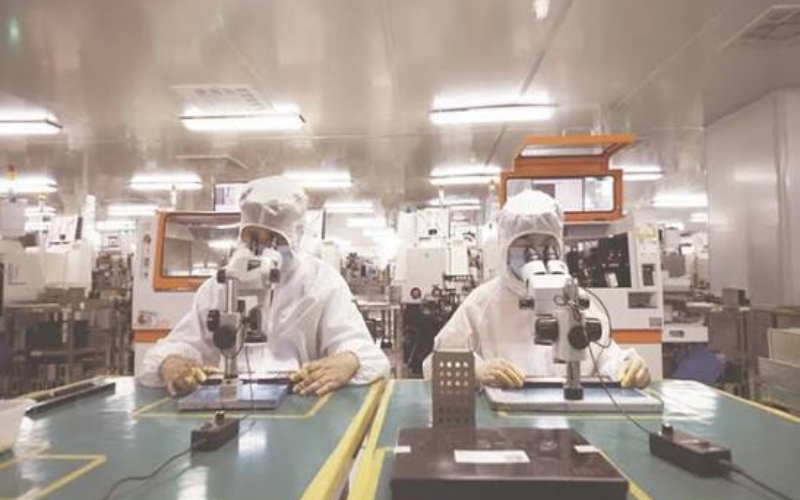
Choosing the right Malaysian cluster for electronics and semiconductor
Location selection should follow the project’s value chain, not a generic ranking of industrial parks. The semiconductor ecosystem is concentrated but not uniform.
| Cluster | Best fit | Investor considerations |
| Penang and Batu Kawan | OSAT, EMS, advanced packaging, equipment, precision engineering and regional supplier operations. | Deepest sector ecosystem and talent pool; competition for engineers, industrial space and transport capacity can raise execution costs. |
| Kulim and wider Kedah | Wafer fabrication, capital-intensive manufacturing and projects needing larger industrial sites linked to Penang suppliers. | Strong Penang–Kulim integration; verify power, water, waste treatment, transport links and district-specific incentive eligibility. |
| Klang Valley and Selangor | IC design, R&D, headquarters, engineering services, customer-facing operations and electronics systems integration. | Access to universities, corporate services and international connectivity; less concentrated fab supply chain than the northern cluster. |
| Johor | EMS, electronics systems, Singapore-linked supply chains, logistics and data-centre-related hardware. | Strategic proximity to Singapore; utilities, talent competition and cross-border operating assumptions require detailed modelling. |
| Melaka and Negeri Sembilan | Selected semiconductor manufacturing, power devices, electronics production and expansion around established plants. | Potential cost and land advantages, but a narrower supplier and senior-talent base than Penang. |
Cluster assessment based on current industry concentration and MIDA’s description of Malaysia’s semiconductor and advanced-manufacturing ecosystem. Site-level utility and labour verification remains essential.
Regulations and incentives foreign investors should understand
Foreign ownership and manufacturing approval
Foreign investors may hold 100% equity in new manufacturing projects and in expansion or diversification projects. Manufacturing companies with shareholders’ funds of RM2.5 million or more, or at least 75 full-time paid employees, generally require a manufacturing licence submitted through MIDA. Current project-approval guidelines also use capital investment per employee, Malaysian workforce participation, and managerial, technical and supervisory employment or value-added criteria.
The New Incentive Framework changes the evaluation logic
From 1 March 2026, new manufacturing incentive applications moved to the New Incentive Framework (NIF). The two primary incentives are mutually exclusive: a special tax rate or an investment tax allowance. For qualifying new investments, the published guideline provides for a special tax rate of 0%–10% for up to 15 years, or an investment tax allowance of up to 100% for up to 15 years, usable against 70%–100% of statutory income. The award is tiered and outcome-based, using the National Investment Aspirations scorecard to assess economic value, local talent, domestic supply-chain development, technology transfer and sustainability.
The standard company tax rate remains 24%, so investors should model both an incentive and a no-incentive case. Published headline rates are not an entitlement, and annual compliance with the approved commitments can affect the benefit. The NIF guideline also notes that the manufacturing-licence requirement is not applicable to IC-design and testing activities, but investors should confirm the classification of their specific operating model before incorporation and application.
Customs, export controls and environmental compliance
Manufacturers may be eligible for import-duty and sales-tax exemptions on machinery, equipment and raw materials, subject to the relevant orders and approvals. Export-control compliance is increasingly important: since July 2025, exports, transshipment and transit of high-performance AI chips of United States origin have required a Malaysian Strategic Trade Permit under the catch-all control provisions of the Strategic Trade Act 2010.
Semiconductor and electronics facilities must also assess environmental approvals, scheduled waste, emissions, wastewater, and chemical handling. An environmental impact assessment is required for activities prescribed under Malaysia’s environmental legislation; projects outside the prescribed list still remain subject to other environmental requirements. This work should begin during site selection, not after land acquisition.
Key risks that can change the investment case in Malaysia
Talent availability and retention
Malaysia produces engineers and technicians, but experienced process, design, yield, equipment and operations leaders remain contested. Large projects can create their own labour shortage through simultaneous hiring. Investors should validate salary levels, shift coverage, training lead times and the realistic use of expatriate specialists rather than relying on national graduate numbers.
Global cycle and customer concentration
The 2025 export surge benefited from AI-related and digital demand. Semiconductor demand remains cyclical, and a Malaysian plant can still be exposed to one end-market, one customer or one technology generation. Capacity planning should therefore include downside utilisation, qualification delays and customer programme changes.
Geopolitics and technology controls
Malaysia’s position between major technology blocs is commercially useful but raises compliance obligations. End-user screening, product classification, country-of-origin rules, restricted-party controls and re-export conditions can affect equipment, chips, software and customers. A project that depends on controlled United States technology or on opaque transshipment routes requires specialist review before commitments are made.
Utilities, sustainability and industrial execution
Fabs and advanced packaging facilities require reliable power, high-quality water, wastewater treatment, clean-room systems and disciplined waste management. National or state-level capacity figures are insufficient. Investors should obtain site-specific utility letters, redundancy plans, connection schedules and expansion commitments. Sustainability is also part of the NIF evaluation and an increasingly important customer qualification criterion.
Policy ambition versus project economics

The NSS provides direction and coordination, but an announced programme does not remove commercial risk. Incentive timing, infrastructure delivery, talent development and domestic supplier qualification may move more slowly than a corporate investment schedule. Financial models should stand on customer demand and operating economics before incentives are included.
Selecting a market-entry model in Malaysia
| Entry model | Best used when | Main risk to control |
| Greenfield plant | The investor has proprietary process technology, committed demand and a long operating horizon. | Utility delivery, construction, ramp-up yield, hiring, and incentive-condition execution. |
| Expansion or co-location | An existing customer, supplier, or group company already provides infrastructure and ecosystem access. | Dependence on the host site and limits on future operational autonomy. |
| Joint venture or acquisition | Local relationships, certifications, engineering teams or customer access are difficult to build organically. | Beneficial ownership, governance, IP leakage, legacy liabilities and management alignment. |
| Design or engineering centre | The company needs regional talent and customer support with lower fixed-asset exposure. | Senior-talent retention, IP protection and insufficient integration with global product teams. |
| Supplier or contract-manufacturing partnership | The company wants to validate demand and quality before committing major capital. | Customer concentration, process control, audit rights and ownership of tooling and improvements. |
A staged model is often preferable for a first entry. Supplier qualification, a design team, a pilot line or a customer-backed contract can create market evidence before a larger facility is approved.
Before capital is committed, the project should pass five tests. First, verify named customers, product qualifications and realistic utilisation. Second, map critical suppliers and import dependencies at part-number level. Third, compare clusters using total delivered cost, utilities, labour and logistics rather than headline land prices. Fourth, confirm licensing, tax, customs, export-control and environmental requirements in a single implementation timeline. Fifth, stress-test the project without incentives and with a slower ramp-up.
Build the financial model around ramp-up, not steady-state output
Semiconductor and high-reliability electronics projects can spend several quarters below planned utilisation while customers complete audits, samples and reliability testing. The financial model should separate construction, tool installation, process qualification, customer qualification and volume production. It should also include scrap and yield learning, imported-spare inventory, expatriate engineering support, training costs, overtime, utilities at peak load and working capital for long lead-time components. An incentive may improve the return profile, but it should not be used to conceal an uneconomic ramp-up curve.
Validate the local supply chain at transaction level
A supplier list is not the same as a qualified supply chain. Investors should request evidence of certifications, capacity, customer references, process controls, financial stability and business-continuity arrangements. For critical materials and components, the assessment should identify country of origin, customs treatment, minimum order quantities, alternative sources and the time required for customer approval of a substitute. This is particularly important where a project is presented as localised but still depends heavily on imported chemicals, substrates, equipment parts or software.
How MoveToAsia supports electronics and semiconductor market entry
MoveToAsia supports international companies in converting a broad interest in Malaysia into a site-specific and commercially testable investment plan. The work can include market and value-chain analysis, customer and supplier validation, industrial-cluster comparison, partner or acquisition target screening, regulatory mapping, incentive-readiness assessment, site visits and implementation planning.
For electronics and semiconductor projects, the objective is not to repeat national growth targets. It is to determine whether the proposed product, technology and entry model can secure customers, talent, utilities and compliance at an acceptable cost and risk. This is particularly important where the project depends on advanced packaging qualifications, controlled technology, specialised equipment or a phased move from engineering services into manufacturing.
Conclusion: Is Malaysia worth investing in?
Malaysia is one of Southeast Asia’s most credible locations for electronics and semiconductor investment because it combines export scale, experienced manufacturers, established clusters and a policy commitment to higher-value technology. The 2025 export and investment figures show real activity rather than only future potential.
The opportunity is nevertheless selective. Investors should favour projects that add design content, process complexity, specialised equipment, advanced packaging, high-reliability electronics or sustainable production capability. Projects based only on lower labour cost or on an unqualified expectation of semiconductor growth face a weaker investment case.
MoveToAsia can support an independent feasibility assessment and market-entry roadmap for companies evaluating Malaysia. The next step is a project-level review of customers, value-chain fit, cluster options, operating costs, incentives and regulatory requirements before capital is committed.