


For foreign manufacturers, the relevant question is therefore where Malaysia offers a defensible advantage after accounting for labour, utilities, qualification cycles, regulatory commitments and exposure to global trade conditions.
Malaysia is most compelling for export-oriented, technology-intensive or quality-sensitive manufacturing. It is less compelling for projects based mainly on low wages, abundant unskilled labour or undifferentiated assembly.
Why Malaysia remains a strategic manufacturing base
Export scale and preferential market access
Malaysia’s manufacturing platform is deeply integrated into international trade. Manufactured goods exports reached a record RM1.388 trillion (US$332,8 billion) in 2025 and represented 86.4% of total exports. The country has implemented 17 free trade agreements, including the Regional Comprehensive Economic Partnership and the Comprehensive and Progressive Agreement for Trans-Pacific Partnership. Trade with FTA partners accounted for 65.5% of Malaysia’s total trade in 2025.
For investors, this network can reduce tariffs and broaden market access, but only when product-specific rules of origin are satisfied. A market-entry plan should therefore map the bill of materials, HS classification, transformation process, and supplier origin before selecting Malaysia as an export platform. FTA access is an operational capability, not an automatic benefit.
Established clusters reduce execution risk
Malaysia offers industrial depth that newer manufacturing locations may take years to build. Penang and Kulim anchor electronics, semiconductor and medical-technology supply chains. Selangor and the wider Klang Valley combine diversified manufacturing with headquarters, engineering, airports and ports. Johor links industrial land and major ports with proximity to Singapore, while specialised corridors support chemicals, automotive, aerospace, food and resource-based activities.
Cluster density matters because it can shorten supplier qualification, equipment servicing, recruitment and customer response times. It can also raise costs. The strongest sites often face competition for engineers, technicians, industrial land and utility capacity. Investors should compare specific parks and catchment areas rather than treating a state-level cluster as a uniform proposition.
Industrial policy favours complexity, technology and local spillovers
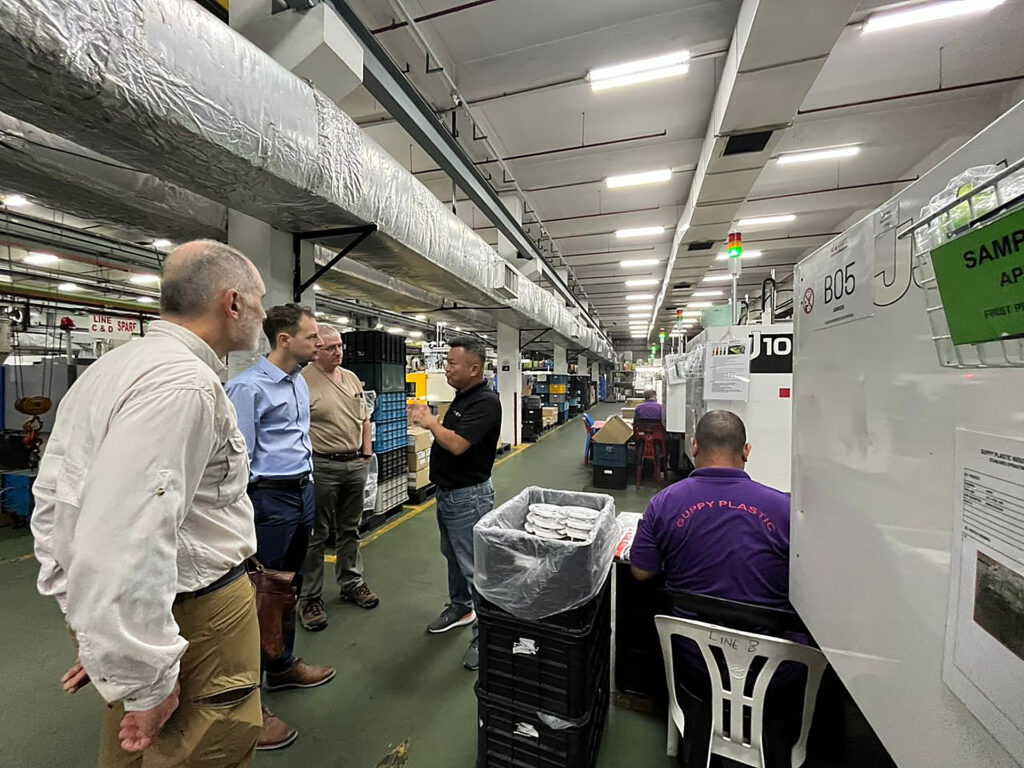
The New Industrial Master Plan 2030 aims to increase manufacturing value added to RM587.5 billion (US$145,4 billion) by 2030 and transform 3,000 facilities into smart factories. Priority sectors include electrical and electronics, chemicals, aerospace, pharmaceuticals and medical devices, alongside growth areas such as electric vehicles, renewable energy, advanced materials and carbon capture technologies.
This direction is important for project design. Malaysia is increasingly rewarding investments that add engineering, R&D, automation, supplier development, workforce training and sustainability outcomes. A proposal limited to imported machinery and basic assembly may remain viable, but it is less aligned with the country’s policy trajectory and may receive less favourable incentive treatment.
Where the strongest manufacturing opportunities are
Approved investment patterns show where international capital is concentrating. The table below combines MIDA’s 2025 data with the principal commercial angle and execution issue for each leading subsector.
| Subsector | 2025 approvals | Most credible investment angle | Principal issue to test |
| Electrical & electronics | RM28.5bn / US$7,1 bn; 83% foreign | Advanced packaging, IC design support, test equipment, precision components, industrial electronics and automation | Engineer availability, customer concentration, export controls and rapid technology cycles |
| Chemicals & chemical products | RM24.9bn / US$6,2 bn; 77% foreign | Specialty chemicals, electronic chemicals, coatings, advanced polymers and downstream formulations | Feedstock economics, environmental approvals, hazardous materials and utility intensity |
| Transport equipment | RM14.9bn / US$3,7 bn; 78% foreign | EV and automotive components, aerospace parts, electronics, lightweight materials and MRO-linked supply | Long qualification cycles, platform concentration and uncertain volume ramp-up |
| Machinery & equipment | RM11.0bn / US$2,7 bn; 77% foreign | Factory automation, robotics integration, tooling, inspection, maintenance and energy-efficiency systems | Need for local service capability and a technically credible sales pipeline |
| Food manufacturing | RM6.3bn / US$1,6 bn; 35% foreign | Halal products, ingredients, processing, packaging, cold chain and export-oriented branded manufacturing | Certification, commodity volatility, retailer power and food-safety execution |
Note. Approved investment and foreign-share calculations use MIDA’s revised 2025 manufacturing statistics. Approvals indicate project intent rather than realised production.
Electronics and semiconductor-adjacent manufacturing
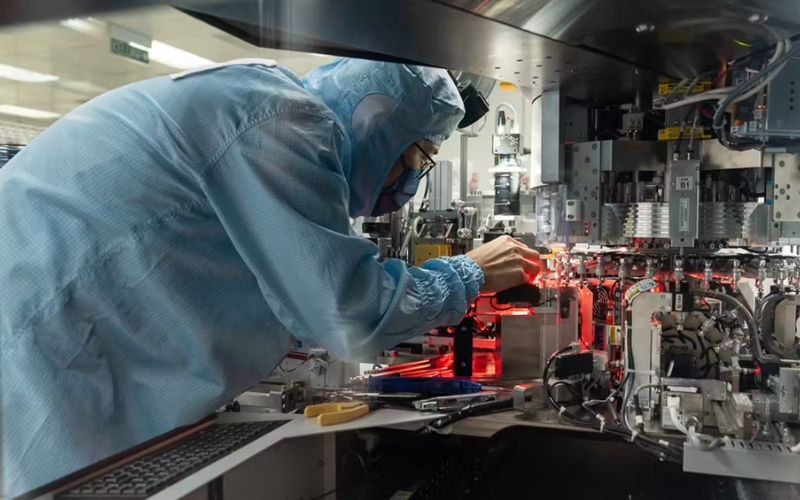
E&E remains Malaysia’s strongest manufacturing ecosystem, but the opportunity is moving beyond conventional back-end assembly. Higher-value entry points include equipment, test and inspection, advanced packaging, power electronics, industrial automation, embedded systems and selected design-related services. The strongest projects typically solve a capability gap for existing customers or suppliers rather than relying on a broad forecast of semiconductor demand.
Investors should also separate cluster strength from talent availability. Malaysia’s latest Critical Occupations List identifies persistent shortages in industrial and production engineers, mechanical engineers, manufacturing professionals and mechanical engineering technicians. A credible operating model therefore needs an early recruitment, training and retention plan.
Machinery, automation and manufacturing-related services
Machinery and equipment can offer a more accessible route for foreign SMEs than a capital-heavy finished-goods factory. Malaysia’s installed industrial base creates demand for robotics integration, tooling, predictive maintenance, energy management, quality systems, cleanroom services and specialised testing. These activities can begin with a technical sales and service team, then localise assembly or component production once recurring demand is proven.
Medical devices, aerospace and regulated products
Medical devices and aerospace align closely with Malaysia’s higher-value industrial strategy. The opportunity is attractive where a company brings certification capability, automation, traceability and qualified customer relationships. However, these sectors involve longer validation cycles, product-specific approvals and demanding quality systems. Investors should model the cash requirement through qualification and audit stages rather than assuming that factory completion immediately produces revenue.
Food, halal and consumer manufacturing
Food manufacturing combines Malaysia’s domestic demand, regional distribution and halal ecosystem. Attractive niches include ingredients, functional foods, private-label production, packaging, cold-chain equipment and automated processing. The investment case is strongest when certification, route-to-market and input sourcing are designed together. A factory built without distributor economics or export-market validation can become a capacity problem rather than a growth platform.
Choosing the right manufacturing location
Site selection should begin with the operating model, not with incentives or the lowest land price. The following comparison summarises the typical investor fit of Malaysia’s main manufacturing corridors.
| Manufacturing corridor | Strongest fit | Investor advantage | Issue requiring due diligence |
| Penang–Kedah northern corridor | E&E, semiconductors, precision engineering, medical devices | Deep specialist supplier and talent ecosystem; established export manufacturing culture | Competition for engineers, technicians, industrial space, power and water capacity |
| Selangor–Klang Valley | Machinery, aerospace, medical technology, chemicals, consumer and regional functions | Broad supplier base, headquarters connectivity, airports and Port Klang access | Higher occupancy and labour costs; congestion and fragmented local approvals |
| Johor and JS-SEZ | E&E, medical devices, aerospace, food, chemicals and Singapore-linked operations | Major ports, industrial expansion capacity and proximity to Singapore customers and services | Labour competition, cross-border operating assumptions and project-specific utility readiness |
| Sarawak and Sabah | Resource-linked processing, food, wood products, selected chemicals and energy-intensive activities | Access to regional resources and, in selected locations, competitively positioned energy | Smaller specialised supplier pools, shipping distance and state-specific approval processes |
Note. This is an investor-oriented comparison based on MIDA investment statistics, Malaysia’s economic-corridor positioning and the sector priorities under NIMP 2030. Individual industrial parks can differ materially.
Regulations and incentives foreign manufacturers should know in Malaysia
Foreign ownership and company structure
Malaysia generally permits 100% foreign equity ownership in manufacturing projects. Most investors establish a locally incorporated private company, although the final structure should reflect tax, financing, governance and customer requirements. Sector-specific products, land arrangements and regulated activities may trigger additional approvals, so equity liberalisation should not be confused with an approval-free operating environment.
Manufacturing licence and local approvals
Under the Industrial Co-ordination Act 1975, a manufacturing company with shareholders’ funds of RM2.5 million (US$ 0,620 million) or more, or 75 or more full-time paid employees, must apply for a manufacturing licence through MIDA for approval by MITI. Smaller manufacturers may seek an exemption confirmation. In parallel, projects normally need state or local approvals for land use, planning, building, fire safety and business operations.
Environmental requirements should be screened before a site is committed. Certain prescribed activities require an environmental impact assessment, while factories generating scheduled waste must comply with notification, storage, labelling, transport and disposal rules under the Environmental Quality framework. Environmental due diligence should cover both the planned process and the historical condition of the site.
Corporate tax and the New Incentive Framework
The standard corporate income tax rate for companies outside the qualifying SME bands is 24%. From 1 March 2026, new manufacturing incentive applications are assessed under the New Incentive Framework. Eligible investors may choose between a special tax rate of 0% or 15% for up to 15 years, or an investment tax allowance of 30% to 100% on qualifying capital expenditure for up to 10 years, subject to the applicable offset and approved commitments.
The key change is that incentives are outcome-based. Assessment considers economic complexity, high-value employment, domestic supply-chain linkages, technology, inclusivity and sustainability. Incentives should therefore be modelled as conditional upside, not as a guaranteed input. Investors need to test eligibility early, document baseline assumptions and ensure that post-approval obligations can be measured and delivered.
Customs, machinery and raw-material exemptions
Manufacturers may be eligible to apply for import-duty and sales-tax exemptions on qualifying machinery, equipment, raw materials and components. Applications and timing requirements vary, and some exemptions must be secured before importation or purchase. The customs model should also address tariff classification, valuation, licensed manufacturing warehouse or free-zone options, and FTA rules of origin.
Labour, wages and expatriate planning
Malaysia’s statutory minimum wage is RM1,700 (US$420-423) per month, fully applicable from August 2025. For most advanced projects, the minimum wage is not the decisive cost; engineer, technician, shift-supervisor and quality-management availability matters more. Persistent shortages in manufacturing-related occupations can lengthen recruitment and increase retention costs. Expatriate and foreign-worker assumptions should be validated against the current approval framework rather than embedded as a permanent substitute for local capability development.
Key risks investors should price into the business case in Malaysia
Malaysia’s strengths do not remove execution risk. They change its nature. The main risks are less about basic market access and more about whether the project can secure the right people, utilities, suppliers, compliance systems and export demand at an acceptable cost.
- External demand and trade-policy exposure. With manufactured products representing most of Malaysia’s exports, global electronics cycles, customer concentration, export controls, tariffs and geopolitical changes can move utilisation quickly.
- Talent and wage pressure. Established clusters offer deeper capability, but they also create competition for engineers, technicians and managers. Training and retention should be treated as capital-project workstreams.
- Utility and site execution. Grid connection, power quality, water, wastewater, cleanroom requirements and expansion rights can vary by industrial park. A state-level reputation is not a substitute for site-level technical verification.
- Incentive compliance. Outcome-based incentives can improve returns, but missed hiring, technology, local-linkage or sustainability commitments can create clawback or reputational risk.
- Supplier localisation. Malaysia has strong clusters, yet not every component, material or process is locally available at the required quality. Dual sourcing and supplier-development costs should be included in the ramp plan.
Market entry models and a practical investment roadmap
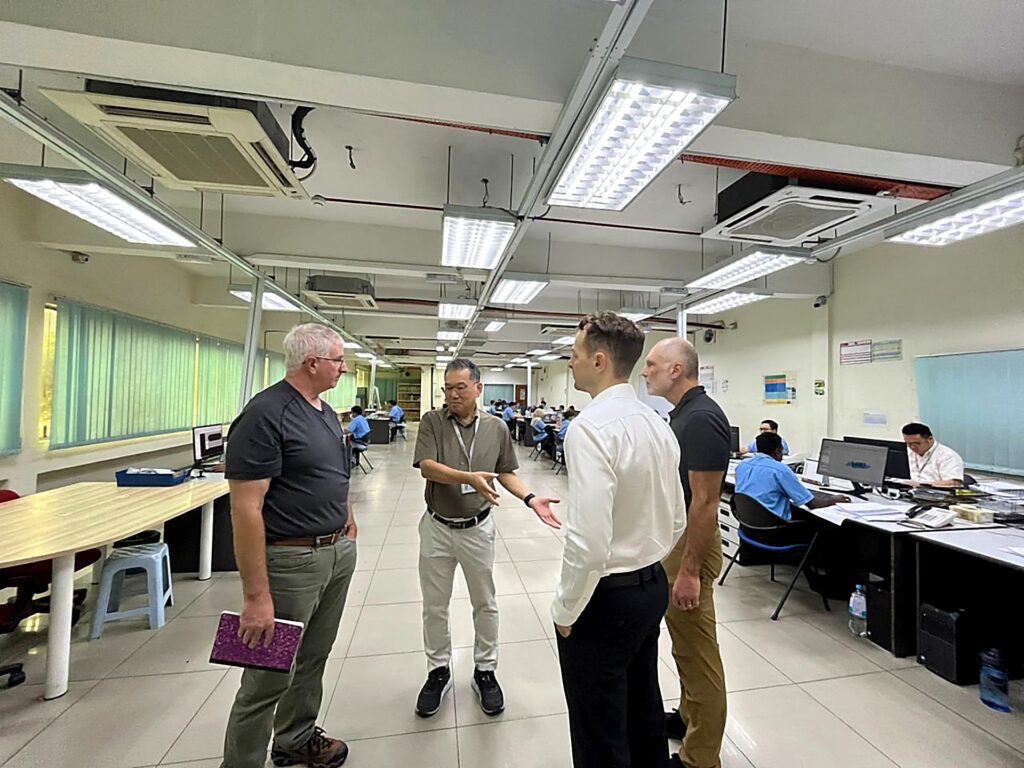
The preferred entry model depends on customer certainty, intellectual-property sensitivity, qualification requirements and the amount of irreversible capital. A greenfield plant offers control but creates the highest execution burden. An acquisition or joint venture can accelerate market access, but only after ownership, compliance, customer and operational due diligence. Contract manufacturing or a technical-services entry can test demand before major capital is committed.
A disciplined process should move through five stages:
- Define the investment thesis around named customers, target products, required certifications, export markets and the activities that must be localised.
- Screen clusters and industrial parks against suppliers, talent, logistics, utilities, expansion capacity and total delivered cost—not headline rent alone.
- Engage MIDA and relevant authorities before finalising the financial model, especially for licensing, incentives, customs treatment and environmental requirements.
- Validate the operating ecosystem through supplier audits, salary benchmarking, recruitment interviews, utility confirmations and customer qualification timelines.
- Stage the commitment with clear gates for land, approvals, customer nominations, equipment orders, hiring and commercial ramp-up.
How MTA supports manufacturing market entry in Malaysia
MTA supports foreign manufacturers in converting a country-level opportunity into an executable project. The work typically includes sector and competitor analysis, customer and supplier mapping, industrial-location screening, partner identification and due diligence, regulatory and licence mapping, incentive-readiness assessment, cost modelling and entry-strategy design.
For greenfield or expansion projects, MTA can coordinate the commercial workstream around site shortlisting, local stakeholder engagement, workforce assumptions, supplier validation and implementation planning. For companies considering a distributor, contract manufacturer, acquisition or joint venture, the focus shifts to partner economics, ownership, capabilities, customer concentration and governance.
The objective is not to present Malaysia as a universal manufacturing solution. It is to determine whether the country’s clusters, trade access and policy support create a stronger risk-adjusted case than the available alternatives, and to identify the conditions required for that case to remain valid.
Conclusion: Is manufacturing in Malaysia worth investing in?
For many international manufacturers, yes, provided the project is built around technology, quality, export access or a real cluster advantage. Malaysia combines strong industrial ecosystems with record manufacturing investment approvals, extensive FTA access and a clear policy preference for higher-value activity. The strongest opportunities are in E&E and semiconductor-adjacent activities, chemicals and advanced materials, machinery and automation, transport technology, regulated manufacturing and export-oriented food production.
The country is less attractive when the business case depends mainly on low-cost labour or assumes that incentives, talent and utility capacity will be available automatically. A defensible investment decision requires site-level evidence, customer-backed demand, a realistic recruitment plan and early alignment with the New Incentive Framework.
MTA helps companies assess these conditions before capital is committed and build a market-entry plan that connects strategy, regulation, location and implementation. The next step is a project-specific feasibility review covering the target product, customer base, preferred region, investment scale and operating model.