


Malaysia’s growth is expected to moderate rather than accelerate indefinitely. Bank Negara Malaysia projects real GDP growth of 4.0%–5.0% in 2026, while the World Bank forecasts 4.4% and highlights trade uncertainty, geopolitical risks and a possible downturn in the global technology cycle (Bank Negara Malaysia [BNM], 2026a; World Bank, 2026). Foreign investors should therefore distinguish structural momentum from a short-term investment boom.
1. Electronics-semiconductors
Malaysia’s electronics-semiconductors sector combines established industrial scale with a deliberate move towards higher-value activities. Electrical and electronics (E&E) projects secured RM28.5 billion in approved investment in 2025, the largest named manufacturing subsector in MIDA’s annual results. A further RM6.0 billion was approved in the first quarter of 2026. Manufacturing sales in electrical and electronics products rose by 15.6% year on year in January 2026, showing that the current investment cycle is supported by production demand rather than policy ambition alone (DOSM, 2026c; MIDA, 2026a, 2026b).
The National Semiconductor Strategy aims to attract at least RM500 billion of investment, train and upskill 60,000 engineers, and strengthen Malaysian companies in integrated-circuit design, advanced packaging and semiconductor manufacturing equipment. This is an upgrading strategy: Malaysia already has deep capabilities in assembly, testing and packaging, but wants to capture more value in design, specialised materials, equipment and research (Ministry of Investment, Trade and Industry [MITI], 2024).
For international investors, the most credible opportunities are not limited to building a fabrication plant. They include chip design services, advanced packaging, testing and reliability laboratories, automation, cleanroom systems, precision engineering, speciality chemicals, industrial software, equipment maintenance and technical training. Penang and the Kulim corridor remain important clusters, but project feasibility depends on exact utility requirements, export-control exposure, workforce depth and customer qualification.
2. Manufacturing
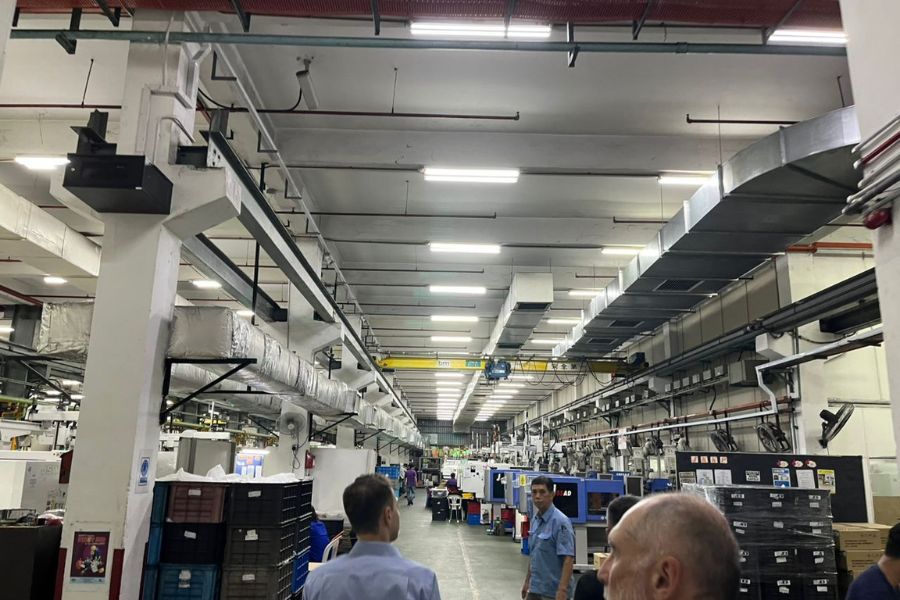
The broader manufacturing sector remains one of Malaysia’s largest and most investable growth platforms. Approved manufacturing investment reached RM131.3 billion in 2025 across 1,354 projects, with foreign investors providing 76.6% of the value. The projects were expected to create almost 110,000 jobs, and nearly half of the positions were classified as managerial, technical or supervisory. Manufacturing output then grew by 5.9% in the first quarter of 2026.
The opportunity extends beyond electronics. Chemicals and chemical products attracted RM24.9 billion in 2025, while machinery and equipment, food manufacturing and transport equipment were among the leading industries in early 2026. Malaysia’s established industrial parks, export infrastructure, supplier networks and regional trade connections support advanced materials, medical devices, food processing, industrial machinery, aerospace components, automation and resource-based manufacturing.
The strongest foreign projects normally bring a process, customer relationship or certification capability that is difficult to reproduce locally. Contract manufacturing, component production, engineering services and industrial maintenance may provide a lower-risk route than a large greenfield facility. Investors should calculate the full delivered cost rather than relying on wage comparisons alone. Power demand, water, waste treatment, imported inputs, skilled labour, tax incentives, certification and port access can materially change the economics between states and industrial parks.
3. Technology
Technology is currently Malaysia’s most visible investment-growth story. Information and communication attracted RM152.9 billion of approved investment in 2025, driven largely by artificial intelligence, big data, data centres and cloud computing. In the first quarter of 2026, the subsector secured RM38.9 billion, of which data centres and cloud computing represented RM34.6 billion across 33 projects. MIDA also reported that Malaysia was listed among the top ten global destinations for data-centre projects (MIDA, 2026a, 2026b).
The opportunity is broader than hyperscale infrastructure. Malaysia Digital approvals reached RM16.2 billion between January and April 2025; among the companies awarded Malaysia Digital status, AI represented the largest category, followed by data centres and cloud, then global business services. This creates demand for cybersecurity, cloud migration, data engineering, enterprise software, fintech infrastructure, industrial digitalisation, AI deployment, managed services and specialised regional support functions.
The fastest capital growth is concentrated in infrastructure, but foreign SMEs may find better economics in the surrounding ecosystem. Data-centre operators need power engineering, cooling, water management, network services, security, maintenance and local vendor development. Manufacturers need automation, traceability and cybersecurity. Banks, retailers and logistics companies need sector-specific software and compliance-ready data solutions.
4. Renewable-energy
Renewable-energy is moving from a policy theme to an operating requirement for industry. Malaysia’s energy roadmaps target a larger renewable share in installed capacity, with the National Energy Transition Roadmap setting a long-term objective of 70% by 2050. The official renewable roadmap identifies solar, bioenergy and hydro as core resources and estimates that capacity expansion to 2035 can support more than RM53 billion of cumulative investment.
Current projects show how the market is developing. MIDA’s first-quarter 2026 results included large-scale solar projects under the LSS5+ programme and a corporate power arrangement supporting STMicroelectronics. Digital infrastructure and export manufacturing are increasing demand for lower-carbon electricity, while corporate decarbonisation commitments create a commercial case for renewable procurement, energy efficiency and emissions data.
Potential entry points include utility-scale and commercial solar, engineering and construction services, battery storage, grid equipment, energy-management software, efficient cooling, renewable-energy certificates, biomass and biogas solutions, and operations and maintenance. Foreign investors can also enter through equipment supply or technical services without taking full project-development risk.
5. Logistics
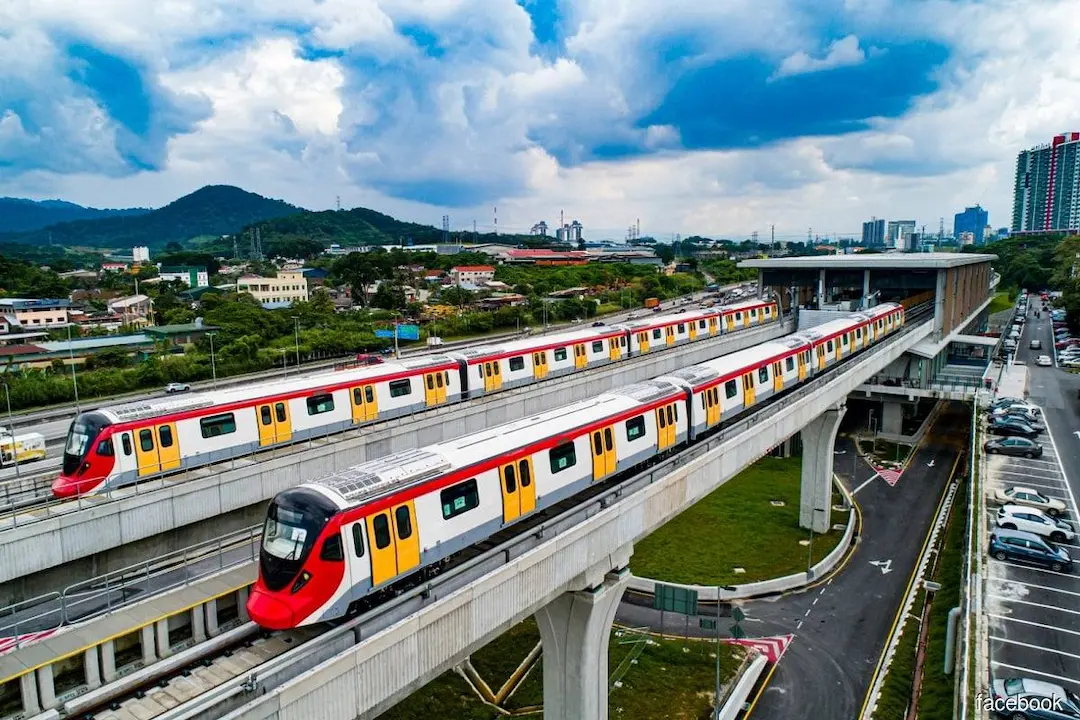
Malaysia’s logistics sector is benefiting from trade, industrial investment, e-commerce and its position on major maritime routes. Transportation and storage expanded by 8.5% year on year in the first quarter of 2026, faster than the overall economy. The same period also recorded strong information and communication growth, underlining the increasing link between physical logistics and digital coordination.
Foreign investment opportunities include contract logistics, specialised warehousing, cold chain, port and airport services, customs and trade-compliance support, fulfilment, freight technology, inventory visibility and industrial distribution. Growth in E&E, food manufacturing, pharmaceuticals, data centres and halal exports creates demand for controlled, traceable and time-sensitive logistics rather than only general trucking or storage.
The commercial opportunity is highly location-specific. Johor’s industrial and digital expansion, the Klang Valley’s consumption and distribution base, Penang’s electronics cluster and East Malaysia’s resource and infrastructure needs generate different cargo flows. A warehouse or fleet is not investable simply because national trade is rising; the project needs contracted customers, adequate throughput and a clear service advantage.
6. Consumer-goods
Consumer-goods growth is supported by a large domestic demand base rather than one spectacular investment category. Private consumption expanded by 5.2% in 2025 and represented 60.5% of GDP. It grew by a further 4.7% in the first quarter of 2026. Spending on food, transport, communication, restaurants and accommodation has supported retail and service activity, although consumers remain price-sensitive.
The market offers opportunities in packaged food, health and personal care, household products, premium and functional products, convenience formats, e-commerce, retail technology and regional brand distribution. Food manufacturing alone attracted RM3.3 billion of approved investment in the first quarter of 2026, showing the link between domestic consumption, export processing and the halal ecosystem.
Malaysia can also serve as a test market and regional operating base. Its urban consumer segments, modern retail channels, digital payment adoption and multilingual business environment are useful for companies adapting products for Southeast Asia. However, national income levels do not remove the need for precise segmentation. Price points, pack sizes, channel margins, product registration, local tastes and promotional intensity determine whether a foreign brand gains repeat purchase.
7. Financial-services
Financial-services is a mature, highly regulated sector, so its investment case differs from the faster build-out seen in digital infrastructure. Growth is concentrated in financial technology, payments, wealth and asset management, sustainable finance, Islamic finance, insurtech and specialised business-to-business services. Malaysia’s capital market reached a record RM4.3 trillion in 2025, including an Islamic capital market of RM2.7 trillion, while assets under management reached RM1.14 trillion.
Malaysia’s strength in Islamic finance is particularly relevant for foreign institutions and technology providers. The ecosystem covers Islamic banking, sukuk, takaful, asset management and Shariah governance. BNM’s 2025 priorities included innovation, stronger business linkages and the development of global capabilities, while the Securities Commission continued to support Islamic capital-market innovation and digitalisation.
Potential entry points include regulatory technology, cybersecurity, fraud prevention, cross-border payments, treasury and trade-finance platforms, wealth technology, ESG and climate data, tokenisation infrastructure, Islamic-finance product development and outsourced specialist services. International companies can contribute technology and regional connectivity, but customer trust, data security and regulatory approval are central to adoption.
8. Halal-industry
The halal-industry is one of Malaysia’s clearest export-led growth platforms, but it should be understood as an ecosystem rather than a single industry. Malaysia’s halal exports reached RM68.52 billion in 2025, up 10.9% year on year and equivalent to 4.3% of national exports. The sector extends beyond food into ingredients, pharmaceuticals, medical devices, cosmetics, personal care, logistics, finance and Muslim-friendly services.
Malaysia’s value proposition combines certification expertise, standards, manufacturing capacity, export promotion and an established buyer network. MATRADE reported that the 2024 Malaysia International Halal Showcase generated RM4.3 billion in sales, while its year-round trade platform connects close to 10,000 halal-certified producers with market intelligence and buyers.
Foreign investors can use Malaysia as a production base, certification and quality-management centre, distribution hub or regional brand platform. Opportunities include halal ingredients, functional food, pharmaceuticals, cosmetics, traceability systems, cold chain, testing laboratories, packaging, trade finance and cross-border e-commerce. The strongest projects do more than obtain a logo: they build auditable sourcing, segregation, documentation and quality systems into operations.
Where the strongest investment cases overlap in Malaysia
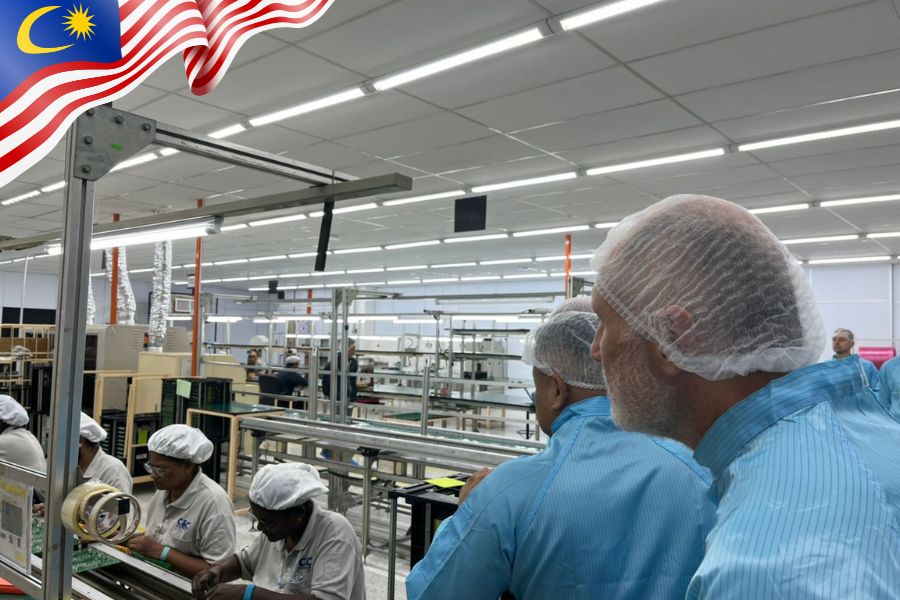
Malaysia’s most compelling opportunities increasingly sit between sectors. Semiconductor and advanced-manufacturing projects create demand for automation, clean energy, specialised logistics and financial solutions. Data centres require renewable power, cooling, water systems, cybersecurity and high-reliability maintenance. Halal consumer products depend on certified manufacturing, cold chain, trade finance and e-commerce. These intersections often provide a clearer market entry route than competing in the core asset itself.
Three cross-sector models are particularly relevant. First, industrial-enablement businesses can supply technology, energy efficiency, testing, maintenance or logistics to multiple manufacturing clusters. Second, regulated digital infrastructure can support finance, trade, supply-chain visibility and compliance. Third, export platforms can combine Malaysian production with halal certification, regional distribution and an existing overseas customer base.
This matters for foreign SMEs. Malaysia’s largest projects are often led by major multinational groups, but the ecosystem around them contains smaller, specialised opportunities. A company does not need to own a semiconductor plant, data centre, solar farm or bank to benefit from the growth of those industries. It needs a defensible capability, a buyer and a realistic route through local regulation and procurement.
From sector growh potential to long-term plan in Malaysia
Foreign investors should avoid selecting a Malaysian sector from national growth figures alone. Before choosing an entity, partner, site or acquisition target, the project should pass five tests.
- Evidence of demand. Identify customers, purchasing criteria, expected volumes and the reason they would change supplier. Letters of intent and interviews are stronger than broad market-size estimates.
- Exact market access. Confirm foreign-ownership conditions, licences, product approvals, land or power arrangements, data rules and regulator expectations for the precise activity. Sector labels are too broad for legal analysis.
- Operating economics. Model labour, utilities, imported inputs, logistics, tax, compliance, financing and working capital at the intended location. Include a downside case for slower exports, higher energy costs or delayed approvals.
- Execution capacity. Verify management, engineering and technical talent; supplier quality; infrastructure; local-service partners; and the time required to meet customer or regulatory standards.
- Staged commitment. Where possible, begin with a customer-validation project, distributor, service office, leased facility, contract manufacturer, joint venture or targeted acquisition before committing to a large fixed asset.
Malaysia offers credible growth opportunities across electronics-semiconductors, manufacturing, technology, renewable-energy, logistics, consumer-goods, financial-services and the halal-industry. The strongest sectors are supported by real investment, production or trade data. They also involve constraints: talent shortages, regulated activities, infrastructure limits, price-sensitive customers and exposure to external trade conditions.
The right conclusion is therefore not that one industry is universally the fastest-growing. It is that Malaysia currently has several distinct growth engines, and each rewards a different investor profile. A commercially sound project connects sector momentum with a specific customer, location, licence pathway, operating model and capital plan.
MoveToAsia supports international companies with market research, customer and partner validation, supplier mapping, regulatory screening, site assessment and feasibility studies across Southeast Asia. The objective is to convert interest in a high-growth Malaysian sector into an investment decision based on evidence and executable assumptions.