


The selection of 2026 as Malaysia’s Year of Medical Tourism appears to have compelling strategic reasoning rather than solely promotional marketing. Some 1.84 million overseas patients visited the country in 2025, leading to the generation of RM3.34 billion in healthcare travel revenue, with the average international patient leaving about RM1,800. The majority of the revenues came from private healthcare institutions, which means that 95% of the healthcare travel revenue was generated by private hospitals. Malaysia’s government has made public its aim of reaching RM7 billion in healthcare travel revenues by 2030. In parallel, the global medical tourism business is estimated to grow from US$35 billion by 2026 to US$142 billion by 2034. Thus, Malaysia appears to be positioning itself ahead of the curve.
Malaysia’s Healthcare Market Structure
Malaysia has a dual-track healthcare system. As such, it has both a public and private system. The government provides public healthcare to the community as a subsidized first-tier service. However, private healthcare is growing rapidly because public healthcare has long waiting times, and public healthcare cannot accommodate the service demand. Private healthcare grows considerably in Kuala Lumpur, Johor, and Penang, which are the three corridors for medical tourism.
Malaysia’s success in the medical tourism market comes from service quality and cost balance that is hard to achieve at high volume. Many procedures that international patients seek like cardiac surgery, orthopaedics, oncology, infertility, and health screenings are priced to give a great deal to patients when compared to the prices in Western countries and even in Singapore. The top healthcare centers in Malaysia are both internationally accredited by the Joint Commission International and certified by the Malaysian Society for Quality in Health. This combination has made Malaysia the premium healthcare destination in Southeast Asia, balancing the hospitality healthcare procedure model in Thailand and the complex, high-value, low-volume healthcare model in Singapore.
Demand Factors

The combination of many different structural forces simultaneously affecting the same market, makes the healthcare sector in Malaysia one of the most resilient in the Southeast Asian region. The growing and aging population in Malaysia is creating a high demand for the management of chronic conditions, as well as a need for geriatric and rehabilitation care. At the same time, the growing middle class in Malaysia is putting a demand for private healthcare that cannot be provided by the public system, thereby creating an ever-expanding market for private healthcare providers. Balancing these market forces are the growing and unsustainable healthcare costs in neighboring countries such as Indonesia, Bangladesh, China, and the Middle East, that have been favoring Malaysia as an accessible, high-quality, low-cost alternative. Lastly, infrastructure improvements and promotional efforts by the Malaysian government in the Malaysia Year of Medical Tourism 2026 initiative have addressed the opportunity-supply gap that previously restricted the volume of international patients in Malaysia.
Five years ago, things were different. Now, digital health is considered a new specialisation for growth. AI in hospital admin and diagnostics, telemedicine allowing Malaysian specialists to treat international patients, and digital chronic disease monitoring health tech are attracting investment and shifting the delivery cost of healthcare to be more efficient for the user and the patient.
Business Potential
Moving through private hospitals and specialist clinics is the most transparent option to investing and the one with the most rounds of funding historically. The economics are typified by a high intensity of capital (and healthcare system integration), long periods to recoup investment, and predictable cash flows once a hospital is sufficiently occupied. Because of this, private equity investment in hospitals is better suited to patient, long-term institutional capital than to short-cycle return expectations. In this space, the first 3–5 years of operation plays an important role in determining the long-term value and is mostly driven by the clinical team, the referral network, and the occupancy trajectory.
The sub sector of diagnostics and laboratory services is improving against the broader healthcare sector that is slower to integrate. The demand for imaging, pathology, genetic testing, and health screening (often the starting point for many medical tourism journeys) is growing for both domestic and international patients and often standalone services for diagnostics are more quickly built and scaled than comprehensive private hospitals.
Investors gravitate toward healthcare-related sectors because of their unique merging of manufacturing, technology, and healthcare investment. Medical device manufacturing in Malaysia has been receiving government support, and with an active export network and growing local hospital infrastructure, it is becoming an attractive place for manufacturing in the region.
There is a clear disparity in the supply and demand of elder care and rehabilitation facilities. Malaysia’s elder care capacity is expanding at a slower rate than the elder care population. Investment in elder care remains a major opportunity due to the nascent regulatory framework and a willingness to engage with a less certain long-term investment.
Healthcare property investment is the final and most integrated of the services. Hospital property is becoming a commonly held asset in REITs and considered a stable, long-term income stream — similar to logistics in the industrial sector. Coupled with the medical tourism and immigration initiatives, the growth of hospitals provides a stream of projects to attract funding.
Risks and Constraints
The most challenging part of healthcare investment in Malaysia is the licensing and regulatory approval timelines. The Ministry of Health has set high standards for licensing private hospitals, and the timelines for the approval of new or expanded facilities can take much longer than the time planned by the developers or the investors. The requirements for the accreditation of facilities that wish to attract international patients has become more stringent. This means that not only does it become more expensive and complex to enter the market, but it also maintains the quality that makes Malaysia’s private hospitals more attractive than their competitors.
Staffing Challenges
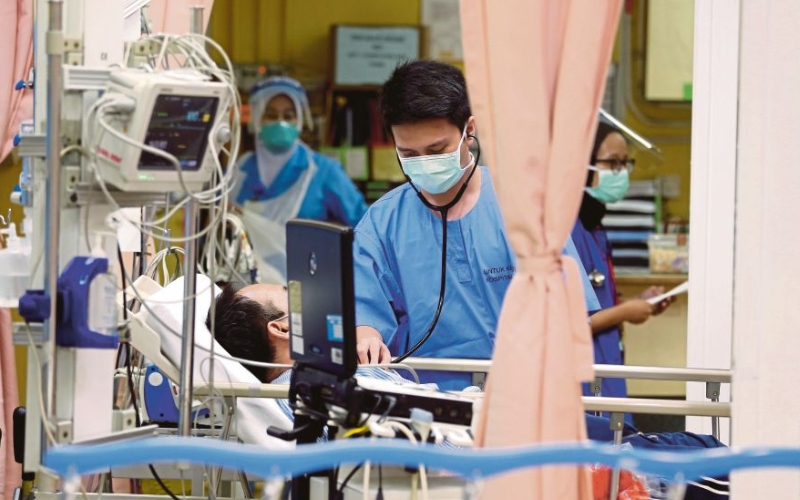
Staffing, especially clinical staffing, is a major challenge. Malaysia produces a large number of doctors, nurses, and allied healthcare professionals, but the most highly sought after and experienced clinical specialists retain the most real options, including the ability to practice elsewhere in the region, such as Singapore. Consequently, there is a competitive market for the most highly skilled clinical staff, and there is considerable upward pressure on costs.
Investing in private healthcare facilities is also capital intensive. For healthcare investment, there are long payback periods, and investors must carry out extensive due diligence on the patient and payer mix before making a commitment. A private hospital that relies on a single medical referral network or a single nationality of medical tourists has a concentration risk that may not be apparent in the occupancy rates.
What Investors Must Determine
The strongest healthcare investments in Malaysia are likely found in locations along medical tourism corridors that include Penang, Kuala Lumpur, Johor, and medical tourism from Sumatra, other parts of northern ASEAN, and the broader regional and Middle Eastern flows. The same applies to Johor and neighboring Singapore. Of more joint value than potential revenue and EBITDA of a healthcare investment are the mix of patients, the mix of payers, the mix of physicians who refer to the healthcare investment, and the mix of physicians who refer to the healthcare investment, the investment’s occupancy and the investment’s growth potential. The potential partnership with and the potential for contractual relationships with government linked healthcare enterprises and with international healthcare enterprises may increase the value of the investment more than the value is reflected during initial underwriting.
Frequently Asked Questions
Do healthcare investments in Malaysia make sense? Yes, for the patient, long-term capital. Healthcare investments in Malaysia make sense given the combination of a long-term, government-promoted, and active demand for healthcare services due to both a domestic and an international growth in medical tourism, and the healthcare asset’s high capital intensity and long payback.
What are the reasons for Malaysia’s medical tourism? The combination of Malaysian medical facilities offering services of a quality that is comparable to Singapore’s private hospitals’ at lower costs with the added benefits of an accredited, English-speaking medical staff and short geographical travel times from Indonesia, China, the Middle East and the other ASEAN countries.
Which healthcare subsectors provide the best opportunities? For investors with limited capital who are unable to go for the large-scale hospital investments, private hospitals and specialist outpatient clinics provide the most certain opportunities, while diagnostics, elder care, and digital health show more rapid growth and more limited capital requirements.
What do you think are the main risks in private healthcare investment? In their investment guidelines, seasoned Malaysian private healthcare investors highlight three main risks: the regulatory approval process and the resulting lengthy time before clinics become operational; the high operating costs of clinical staff; and the risks associated with capital intensive, long duration hospital investments.