


https://www.youtube.com/watch?v=P5VAKIDsERc
At MoveToAsia, we have supported foreign companies that needed more than a list of Malaysian suppliers. Our role has often been to act as an on-the-ground extension of their sourcing team: identifying suitable manufacturers, verifying capabilities, conducting factory audits, supporting technical discussions, and helping clients maintain visibility as projects move from supplier selection into sampling and production.
Malaysia as a mature, export-driven industrial ecosystem
Malaysia is not a new manufacturing destination.
Its modern industrial base has been developing since the 1970s through foreign direct investment, free industrial zones, multinational manufacturing projects and substantial investment in infrastructure and technical skills.
Today, the country’s manufacturing strengths include:
-
electronics and semiconductors;
-
electrical equipment;
-
medical devices;
-
precision engineering;
-
machinery;
-
automotive components;
-
technical plastics;
-
metal fabrication;
-
chemicals and advanced materials.
The scale of new investment illustrates this industrial positioning.
During the first half of 2026, electrical and electronics projects alone received approximately RM16.6 billion of approved manufacturing investment.
Malaysia also benefits from a highly export-oriented economy.
In 2025, total trade exceeded RM3 trillion for the first time, while Malaysia recorded its 28th consecutive annual trade surplus.
For buyers, this matters because export-oriented manufacturers tend to operate within an ecosystem that already understands:
-
international logistics;
-
export documentation;
-
customer audits;
-
material traceability;
-
quality reporting;
-
overseas customer communication.
This does not mean every Malaysian factory performs at the same level.
Malaysia contains global-tier manufacturers alongside much smaller workshops.
The challenge is determining which level of factory your project actually requires.
Why sourcing in Malaysia is different from simply finding a Malaysian factory
Finding potential suppliers has become relatively easy.
Search engines, B2B platforms, LinkedIn, industrial directories and AI tools can produce dozens of Malaysian manufacturers within minutes.
That means the real value of professional sourcing has shifted.
The question is no longer:
“Can we find five suppliers?”
It is:
“Which of these five suppliers can actually execute our project?”
The difference can be substantial.
Consider two factories that both claim to provide CNC machining.
Factory A may operate:
-
modern 5-axis machinery;
-
CMM inspection;
-
documented material traceability;
-
calibrated measurement equipment;
-
established export customers.
Factory B may operate:
-
basic CNC equipment;
-
manual inspection;
-
subcontracted finishing;
-
weak drawing revision control.
Both can legitimately describe themselves online as “CNC machining manufacturers in Malaysia.”
A website search alone will not necessarily reveal the difference.
That is why sourcing has become increasingly focused on supplier qualification rather than supplier discovery.
The real challenge: moving from “finding suppliers” to “securing execution”
Many sourcing failures happen because buyers select suppliers based on incomplete information.
A manufacturer may:
-
respond quickly;
-
provide certificates;
-
present modern machinery;
-
submit an attractive quotation;
and still be the wrong production partner.
Common mismatches include:
Wrong volume fit
A technically capable factory designed for multinational programs may have little interest in a small production run.
Conversely, a smaller supplier may perform well during development but become overwhelmed when annual volume increases substantially.
Wrong technical specialization
Factories sometimes accept RFQs outside their real strengths.
A general metal fabricator may technically be able to produce a precision assembly while lacking the fixtures, inspection methods or engineering required to maintain tolerances consistently.
Wrong customer profile
Some factories are optimized around:
-
automotive;
-
medical;
-
electronics;
-
industrial machinery;
-
consumer goods.
Different customer industries create different quality systems and production cultures.
Hidden subcontracting
A factory may perform 50% of the process internally and outsource:
-
machining;
-
surface finishing;
-
heat treatment;
-
painting;
-
assembly;
-
packaging.
Subcontracting is not automatically problematic.
The issue is whether the subcontracting is transparent, qualified and controlled.
Capacity that exists on paper but not in practice
Owning 20 machines does not mean the factory has available production capacity.
Existing customer commitments, maintenance schedules, skilled-operator availability and tooling constraints can substantially affect actual capacity.
 Picture taken while doing a pre-shipment inspection on behalf of one of our customers manufacturing in Malaysia
This is why supplier qualification needs to examine the production system rather than simply the equipment list.
Common risk patterns without local presence in Malaysia
International companies sourcing remotely frequently encounter several recurring risks.
Intermediaries presenting themselves as manufacturers
Malaysia has manufacturers, distributors, trading companies and engineering companies that coordinate subcontractors.
All can potentially be useful.
The problem occurs when the buyer does not know which model they are dealing with.
Ask explicitly:
-
Which manufacturing processes are performed at this address?
-
Which processes are subcontracted?
-
Can subcontractor locations be disclosed?
-
Who controls final quality?
-
Who carries responsibility when a subcontracted process fails?
A trading or engineering company can sometimes create significant value.
Lack of transparency is the risk—not the business model itself.
Stated capacity versus available capacity
Factory capacity should be assessed at two levels:
Installed capacity
What equipment could theoretically produce.
Available capacity
What the supplier can actually allocate to your project.
A sourcing agent should investigate both.
Certification misunderstandings
Certificates should never be accepted only as PDF files.
Verify:
-
company name;
-
production address;
-
issuing body;
-
expiration;
-
scope;
-
applicable processes.
A factory having ISO 9001 does not automatically mean your product complies with EU, US or other destination-market regulations.
Factory certification and product compliance are different questions.
Late visibility of production problems
One of the largest manufacturing risks is discovering a problem after production is complete.
At that point:
-
material has been consumed;
-
labor has been spent;
-
packaging may be finished;
-
shipment deadlines may already be compromised.
This is why quality control should increasingly focus on process checkpoints, not only pre-shipment inspection.
Direct sourcing vs sourcing agent vs trading company
Foreign buyers generally have three approaches when working with Malaysian manufacturers.
| Model | Direct Sourcing | Independent Sourcing Agent | Trading Company |
|---|---|---|---|
| Factory relationship | Direct | Usually direct | Often through trader |
| Supplier discovery | Buyer | Agent | Trader |
| Factory verification | Buyer | Agent | Varies |
| Quotation transparency | High | Usually high | Varies |
| Agent margin | None | Service fee / commission | Often built into product |
| Production follow-up | Buyer | Agent | Trader |
| Factory audit | Buyer arranges | Often available | Varies |
| Quality control | Buyer arranges | Often available | Varies |
| Best for | Experienced local procurement teams | Companies needing local execution support | Buyers wanting simplified purchasing |
There is no universally superior model.
Direct sourcing works well when:
-
your company already has Asian procurement staff;
-
the supplier relationship is mature;
-
internal technical resources are available;
-
production is stable.
An independent sourcing agent becomes useful when:
-
entering Malaysia for the first time;
-
comparing multiple factories;
-
developing a custom product;
-
managing complex industrial production;
-
conducting audits;
-
coordinating factory visits;
-
needing local follow-up.
Trading companies can be useful when:
-
purchasing standard products;
-
consolidating multiple categories;
-
the buyer values purchasing simplicity over direct manufacturer access.
The key issue is understanding who represents whom and how each party is compensated.
What a reliable sourcing agent actually does
A professional sourcing partner should create value across four stages:
Discovery → Qualification → Industrialization → Execution
1. Supplier discovery
The sourcing team identifies potential manufacturers according to:
-
product;
-
technical process;
-
materials;
-
volume;
-
certification;
-
geography;
-
export experience.
But a longlist alone creates limited value.
2. Supplier qualification
This is where the real sourcing work begins.
Factories should be assessed according to:
-
relevant manufacturing processes;
-
equipment;
-
technical competence;
-
production capacity;
-
quality systems;
-
customer profile;
-
export experience;
-
communication;
-
pricing;
-
lead time.
This converts perhaps 20–30 potential suppliers into a shortlist of a few serious candidates.
3. Industrialization
Once a supplier is shortlisted, the project moves toward:
-
drawings;
-
DFM;
-
tooling;
-
sampling;
-
technical clarification;
-
material validation;
-
packaging;
-
testing.
This is frequently where supplier capability becomes much clearer.
4. Execution
Once production starts, the focus shifts to:
-
milestone management;
-
raw-material readiness;
-
production schedule;
-
quality checkpoints;
-
deviations;
-
corrective actions;
-
final inspection;
-
shipment readiness.
The sourcing agent becomes a buyer-side industrial coordinator, not simply a supplier finder.
What should be verified during a Malaysian factory audit?
A factory audit should answer a simple question:
Can this supplier repeatedly manufacture this particular product at the required quality and scale?
The assessment should therefore be project-specific.
Company and organization
Check:
-
ownership;
-
management;
-
employee count;
-
major customers;
-
customer concentration;
-
turnover where available.
Manufacturing
Verify:
-
installed machines;
-
actual processes;
-
tooling;
-
line utilization;
-
maintenance.
Quality
Review:
-
incoming inspection;
-
in-process inspection;
-
final inspection;
-
calibration;
-
nonconforming-product controls;
-
CAPA;
-
8D procedures.
Traceability
Select an existing production batch and ask:
Can you trace this finished product back to its raw material and production records?
Engineering
Assess whether the supplier can:
-
understand drawings;
-
challenge specifications;
-
provide DFM;
-
manage revisions;
-
control engineering changes.
Capacity
Ask:
-
What is current utilization?
-
Who are the largest customers?
-
What volume could be allocated to this project?
-
Which machines would produce it?
Subcontracting
Map every outsourced operation.
A sourcing audit should produce a process map, not simply a factory score.
How to compare Malaysian suppliers objectively
Supplier selection becomes more robust when each candidate is evaluated using the same criteria.
A sample evaluation matrix could be:
| Criterion | Weight |
|---|---|
| Technical capability | 25% |
| Quality system | 20% |
| Commercial competitiveness | 15% |
| Available capacity | 10% |
| Engineering support | 10% |
| Communication | 5% |
| Export experience | 5% |
| Lead time | 5% |
| Logistics/location | 5% |
Weights should depend on the project.
For a medical component, quality and compliance should receive considerably more weight.
For a simple consumer item, cost may play a larger role.
The objective is not to mathematically choose a supplier.
The scorecard forces the sourcing team to compare factories consistently instead of relying on impressions.
https://www.youtube.com/watch?v=PFH0CJrDMLk
The sourcing agent as an industrial project manager
For custom manufacturing, sourcing is best viewed as an industrial project rather than a transaction.
A typical program may move through:
Feasibility → Supplier Search → RFQ → Qualification → Factory Audit → Sampling → Pilot → Production → QC → Shipment
Each phase creates different risks.
During feasibility
Determine:
-
Is Malaysia suitable for the product?
-
Are the materials available?
-
Are the processes available?
-
What volumes are realistic?
-
What certifications are required?
During supplier search
Separate theoretically relevant companies from real manufacturing candidates.
During RFQ
Ensure suppliers quote the same technical scope.
Otherwise, quotation comparisons are meaningless.
During sampling
Establish:
-
acceptance criteria;
-
dimensional requirements;
-
cosmetic requirements;
-
testing;
-
packaging;
-
revision control.
During production
Track milestones rather than waiting for the promised completion date.
During quality control
Inspect at the stage where problems can still be corrected economically.
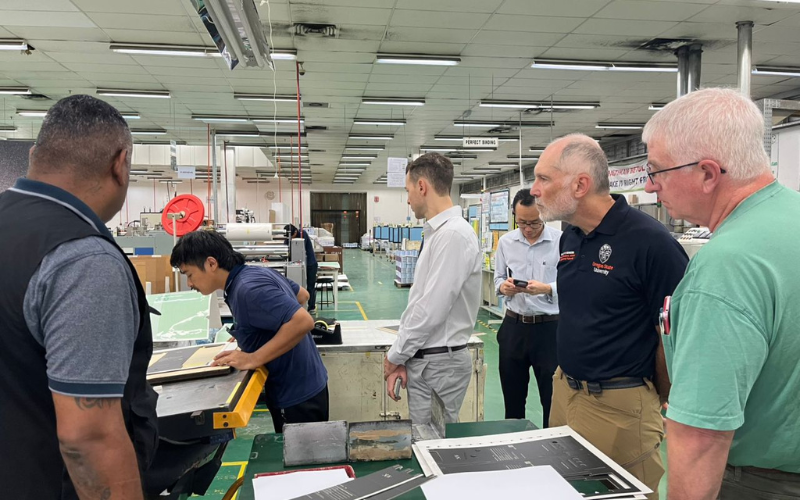
The sourcing partner should therefore behave much more like a local project-management extension of the buyer’s procurement and engineering teams.
Where Malaysia is particularly strong
Malaysia’s current manufacturing investment profile illustrates the sectors where sourcing activity is likely to remain strongest.
During the first half of 2026, manufacturing investment approvals included approximately RM16.6 billion in electrical and electronics projects. Across all sectors, Malaysia attracted RM218.5 billion of approved investment during the same period, 11.7% higher than a year earlier.
Malaysia is particularly relevant for:
Electronics and EMS
Penang and Kedah contain one of Southeast Asia’s most sophisticated electronics and semiconductor ecosystems.
Relevant sourcing categories include:
-
PCB assembly;
-
box-build;
-
industrial electronics;
-
cable assemblies;
-
semiconductor equipment;
-
test systems.
Precision engineering
Malaysia has developed substantial capabilities in:
-
CNC machining;
-
precision components;
-
tooling;
-
automation;
-
industrial equipment.
Plastic injection molding
The country offers strong capabilities in:
-
tooling;
-
engineering plastics;
-
technical molding;
-
secondary operations;
-
assembly.
Medical devices
Malaysia has a substantial export-oriented medical manufacturing industry involving:
-
molded components;
-
electronics;
-
consumables;
-
medical equipment.
Metal fabrication and industrial equipment
Manufacturers can provide:
-
cutting;
-
bending;
-
welding;
-
machining;
-
coating;
-
electrical integration;
-
complete assemblies.
For these categories, Malaysia’s competitive advantage is frequently less about lowest labor cost and more about engineering capability and execution discipline.
When does using a sourcing agent make economic sense?
Not every sourcing project requires an agent.
If you already purchase a standard product from a well-established manufacturer and have an internal regional purchasing team, direct sourcing may be perfectly effective.
Local sourcing support becomes more valuable when:
-
entering Malaysia for the first time;
-
developing a custom product;
-
tooling is required;
-
multiple manufacturing processes are involved;
-
supplier claims need physical verification;
-
the order value is significant;
-
quality failure would be expensive;
-
your internal team cannot frequently visit Malaysia.
One useful way to evaluate the cost is to compare:
Cost of sourcing support
against:
Potential cost of supplier failure.
For a US$500,000 annual sourcing program, avoiding one:
-
major quality claim;
-
missed production window;
-
tooling mistake;
-
unsuitable supplier appointment
can outweigh the professional fees involved in proper supplier qualification.
How sourcing agents charge—and what buyers should ask
There is no single sourcing-agent fee structure.

Common models include:
Fixed project fee
Used for:
-
supplier searches;
-
audits;
-
factory visits;
-
market studies.
This is often the most transparent structure for qualification work.
Day rate
Common for:
-
audits;
-
inspections;
-
factory tours;
-
negotiations.
Commission on purchasing
The agent receives a percentage of the purchase value.
This can align incentives around ongoing production, but the percentage and calculation basis should be transparent.
Monthly retainer
Relevant when the buyer needs recurring:
-
supplier management;
-
QC;
-
production follow-up;
-
local coordination.
Hybrid model
Some programs combine:
project fee + QC fees + ongoing production commission
depending on responsibilities.
The important question is not simply:
“What percentage do you charge?”
Ask instead:
-
Who pays the agent?
-
Does the agent receive money from the supplier?
-
Are factory quotations disclosed?
-
Are commissions included in product prices?
-
Does the buyer communicate directly with manufacturers?
-
Who owns the supplier relationship?
These questions determine whether the sourcing partner is genuinely representing the buyer.
Red flags when choosing a sourcing agent in Malaysia
A sourcing agent should itself be qualified.
“We can source anything”
Malaysia is a diversified industrial country, but no sourcing team has equal expertise across every category.
Ask for relevant project experience.
Supplier names offered before understanding the requirement
A serious sourcing process begins with:
-
specifications;
-
volumes;
-
process;
-
target market;
-
timeline.
Not with a recycled supplier database.
Refusal to disclose manufacturers
Some trading models legitimately keep factories confidential.
But if you are paying for independent supplier search and qualification, lack of factory transparency should be questioned.
No technical qualification process
Supplier sourcing should involve more than requesting quotations.
Ask what criteria are used to qualify factories.
No distinction between audit and QC
A factory audit assesses the supplier and production system.
An inspection checks a specific production batch.
They solve different problems.
Only final inspection is offered
For technically demanding products, waiting until final inspection may be too late.
A good sourcing strategy should identify critical production checkpoints earlier.
How Move To Asia fits after the global framework
MoveToAsia supports international companies assessing and manufacturing products in Malaysia with a focus on supplier qualification and on-the-ground execution.
The process begins by understanding the project rather than immediately sending RFQs.
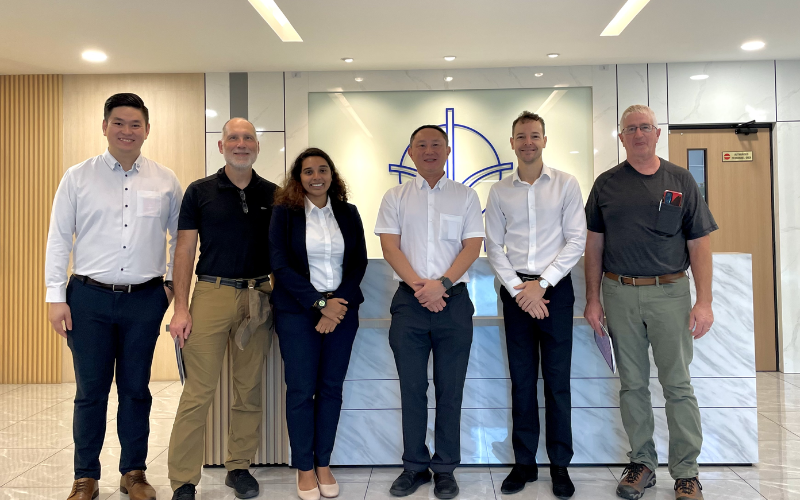
Picture taken during a sourcing trip with MoveToAsia sourcing team supporting a US customer assessing Malaysia capabilities
Depending on the assignment, this means clarifying:
-
drawings or specifications;
-
expected volumes;
-
manufacturing process;
-
target markets;
-
compliance;
-
timeline;
-
quality expectations.
The team can then identify and pre-qualify Malaysian manufacturers according to technical and commercial fit.
Where required, this is followed by factory audits and joint visits with the client to verify:
-
actual equipment;
-
engineering capabilities;
-
production processes;
-
capacity;
-
quality systems;
-
subcontracting;
-
operational organization.
Once manufacturing begins, support can extend into:
-
sampling;
-
production follow-up;
-
quality inspection;
-
supplier coordination;
-
shipment readiness.
The objective is not simply to create a supplier introduction.
If you are sourcing from Malaysia and need greater visibility over supplier selection, factory capability, or production execution, MoveToAsia can support you with a structured, buyer-side approach. From qualifying potential manufacturers to organizing audits, factory visits, and production follow-up, our objective is to help you make sourcing decisions based on verified information and maintain control as the project develops.
It is to help the buyer establish a manufacturing relationship that can be verified before commitment and controlled once production starts.
Conclusion: a sourcing agent should provide control, not simply contacts
Malaysia enters the second half of 2026 with continued manufacturing momentum.
Manufacturing sales reached RM177.0 billion in June 2026, up 9.8% year-on-year. During the first six months of the year, 973 manufacturing projects representing RM51.3 billion of investment were approved, while Malaysia attracted RM218.5 billion of investment across the wider economy.
The country’s international trade position is equally significant.
Malaysia exported a record RM1.607 trillion of goods in 2025, with total trade exceeding RM3 trillion for the first time.
These indicators reinforce Malaysia’s position as a serious manufacturing platform.
But country-level strength does not guarantee supplier-level performance.
A successful sourcing project still depends on selecting a manufacturer that can:
-
understand the product;
-
manufacture it consistently;
-
allocate sufficient capacity;
-
control subcontractors;
-
manage quality;
-
communicate deviations;
-
scale alongside the buyer.
This is where the role of a professional sourcing agent should be evaluated.
The agent’s value is not the size of a supplier database.
It is the ability to convert an unknown manufacturing market into a structured and evidence-based supplier selection process, and then remain involved where necessary to keep production under control.
For companies without an established procurement team in Malaysia, this can reduce both sourcing risk and the internal workload required to manage manufacturers from overseas.
FAQ – Finding a Reliable Sourcing Agent in Malaysia
What is the difference between a sourcing agent and a trading company in Malaysia?
An independent sourcing agent normally represents the buyer and provides services such as supplier identification, factory qualification, audits, negotiations and production follow-up.
A trading company generally buys and resells products or coordinates manufacturing through its own supplier network.
Neither model is automatically better. The important distinction is understanding factory transparency, pricing structure and who the intermediary represents.
How much does a sourcing agent in Malaysia charge?
There is no universal rate.
Agents may work through:
-
project fees;
-
daily rates;
-
purchasing commissions;
-
monthly retainers;
-
hybrid structures.
Buyers should compare the scope of work rather than commission percentage alone.
Should the sourcing agent disclose the factory?
For an independent supplier-identification assignment, direct visibility of the shortlisted manufacturers is generally preferable.
If the provider operates as a trader or procurement company, the model may be different. This should be clarified before engagement.
Are Malaysian suppliers generally compliant with EU and US standards?
Many Malaysian exporters are accustomed to international customer requirements.
However, compliance should always be verified supplier by supplier and product by product.
An ISO certificate alone does not prove that a particular product meets destination-market requirements.
What services should a good sourcing agent provide beyond supplier introduction?
Depending on the project, services can include:
-
feasibility assessment;
-
supplier search;
-
supplier qualification;
-
RFQ management;
-
quotation comparison;
-
factory audit;
-
sampling;
-
negotiations;
-
production follow-up;
-
quality control.
The exact scope should depend on project risk.
Is Malaysia suitable for high-volume manufacturing?
Yes, in several industries.
Malaysia hosts high-volume electronics, semiconductor, medical, automotive and other manufacturing operations.
However, for highly labor-intensive commodity products, countries with lower labor costs or deeper mass-production ecosystems may sometimes be more competitive.
When should I involve a sourcing agent?
Ideally before supplier selection.
Early involvement allows technical requirements, expected volumes and sourcing criteria to be clarified before factories are approached.
This is particularly important when tooling, compliance or custom manufacturing is involved.
Can a sourcing agent help with factory audits?
Yes.
Factory audits can be one of the most valuable parts of local sourcing support, particularly before committing tooling or significant purchase volumes.
The audit should be tailored to the manufacturing process rather than relying solely on a generic checklist.
Can a sourcing agent support logistics?
A sourcing agent is not necessarily a freight forwarder.
However, the sourcing team can coordinate shipment readiness, packaging, export documents and communication between the factory and logistics provider.
How can I tell if a Malaysian supplier is really a manufacturer?
Verify:
-
registered and factory addresses;
-
machinery;
-
employee structure;
-
production processes;
-
raw-material storage;
-
QC facilities;
-
subcontracting.
For important projects, physical verification is preferable.
How does MoveToAsia approach sourcing in Malaysia?
MoveToAsia combines supplier research with qualification and on-site verification.
Depending on the assignment, the team can support supplier identification, RFQs, factory audits, joint supplier visits, sampling, production follow-up and quality control.
The objective is not merely to produce a list of Malaysian factories, but to help clients determine which manufacturers are genuinely capable of becoming long-term production partners.