

For foreign buyers, however, Malaysia’s real advantage is not that every supplier is automatically compliant or sophisticated.
It is that the country offers a deep enough industrial ecosystem to find manufacturers capable of supporting controlled, export-oriented medical-device programs when suppliers are properly qualified.
At MoveToAsia, we have supported foreign companies assessing Malaysia for medical-device and healthcare-related manufacturing, where supplier selection requires a much deeper level of scrutiny than in conventional sourcing projects. Our work typically focuses on identifying manufacturers with the right technical and regulatory profile, reviewing quality systems and process controls, and conducting factory visits to verify whether their actual production environment can support the traceability, validation, and consistency required for medical applications.
This guide explains what Malaysia manufactures well, how its regulatory environment affects sourcing, where the main medtech clusters are located, and what buyers should verify before committing tooling, validation or production.
Why medical device programs choose Malaysia
Malaysia’s medical-device proposition is rarely based on being the cheapest manufacturing country in Southeast Asia.
Its competitive position is stronger where a project requires:
-
repeatable manufacturing;
-
documented processes;
-
engineering support;
-
material traceability;
-
regulated production;
-
clean manufacturing environments;
-
reliable export operations.
The industry is also larger and more diversified than many foreign companies initially expect.
MIDA identifies Malaysia as the largest medical-device market in Southeast Asia, with the domestic market valued at approximately RM10.6 billion in 2023. The sector is expected to continue expanding toward roughly US$4.8 billion by 2028, representing an estimated annual growth rate of around 7.9%.
Malaysia’s industrial strategy is also explicitly encouraging higher-value medical technologies.
Under the New Industrial Master Plan 2030, the country is targeting areas such as:
-
advanced diagnostics;
-
minimally invasive solutions;
-
precision medical devices;
-
convergence technologies;
-
connected medical technology.
In July 2026, MIDA described Malaysia’s longer-term direction as a shift from traditional “build-to-print” toward “build-to-design”, reflecting greater emphasis on design, engineering, digital health and advanced manufacturing capabilities.
For sourcing teams, this is an important development.
Malaysia should increasingly be evaluated not only as a location for contract production, but also for:
engineering + industrialization + component manufacturing + assembly + validation support
depending on supplier capability.
A medical-device industry supported by a wider manufacturing ecosystem
Medical-device manufacturing rarely operates independently.
A single product may require:
-
injection-molded components;
-
precision metals;
-
PCB assemblies;
-
cables;
-
sensors;
-
packaging;
-
sterilization;
-
cleanroom assembly;
-
testing;
-
labeling.
Malaysia’s existing industrial strengths create important advantages here.
MIDA describes the country’s medtech ecosystem as extending from upstream R&D and component manufacturing through assembly, sterilization, distribution and after-sales activities.
This means buyers can potentially build more of the medical-device supply chain inside Malaysia rather than sourcing every supporting operation from another country.
Major international medical companies with manufacturing operations in Malaysia include groups such as:
-
B. Braun;
-
Boston Scientific;
-
Dexcom;
-
Smith+Nephew;
-
Teleflex;
-
Abbott;
-
Steris.
Their presence has helped create a supporting ecosystem of Malaysian suppliers familiar with medical, electronics and precision-manufacturing requirements.
What Malaysia can manufacture well in medical devices
Malaysia’s medical-device manufacturing capabilities span a wide spectrum.
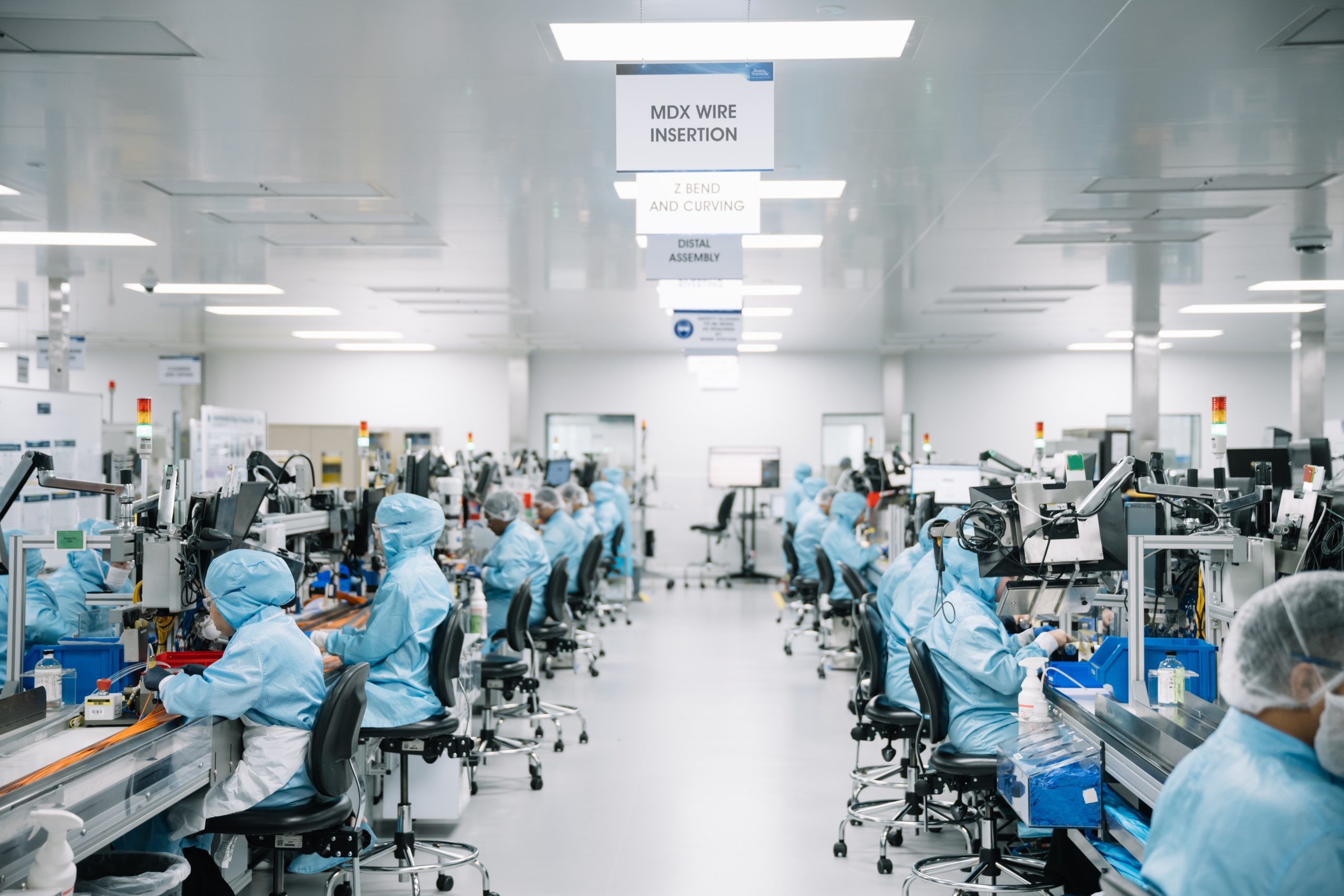
The appropriate sourcing location and supplier profile depend heavily on product complexity.
Consumables and single-use medical products
Malaysia has long-established capabilities in high-volume medical consumables.
Products can include:
-
examination products;
-
tubing;
-
disposable sets;
-
selected catheter components;
-
molded consumables.
The key sourcing variables are typically:
-
material consistency;
-
production hygiene;
-
process repeatability;
-
automation;
-
packaging;
-
traceability.
Catheters and minimally invasive devices
Malaysia is increasingly relevant for more sophisticated single-use and minimally invasive products.
Typical manufacturing requirements may include:
-
extrusion;
-
precision molding;
-
bonding;
-
assembly;
-
cleanroom production;
-
inspection;
-
packaging.
These projects require much stronger process validation than general consumer-product manufacturing.
Precision medical components
Malaysia’s precision-machining ecosystem, particularly around Penang, can support products such as:
-
surgical components;
-
orthopedic instrumentation;
-
precision housings;
-
fixtures;
-
specialized metal components.
For these products, buyers should evaluate:
-
dimensional inspection;
-
CMM capability;
-
material traceability;
-
surface finishing;
-
process validation.
Electromechanical medical devices
Malaysia’s electronics and EMS base creates another important opportunity.
Potential programs include:
-
diagnostic devices;
-
monitoring equipment;
-
powered medical equipment;
-
medical electronics;
-
sensor-based devices.
The combination of:
PCBA + plastics + precision metal + assembly + testing
can make Malaysia particularly interesting for complete medical-device manufacturing rather than individual components alone.
Higher-value and connected medical technologies
Malaysia’s industrial policy is increasingly focused on technologies integrating:
-
sensors;
-
connectivity;
-
IoT;
-
artificial intelligence;
-
point-of-care diagnostics.
This direction is important because it overlaps strongly with Malaysia’s existing semiconductor and electronics capabilities.
Which medical-device projects are a good fit for Malaysia?
| Product / Project Type | Malaysia Fit | Key Supplier Capabilities to Verify |
|---|---|---|
| Medical consumables | Strong | Automation, hygiene, material control, scale |
| Catheters / tubing | Strong | Extrusion, bonding, cleanroom, validation |
| Injection-molded medical components | Strong | ISO 13485, tooling, resin traceability, cleanroom |
| Precision surgical components | Strong | CNC, metrology, traceability, finishing |
| Diagnostic equipment | Strong | Electronics, assembly, testing, software/change control |
| Electromechanical devices | Strong | EMS + mechanical integration + functional testing |
| Implant-related components | Selective | Specialized materials, validation, regulatory experience |
| Simple commodity medical products | Strong but price-sensitive | Scale, automation, purchasing efficiency |
| Highly novel devices requiring deep R&D | Supplier-specific | Engineering, design controls, regulatory-development experience |
This is why supplier search should begin with process requirements, not simply the term “medical-device factory.”
Regulation in Malaysia: why it matters even if you manufacture for export
Malaysia regulates medical devices primarily through the Medical Device Act 2012 (Act 737) and related regulations administered by the Medical Device Authority (MDA).
The framework uses a risk-based classification system:
-
Class A: low risk;
-
Class B: low-moderate risk;
-
Class C: moderate-high risk;
-
Class D: high risk.
The classification affects registration and regulatory requirements.
However, one important distinction should be made for companies manufacturing specifically for overseas markets.
Export-only medical devices: an important 2024 regulatory change
Earlier descriptions of the Malaysian regulatory framework sometimes state that every medical device must be registered before being exported.
That is no longer universally correct.
Under the Medical Device (Exemption) Order 2024, medical devices produced for export-only purposes can be exempted from Malaysian device-registration requirements.
The exporter must still apply to the Medical Device Authority and obtain a Medical Device for Export Only Exemption Letter before export.
For companies manufacturing entirely for Europe, North America or another overseas destination, this distinction can materially affect the regulatory pathway.
The destination-market requirements still apply independently.
For example:
Manufacturing in Malaysia does not replace EU MDR, US FDA or other target-market compliance requirements.
Good Distribution Practice for Medical Devices
Malaysia also applies Good Distribution Practice for Medical Devices requirements across relevant parts of the medical-device supply chain.
This reinforces expectations around:
-
storage;
-
transportation;
-
traceability;
-
documentation;
-
complaint handling;
-
post-market controls.
For buyers, the value is not simply the regulation itself.
It contributes to a broader manufacturing environment where structured documentation and traceability are already familiar concepts.
ISO 13485: important, but never sufficient on its own
ISO 13485 is one of the first certifications buyers typically request when qualifying medical-device manufacturers.
It is important.
But a PDF certificate should never become the end of supplier qualification.
Check:
-
which legal company owns the certificate;
-
which factory address it covers;
-
certification scope;
-
expiry date;
-
issuing body.
More importantly, verify whether the system actually operates.
Ask to see:
-
recent nonconformance reports;
-
corrective actions;
-
training records;
-
equipment calibration;
-
supplier qualification files;
-
traceability records;
-
change-control records.
A factory that claims to have almost no nonconformances is not necessarily better than a factory that can show well-documented deviations and effective corrective actions.
Where to source in Malaysia: clusters that matter for medtech
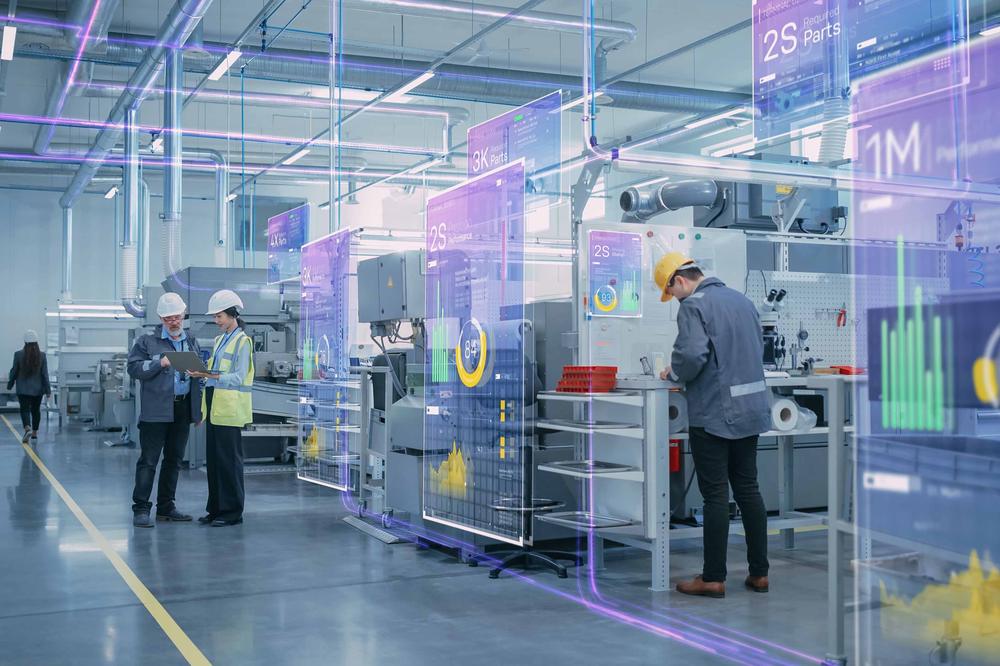
Malaysia’s medical-device sourcing landscape is highly cluster-driven.
Penang: Malaysia’s principal medtech manufacturing cluster
Penang should normally be the first region evaluated for technically demanding medical-device sourcing.
InvestPenang describes the state as having the highest concentration of MedTech companies in Malaysia and Southeast Asia.
It currently hosts six of the global Top 40 medical-device companies by sales:
-
Abbott;
-
Boston Scientific;
-
B. Braun;
-
Smith+Nephew;
-
Steris;
-
Dexcom.
The surrounding supply chain includes companies certified to standards such as ISO 13485 and operating across:
-
precision machining;
-
plastics;
-
electronics;
-
tooling;
-
automation;
-
assembly.
Products manufactured in Penang include categories such as:
-
scientific instruments;
-
medical electrodes;
-
catheters;
-
surgical equipment;
-
orthopedic instrumentation.
For international sourcing teams, Penang’s biggest advantage is therefore not simply the number of medical-device factories.
It is the density of supporting suppliers surrounding those factories.
Kedah and the Northern Corridor
Neighboring Kedah complements Penang through the wider northern industrial ecosystem.
Its relevance increases particularly when the product requires:
-
electronics;
-
automation;
-
precision components;
-
technically controlled manufacturing.
For some sourcing projects, Penang and Kedah should therefore be evaluated together rather than as separate markets.
Klang Valley and Selangor
Selangor and Greater Kuala Lumpur have a broader industrial base.
The region can be relevant for:
-
injection molding;
-
packaging;
-
printing;
-
electronics;
-
contract manufacturing;
-
distribution;
-
supporting services.
It may be particularly attractive when a medical product needs several different industrial processes.
Johor
Johor provides another important manufacturing base, particularly for companies integrating their Malaysian operations with Singapore.
The region can support:
-
electronics;
-
plastics;
-
industrial manufacturing;
-
assembly;
-
regional logistics.
For internationally managed programs, Singapore-Johor connectivity can provide practical advantages in management, transportation and regional distribution.
Medical-device exports: a meaningful global manufacturing footprint
Malaysia’s medical-device industry is highly export-oriented.
Medical-device exports increased 31.6% in 2024 to RM37.03 billion, with major destination markets including:
-
United States;
-
Belgium;
-
Germany;
-
Singapore;
-
Japan.
Together, those markets represented more than 60% of Malaysian medical-device exports in 2024.
Exports stood at approximately RM34.54 billion in 2025.
The slight normalization from the exceptional 2024 level does not change the broader picture: Malaysia remains deeply integrated into global medical supply chains.
For sourcing companies, this matters because substantial production already serves demanding international markets.
Investment is moving toward higher-value medical technology
Malaysia’s 2025 medtech investment figures show a significant acceleration.
| Indicator | 2024 | 2025 |
|---|---|---|
| Approved medical-device projects | 23 | 46 |
| Approved investment | RM1.8 bn | RM4.0 bn |
| Foreign investment | RM1.1 bn | RM3.4 bn |
| Foreign share | 61.6% | 85% |
This represents more than a doubling of both the number of approved projects and total investment.
Of the RM4.0 billion approved in 2025:
-
approximately RM3.3 billion involved new projects;
-
around RM0.7 billion involved expansion or diversification;
-
projects were expected to generate 3,393 employment opportunities.
This supports Malaysia’s broader ambition to move further into advanced medtech rather than remaining concentrated around conventional medical consumables.
What to verify on factory tours in Malaysia
Malaysia’s medical-device factories can present extremely well.
This makes technical auditing more important, not less.
A strong audit should test the actual manufacturing system.
1. Material control and traceability
Ask the supplier to select an existing finished batch and demonstrate:
Finished device → production lot → component lot → raw material → supplier documentation
If traceability depends heavily on spreadsheets, handwritten memory or individual operators, investigate further.
2. Cleanroom behavior and discipline
A cleanroom is not simply a physical room.
Verify:
-
gowning procedure;
-
personnel access;
-
pressure differential;
-
particle monitoring;
-
cleaning;
-
environmental records;
-
material transfer;
-
product flow.
Observe operators.
Daily behavior frequently tells you more than the cleanroom certificate.
3. Process validation
Ask how the supplier manages:
-
IQ – Installation Qualification;
-
OQ – Operational Qualification;
-
PQ – Performance Qualification
where applicable.
Also investigate whether processes such as:
-
molding;
-
bonding;
-
sealing;
-
sterilization;
-
packaging
have controlled validation plans.
4. Change control and revision management
For medical devices, uncontrolled change is particularly dangerous.
Ask:
-
Who can approve a material change?
-
How are drawing revisions released?
-
How are old instructions removed?
-
How are changes communicated to operators?
-
How does the supplier notify the customer?
5. Nonconformance and CAPA
Ask for a real recent example.
Review:
Defect → containment → root cause → corrective action → verification
A supplier with an organized CAPA system is generally safer than one claiming quality problems rarely occur.
6. Calibration and metrology
Verify:
-
calibration status;
-
equipment identification;
-
measurement capability;
-
gauge management;
-
measurement-system suitability.
7. Subcontractor control
Medical-device manufacturing commonly involves external:
-
sterilization;
-
coating;
-
printing;
-
specialized machining;
-
packaging.
Map the complete supply chain.
The buyer needs to understand:
who physically performs each critical process.
Medical device supplier qualification scorecard
For larger projects, suppliers can be evaluated with a structured matrix.
| Qualification Area | Indicative Weight |
|---|---|
| Quality system / ISO 13485 maturity | 20% |
| Technical manufacturing capability | 20% |
| Process validation capability | 15% |
| Traceability and documentation | 10% |
| Engineering / DFM support | 10% |
| Regulatory-market experience | 10% |
| Available capacity | 5% |
| Commercial competitiveness | 5% |
| Communication / project management | 5% |
For higher-risk products, regulatory experience and validation should receive greater weighting.
For straightforward Class A products, cost and scalability may become more important.
Sterilization: verify the complete supply chain
For sterile medical devices, sourcing does not stop when the device leaves the assembly line.
Sterilization can become a critical part of the supply chain.
Depending on the device, processes may include:
-
ethylene oxide;
-
radiation;
-
other validated sterilization methods.
Buyers should determine:
-
whether sterilization is internal or outsourced;
-
location of the sterilization partner;
-
logistics between facilities;
-
validation responsibility;
-
batch traceability;
-
packaging validation;
-
release procedures.
A strong assembly factory connected to a poorly controlled sterilization process can still create major regulatory risk.
Cost structure: why Malaysia can still be competitive
Malaysia generally has higher direct labor costs than some lower-cost Southeast Asian manufacturing countries.
For medical devices, however, direct labor can be only one part of the cost equation.
A more useful comparison is:
**Manufacturing cost
-
validation
-
scrap
-
rework
-
quality management
-
inventory
-
expedited freight
-
supplier management
-
compliance risk**
Suppose Supplier A quotes 8% less but requires:
-
more frequent inspections;
-
repeated corrective actions;
-
additional validation runs;
-
higher scrap;
-
more engineering involvement.
The apparent price advantage can disappear quickly.
Malaysia can therefore be particularly competitive for products where the cost of manufacturing instability is high.
Malaysia vs other Southeast Asian sourcing options
Malaysia should not automatically be selected over Vietnam, Thailand or another regional manufacturing country.
The better location depends on the device.
| Factor | Malaysia | Vietnam | Thailand |
|---|---|---|---|
| Medtech cluster maturity | Very strong | Growing | Strong |
| E&E integration | Very strong | Strong | Strong |
| Precision engineering | Strong | Growing quickly | Strong |
| English business communication | Strong | Moderate | Moderate |
| Low-cost labor advantage | Moderate | Strong | Moderate |
| Medical consumables | Very strong | Growing | Strong |
| Higher-value medtech | Strong / expanding | Emerging | Strong |
| Supplier depth for medtech | Strong, especially Penang | More fragmented | Strong in selected clusters |
This table should be used as a directional comparison rather than a universal ranking.
A supplier-level assessment remains more important than the country-level comparison.
Common sourcing traps in Malaysia
Overvaluing certifications and undervaluing evidence
ISO 13485 helps establish a baseline.
It does not prove day-to-day manufacturing discipline.
Audit the system.
Assuming FDA experience means your product is compliant
A factory may manufacture FDA-regulated products for another customer.
That does not automatically make your new product FDA compliant.
Product compliance and manufacturing capability need to be evaluated separately.
Assuming subcontracting is controlled
Identify every critical subcontractor.
Pay particular attention to:
-
sterilization;
-
coatings;
-
special processes;
-
packaging.
Treating medtech like normal industrial manufacturing
A good industrial manufacturer can still be unsuitable for medical devices.
Medical manufacturing requires a different level of:
-
documentation;
-
change control;
-
validation;
-
traceability.
Selecting suppliers before defining the regulatory pathway
Product classification and target-market requirements should influence factory selection.
If you are exploring Malaysia for a medical-device, diagnostic, precision component, or healthcare manufacturing project, MoveToAsia can help you structure the supplier search around the specific risk level and manufacturing requirements of your product. From mapping the relevant medtech clusters and pre-qualifying factories to technical audits and on-site assessments, our team can help you identify partners whose quality systems, production capabilities, and compliance experience are aligned with your target markets and long-term manufacturing objectives.
Otherwise, a technically capable supplier can later prove unsuitable for the compliance requirements.
Ignoring supplier fit by volume
A major multinational supplier may technically fit the project but have little interest in relatively small volumes.
Conversely, a smaller supplier may provide excellent development support but lack the capacity required at scale.
Commercial fit matters alongside regulatory capability.
A practical way to find the right suppliers in Malaysia

A structured sourcing process can significantly reduce risk.
Step 1 – Define the device and regulatory pathway
Clarify:
-
intended use;
-
risk classification;
-
target countries;
-
regulatory requirements;
-
sterilization;
-
cleanroom requirements.
Step 2 – Map required manufacturing processes
Break the product into:
-
molding;
-
machining;
-
electronics;
-
tubing;
-
assembly;
-
packaging;
-
sterilization.
Step 3 – Search by cluster and process
For sophisticated medtech programs, Penang should often be evaluated first.
Then expand into Selangor, Johor and other relevant manufacturing clusters depending on the required processes.
Step 4 – Pre-qualify suppliers remotely
Request:
-
ISO 13485;
-
machine list;
-
cleanroom details;
-
process flow;
-
export-market experience;
-
subcontractor list;
-
indicative capacity.
Step 5 – Conduct technical factory audits
Audit the manufacturing system against the specific product requirements.
Step 6 – Run controlled sampling and validation
Do not move directly from a successful prototype to full-scale production.
Use:
sample → engineering validation → pilot → process validation → scale-up
according to the device and regulatory strategy.
The 2026 outlook: from manufacturing base to higher-value MedTech hub
Malaysia’s medical-device sector is entering another stage of development.
The 2025 figures are particularly significant:
-
RM4.0 billion of approved medtech investment;
-
46 projects;
-
85% foreign-investment share.
This compares with RM1.8 billion and 23 projects in 2024.
At the same time, MIDA’s 2026 industry positioning emphasizes growing opportunities in:
-
AI-enabled healthcare;
-
connected devices;
-
digital health;
-
automation;
-
minimally invasive technology;
-
advanced diagnostics.
The objective is increasingly to shift Malaysia from being predominantly a contract manufacturing destination toward becoming a higher-value regional medical-technology development and manufacturing hub.
Budget 2026 also allocated RM46.5 billion to Malaysia’s Ministry of Health, supporting further investment in hospitals, clinics, equipment modernization and healthcare capacity.
These trends should continue strengthening both domestic medtech demand and the supporting manufacturing ecosystem.
Conclusion: Malaysia works well for medtech when you treat it as a system
Malaysia has developed a credible position in global medical-device manufacturing.
The evidence is increasingly visible.
Penang has developed one of Southeast Asia’s most concentrated medtech clusters, supported by multinational manufacturers and a wider ecosystem of electronics, plastics, precision engineering, tooling and automation suppliers.
Malaysia is also moving beyond its historical strength in consumables.
The industry is increasingly targeting:
-
advanced diagnostics;
-
minimally invasive devices;
-
precision medical technologies;
-
connected healthcare;
-
higher-value OEM and design-led manufacturing.
For international sourcing companies, however, the most important lesson remains unchanged:
Do not select a medical-device supplier because Malaysia has a strong medtech industry. Select the supplier because its manufacturing system has been verified against your specific device.
That means assessing:
-
ISO 13485 maturity;
-
validation capability;
-
cleanroom discipline;
-
traceability;
-
engineering;
-
subcontractor control;
-
available capacity;
-
target-market experience.
Malaysia can provide an excellent base for medical-device manufacturing when these elements align.
The objective should therefore not simply be to find a medical-device manufacturer in Malaysia.
It should be to identify a partner capable of supporting your product from industrialization and validation through stable, auditable long-term production.