

At MoveToAsia, we have worked with foreign companies looking to develop and manufacture plastic components in Malaysia, from early supplier screening and tooling assessment to technical factory visits and production capability reviews. For injection molding projects, we pay particular attention to the elements that often determine long-term performance: mold design, material control, process repeatability, secondary operations, and the supplier’s ability to support production as volumes increase.
Malaysia’s Position in the Global Plastics Manufacturing Ecosystem
An Industrial Strategy Focused on Value Creation
Malaysia’s plastics sector should be understood within the broader transformation of its manufacturing economy.
Rather than competing principally through inexpensive labor, Malaysia has spent decades developing capabilities in industries such as:
-
electrical and electronics;
-
semiconductors;
-
medical devices;
-
automotive;
-
machinery and equipment;
-
aerospace;
-
chemicals and advanced materials.
Plastic manufacturing has developed alongside these sectors.
According to MIDA, Malaysia’s plastics industry now plays an important downstream role in converting petrochemical materials into higher-value products for packaging, E&E, automotive and construction. The industry is also gradually shifting toward more sophisticated engineering plastics used in advanced manufacturing.
The Malaysian industry therefore covers two very different markets.
At one end are high-volume commodity applications such as packaging and household products.
At the other are precision molded components requiring:
-
tight dimensional tolerances;
-
engineered materials;
-
validated tooling;
-
controlled production parameters;
-
detailed traceability;
-
secondary operations;
-
clean manufacturing environments;
-
structured quality systems.
It is this second category that makes Malaysia particularly relevant for international OEM and ODM projects.
A Plastics Industry Worth More Than RM64 Billion
The industry’s structure also gives a useful picture of Malaysian manufacturing demand.
According to MPMA’s latest industry figures for 2024:
-
Packaging accounted for 44% of the plastics market;
-
Electrical & electronics represented 29%;
-
Automotive represented 12%;
-
construction accounted for around 6%;
-
agriculture, household and other segments represented the remainder.
Annual industry sales increased from approximately RM61.4 billion in 2023 to RM64.8 billion in 2024.
For companies looking specifically at injection molding, the E&E and automotive figures are particularly relevant.
These sectors create demand for molded products that go considerably beyond simple packaging:
-
connectors;
-
electronic housings;
-
precision covers;
-
sensor components;
-
electrical insulation components;
-
clips and fastening systems;
-
automotive interior parts;
-
technical assemblies;
-
overmolded components.
This demand helps sustain the tooling, engineering and quality-control ecosystem surrounding Malaysian molders.
Deep Integration into Global Supply Chains
Malaysia’s plastics industry is strongly connected to international markets.
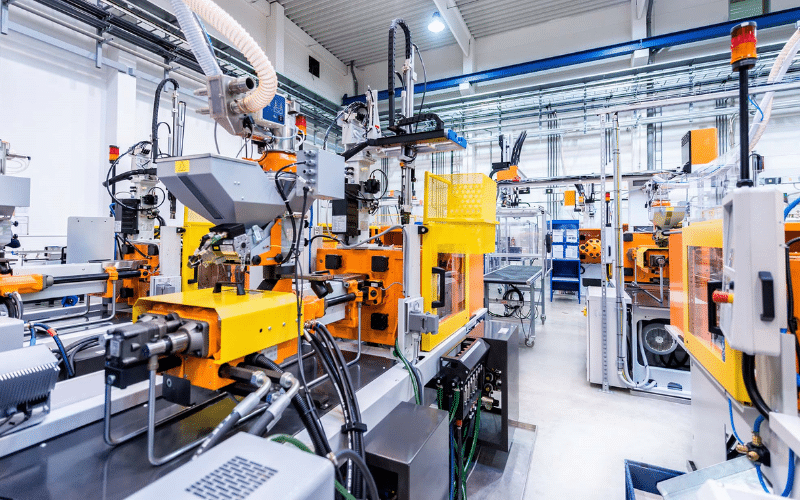
Plastic product exports reached approximately RM17.34 billion in 2024, recovering from RM16.1 billion in 2023. MPMA attributed the improvement partly to recovering external demand and the global technology upcycle.
The United States is an increasingly important market. Malaysian plastic-product exports to the US reportedly increased by approximately 18% in 2024 to RM2.03 billion.
This export orientation matters for buyers because factories serving international customers tend to become familiar with requirements around:
-
documentation;
-
material declarations;
-
inspection;
-
traceability;
-
customer audits;
-
packaging;
-
export logistics;
-
corrective actions.
Malaysia’s wider trade environment reinforces this position. The country recorded a record RM3.061 trillion in total trade in 2025, while exports reached approximately RM1.607 trillion.
Plastic Injection Molding as an Advanced Manufacturing Process
A Technically Demanding Industrial Discipline
Plastic injection molding can appear straightforward: melt resin, inject it into a mold, cool the part and repeat.
In reality, producing technically demanding parts consistently requires precise control over numerous variables.
These can include:
-
resin moisture;
-
melt temperature;
-
mold temperature;
-
injection pressure;
-
holding pressure;
-
cooling time;
-
gate design;
-
venting;
-
shrinkage;
-
warpage;
-
cavity balance;
-
environmental conditions.
A factory may therefore own modern injection molding machines without necessarily possessing the engineering discipline required for a demanding industrial project.
When qualifying a supplier, buyers should assess the process behind the machine.
Questions should include:
-
How are parameters validated?
-
How are approved settings controlled?
-
Who can modify them?
-
How is the first-off part approved?
-
How does the factory react to process drift?
-
How are defects categorized?
-
How is process history recorded?
For long-term OEM programs, these questions are frequently more important than simply knowing how many injection presses the supplier operates.
Repeatability as a Core Requirement for OEM and ODM Projects
Repeatability is one of the most important indicators of injection molding performance.
A supplier may successfully manufacture 100 acceptable samples but struggle to maintain the same result across hundreds of thousands of parts.
This is why serious injection molding factories increasingly invest in:
-
automated material feeding;
-
mold-temperature controllers;
-
robotic part handling;
-
machine monitoring;
-
automated inspection;
-
controlled parameter recipes;
-
preventive maintenance.
Malaysia’s manufacturing sector more broadly continues to invest heavily in automation and high-value manufacturing. Approved manufacturing investments reached RM131.3 billion in 2025, covering 1,354 projects, with MIDA highlighting increasing investment in automation and technology-intensive production.
The trend is visible specifically in plastics.
In November 2025, Malaysian precision injection molding company Polyplas inaugurated a new high-technology facility in Penang backed by approximately RM24 million in facility investment and RM50 million in advanced machinery and automation.
For international buyers, these investments signal an industry increasingly focused on productivity and precision rather than competing purely through manual labor.
Mold Making as the Foundation of Manufacturing Performance
Mold Design and Tooling Engineering
In injection molding, the mold is often more important than the molding machine.
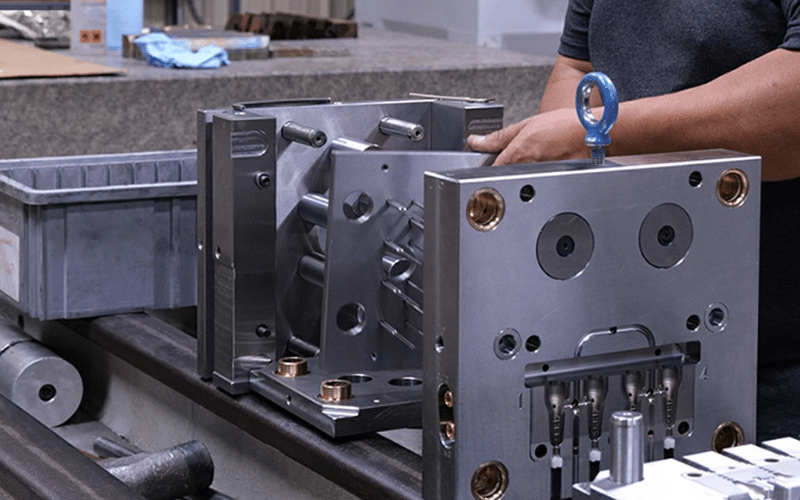
Tool design directly influences:
-
cycle time;
-
dimensional stability;
-
surface quality;
-
scrap rate;
-
cooling efficiency;
-
part ejection;
-
maintenance frequency;
-
final unit cost.
Many Malaysian injection molders either maintain in-house tooling departments or work closely with specialized toolmakers.
Typical capabilities can include:
-
CAD/CAM;
-
CNC machining;
-
EDM;
-
wire cutting;
-
grinding;
-
polishing;
-
mold-flow simulation;
-
mold modification;
-
preventive maintenance.
For buyers developing a new product, early Design for Manufacturing (DFM) is particularly important.
A capable supplier should be prepared to challenge:
-
wall thickness;
-
draft angles;
-
undercuts;
-
rib design;
-
gate position;
-
ejector location;
-
tolerance assumptions;
-
cosmetic specifications.
The supplier that identifies problems before tooling is manufactured may ultimately save considerably more money than the supplier providing the cheapest mold quotation.
Tool Durability and Preventive Maintenance
Tooling is a long-term manufacturing asset.
For OEM programs expected to run for several years, buyers should specify:
-
expected mold life;
-
mold steel;
-
cavity number;
-
hot-runner or cold-runner system;
-
preventive maintenance intervals;
-
wear-component replacement;
-
spare components;
-
storage conditions.
Tool maintenance should also be documented.
A good supplier should be able to tell you how many shots the mold has completed and when preventive maintenance is required.
Tooling Ownership: One of the Most Important Contractual Points
Tool ownership is an area international buyers frequently underestimate.
If you finance the tool, the agreement should clearly establish:
-
who legally owns it;
-
where it will be stored;
-
whether the supplier can use it for another customer;
-
whether it can be moved;
-
what happens if the supplier relationship ends;
-
who pays for routine maintenance;
-
who pays for damage;
-
how tooling modifications are approved.
Ideally, the tool should also carry a permanent asset plate identifying the client and tool reference.
For strategically important products, buyers may also want the right to inspect or relocate the mold.
OEM and ODM Manufacturing Models in Malaysia
OEM Manufacturing: Precision and Operational Discipline
OEM remains a core model for Malaysian injection molding.
The international client typically provides:
-
2D drawings;
-
3D files;
-
material specifications;
-
tolerance requirements;
-
cosmetic specifications;
-
testing requirements.
The supplier then industrializes and manufactures the component.
Malaysia is particularly well suited to this model when products require controlled technical documentation and repeat production.
For more complex projects, OEM support may extend beyond molding into:
-
tooling;
-
insert molding;
-
ultrasonic welding;
-
printing;
-
painting;
-
assembly;
-
testing;
-
packaging.
The most valuable suppliers are often those capable of managing several of these operations within one controlled production system.
ODM Manufacturing: Co-Development and Value Creation
ODM goes further.
Instead of simply executing the buyer’s design, the supplier participates in product development.
This can include:
-
industrial design;
-
mechanical engineering;
-
material selection;
-
DFM;
-
tooling optimization;
-
cost reduction;
-
product testing.
ODM can substantially reduce development time when the supplier has strong engineering capabilities.
However, intellectual-property rules become more important.
Contracts should define:
-
existing supplier know-how;
-
client-funded design work;
-
ownership of CAD files;
-
tooling ownership;
-
exclusivity;
-
rights to future modifications.
For proprietary products, these questions should be resolved before significant engineering work begins.
Plastic Materials and Technical Specifications
Malaysia’s plastics ecosystem processes both commodity resins and engineering polymers.
Common materials include:
-
PP – polypropylene;
-
PE – polyethylene;
-
PS – polystyrene;
-
ABS;
-
PC – polycarbonate;
-
PA/Nylon;
-
POM;
-
PMMA;
-
TPE/TPU;
-
glass-fiber-reinforced compounds.
Material selection should never be treated purely as a purchasing decision.
Different polymers behave very differently in terms of:
-
shrinkage;
-
UV resistance;
-
chemical resistance;
-
heat performance;
-
impact strength;
-
flame retardancy;
-
dimensional stability.
Engineering Plastics Are Becoming More Important
MIDA specifically identifies Malaysia’s shift toward higher-value engineering plastics as part of the evolution of the domestic plastics industry.
This is closely connected to growth in:
-
electronics;
-
EV components;
-
medical equipment;
-
industrial applications.
For buyers, this means Malaysia can become especially interesting when molded parts require more advanced materials rather than commodity PP or PE.
Resin Origin and Material Traceability
Material sourcing should also be part of supplier due diligence.
Ask suppliers:
-
Which resin manufacturers do they normally purchase from?
-
Do they buy through authorized distributors?
-
Can they provide certificates of analysis?
-
How are material lots identified?
-
Are recycled materials used?
-
How is resin substitution controlled?
For critical products, the approved resin should be identified by manufacturer and grade, not simply by generic polymer type.
“ABS” is not a sufficient specification for a technical product.
https://www.youtube.com/watch?v=CAu1uiG1RIs&t=18s
Appointment at 2:10 PM to explore the plastic injection workshops
Key Industrial Sectors Driving Injection Molding in Malaysia
Malaysia’s injection molding industry benefits significantly from being surrounded by sophisticated downstream manufacturing sectors.
Electronics and Electrical Equipment
Electronics represents one of the strongest demand drivers.
MPMA estimates E&E represented approximately 29% of the Malaysian plastics industry’s market structure in 2024.
Injection molded applications can include:
-
connectors;
-
switchgear components;
-
PCB housings;
-
device casings;
-
insulation components;
-
sensor housings;
-
cable-management components.
Malaysia’s massive semiconductor and electronics ecosystem creates continued demand for precision-molded components capable of meeting tight dimensional and cleanliness requirements.
Automotive and Mobility
Automotive accounted for approximately 12% of Malaysia’s plastics market in 2024.
Injection molded automotive components can include:
-
interior trim;
-
clips and fasteners;
-
air-management components;
-
electrical connectors;
-
sensor housings;
-
under-hood components.
EV development may increase demand for additional polymer applications involving battery systems, electrical insulation, lightweighting and thermal-management components.
Suppliers serving automotive programs should typically be evaluated for stronger quality systems, potentially including IATF 16949, depending on their role in the supply chain.
Medical Devices: A Higher-Value Opportunity
Medical manufacturing is one of Malaysia’s increasingly important advanced-manufacturing sectors.
MIDA describes a growing medical-device ecosystem covering R&D and component manufacturing through assembly, sterilization and downstream distribution. Major international groups with manufacturing operations in Malaysia include companies such as B. Braun, Boston Scientific, Dexcom, Smith+Nephew and Teleflex.
The Malaysian medical-device market is projected to reach around US$4.5 billion by 2028, according to MIDA, representing an estimated CAGR of 8.5% between 2023 and 2028.
Plastic components for medical applications can require:
-
controlled manufacturing environments;
-
cleanroom molding;
-
ISO 13485;
-
material traceability;
-
validation;
-
controlled packaging;
-
sterilization compatibility.
This segment demonstrates why Malaysia increasingly competes on technical manufacturing capability rather than low labor cost alone.
Consumer and Industrial Products
Malaysia also supports injection molded products for:
-
household goods;
-
appliances;
-
industrial equipment;
-
furniture;
-
construction;
-
packaging.
For these applications, buyers may benefit from suppliers capable of combining plastic molding with other local manufacturing processes such as metal stamping, PCB assembly or final product assembly.
Industrial Clusters: Where to Look for Injection Molding Suppliers
Supplier capability also varies geographically.
Penang and the Northern Corridor
Penang is particularly relevant for precision molding connected to:
-
electronics;
-
semiconductors;
-
medical devices;
-
industrial products.
The launch of Polyplas’ new automated precision molding facility in Penang in late 2025 is one example of continued investment in higher-value plastics manufacturing in the region.
Klang Valley and Selangor
Greater Kuala Lumpur and Selangor have a broader industrial base.
The region can be attractive for projects combining:
-
plastics;
-
electronics;
-
metal components;
-
packaging;
-
assembly;
-
logistics.
It is therefore often particularly relevant for complete OEM products rather than standalone molded components.
Johor
Johor benefits from proximity to Singapore and increasingly sophisticated industrial development.
It can be relevant for manufacturers serving:
-
electronics;
-
consumer products;
-
data-center-related equipment;
-
industrial products;
-
regional distribution.
For foreign buyers operating through Singapore, Johor can also provide practical logistics and management advantages.
Workforce, Automation, and Industrial Know-How
Malaysia has historically invested in technical education and engineering talent.
However, like many developed manufacturing economies in Asia, companies are also responding to labor availability and rising wage pressure through greater automation.
Injection molding is particularly suited to automation.
Factories can automate:
-
resin feeding;
-
insert placement;
-
part removal;
-
degating;
-
inspection;
-
packing;
-
machine monitoring.
The objective is not simply to reduce labor.
Automation can improve:
-
repeatability;
-
productivity;
-
traceability;
-
cycle-time stability;
-
contamination control.
For buyers comparing Malaysia with lower-cost sourcing countries, this is an important distinction.
A higher nominal labor rate does not necessarily translate into a proportionally higher unit cost if the Malaysian factory operates with greater automation and productivity.
Quality Management, Compliance, and Risk Control
A supplier’s quality certification should be treated as the start of qualification, not the end.
Depending on the industry, relevant standards can include:
-
ISO 9001;
-
ISO 14001;
-
ISO 13485;
-
IATF 16949.
Buyers should verify:
-
certification scope;
-
factory address;
-
expiry date;
-
accredited certification body.
What to Check During a Factory Audit
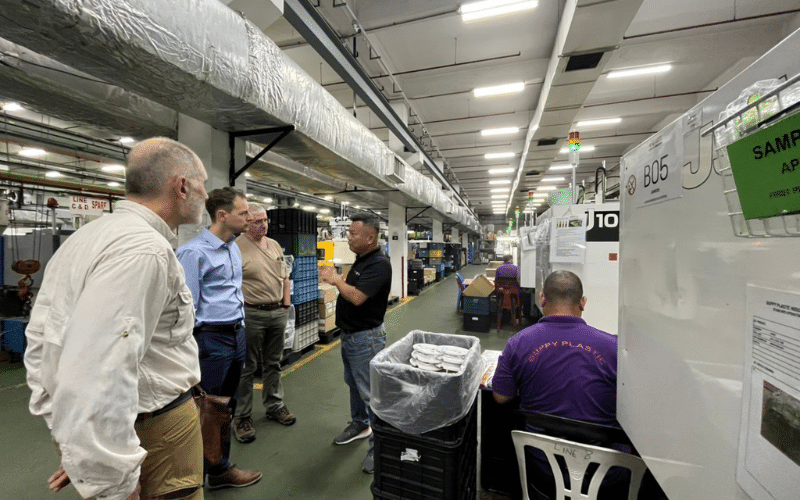
For injection molding, a technical audit should examine:
Raw-material management
-
resin identification;
-
controlled storage;
-
drying;
-
batch traceability.
Tooling
-
mold storage;
-
maintenance;
-
repair capability;
-
tool history.
Production
-
machine condition;
-
parameter control;
-
operator instructions;
-
first-piece approval.
Quality
-
dimensional inspection;
-
measurement equipment;
-
calibration;
-
defect records;
-
nonconforming product control.
Change management
-
material substitution;
-
mold changes;
-
parameter changes;
-
engineering revisions.
A particularly useful audit approach is to select a finished part and ask the supplier to trace it backwards through production to its original material batch.
If this cannot be done reliably, traceability may be weaker than the supplier’s presentation suggests.
Logistics Infrastructure and Export Capability
Malaysia’s plastics manufacturing clusters benefit from extensive port, airport and road infrastructure.
Port Klang, Penang Port and southern Malaysia’s logistics links provide access to international shipping routes, while Kuala Lumpur International Airport and Penang support time-sensitive air freight.
This infrastructure is particularly relevant during:
-
sampling;
-
product launch;
-
initial production;
-
emergency replenishment.
Malaysia’s overall export scale also demonstrates the maturity of its logistics environment. Total Malaysian exports reached a record RM1.607 trillion in 2025, while trade exceeded RM3 trillion for the first time.
However, injection molding lead time should never be evaluated only in terms of production.
A new program may include:
DFM → mold design → tooling → T0 trial → modification → T1/T2 trials → approval → pilot production → mass production
Tooling can therefore dominate the schedule during product development.
Sustainability and the Future of Plastics Manufacturing
Sustainability is becoming a more important factor in Malaysian plastics manufacturing.
Malaysia’s Plastics Sustainability Roadmap 2021–2030 is designed to move the industry toward greater circularity, including better product design, recycling and more sustainable materials management.
The policy direction has continued to evolve.
Malaysia’s environmental authorities confirmed that measures under the sustainability roadmap include development of mandatory eco-design standards for plastic products, with NRES and SIRIM working on the relevant framework.
Malaysia also began implementing additional restrictions on single-use plastic carrier bags from 1 January 2026 as part of the country’s longer-term sustainability policies.
For industrial sourcing, this means sustainability requirements are likely to become increasingly relevant even outside consumer packaging.
Buyers may progressively need to consider:
-
recycled content;
-
recyclable product design;
-
resin traceability;
-
waste recovery;
-
scrap management;
-
material declarations;
-
carbon footprint.
For European and North American brands, it is worth discussing these requirements with suppliers during the design stage rather than attempting to introduce them after tooling is completed.
The Importance of Supplier Qualification Before Tooling
Injection molding creates a particular sourcing risk that buyers should understand:
once the tool has been manufactured and validated at a supplier, changing factories becomes significantly more difficult.
This makes supplier selection before tooling substantially more important than in many other manufacturing processes.
Before approving a tooling deposit, buyers should evaluate:
-
technical molding capability;
-
tooling capability;
-
material expertise;
-
quality systems;
-
available production capacity;
-
financial and organizational stability;
-
export experience;
-
communication;
-
subcontracting;
-
tooling ownership and transfer conditions.
A cheap tooling quotation from the wrong supplier can create years of downstream problems.
Long-Term Outlook for Injection Molding in Malaysia
Malaysia appears well positioned to continue moving toward higher-value plastic manufacturing rather than commodity conversion alone.
Several trends support this direction.
The country’s electronics and semiconductor industries continue to expand.
Medical-device manufacturing is developing into a more important advanced-manufacturing segment.
Automotive and EV supply chains are creating demand for new engineered polymer applications.
Factories are investing in automation.
At the national level, Malaysia recorded RM426.7 billion of approved investments in 2025, the highest level ever recorded and 11% higher than 2024. Manufacturing represented approximately RM131.3 billion of these approvals.
Momentum has continued into 2026. During the first half of the year, Malaysia secured RM218.5 billion in approved investments, while plastic products were among the sectors represented in a rapidly growing group of highly export-oriented manufacturing projects.
For foreign sourcing companies, these trends strengthen the case for Malaysia when the project involves:
-
engineering plastics;
-
precision components;
-
sophisticated tooling;
-
controlled production;
-
assembly;
-
regulated industries;
-
long-term OEM programs.
Malaysia will not win every project on price.
But for programs where the cost of poor quality, unstable tooling or uncontrolled manufacturing is high, the country’s industrial model can offer a compelling total cost of ownership proposition.
Conclusion: Malaysia as a Strategic OEM and ODM Manufacturing Partner
Malaysia’s plastic injection molding industry is supported by a manufacturing ecosystem considerably broader than plastics alone.
Its approximately RM64.8 billion plastics sector, 1,400 companies and 167,000 employees operate alongside major electronics, semiconductor, automotive, medical-device and industrial-manufacturing clusters.
This creates an environment where injection molding suppliers increasingly compete through:
-
engineering;
-
precision;
-
automation;
-
tooling;
-
quality management;
-
downstream integration.
For international buyers, Malaysia can therefore be particularly relevant for long-term OEM and ODM manufacturing programs requiring stable production, strong documentation and technically capable suppliers.
The key is supplier selection.
Two injection molders located in the same industrial zone may have completely different capabilities in tooling, material control, automation, secondary operations and quality management.
If you are considering Malaysia for an injection molding, plastic component or complete OEM manufacturing project, the MoveToAsia team can help you navigate the supplier landscape, benchmark manufacturing capabilities and build a sourcing strategy around your technical requirements. From initial supplier mapping and qualification to factory visits and production assessment, the objective is to help you select a manufacturing partner that can support not only your first order, but the long-term development of your product.
FAQ – Plastic Injection Molding in Malaysia
1) What types of injection molded products are best suited for Malaysia?
Malaysia is particularly relevant for technical and export-oriented products where repeatability, engineering, quality control and documentation are important. These include electronics housings, industrial components, automotive parts, medical-related products and technically demanding consumer goods.
2) Is Malaysia competitive on cost compared with other Asian countries?
Malaysia is generally not the lowest-cost Asian destination based purely on labor rates. However, it can be competitive on total cost of ownership when automation, productivity, lower defect rates, tooling reliability and quality consistency are considered.
3) Does Malaysia have in-house mold-making capabilities?
Yes. Many suppliers maintain tooling engineering capabilities or cooperate with specialized Malaysian toolmakers. Capabilities can include mold design, CNC machining, EDM, polishing, maintenance and mold modification.
4) What is the difference between OEM and ODM injection molding in Malaysia?
Under OEM, the client generally controls product design while the supplier manufactures according to technical specifications. Under ODM, the manufacturer participates more actively in design, engineering and industrialization. ODM can accelerate development but requires particularly clear intellectual-property arrangements.
5) What materials can Malaysian manufacturers handle?
Common materials include PP, PE, PS, ABS, polycarbonate, nylon, POM, PMMA, TPU/TPE and reinforced engineering compounds. Exact capabilities should always be verified supplier by supplier.
6) How do Malaysian suppliers manage production repeatability?
More advanced factories use validated machine parameters, automated material handling, process monitoring, preventive tooling maintenance and structured quality controls to minimize variation between production runs.
7) Is Malaysia suitable for regulated EU and US markets?
Many Malaysian manufacturers already serve regulated export markets. However, compliance should never be assumed from country of origin. Certifications, materials, processes, documentation and product-specific regulatory requirements still need to be independently verified.
8) What are the main risks when sourcing injection molding in Malaysia?
Typical risks include insufficient tooling-ownership clauses, subcontracting that is not clearly disclosed, uncontrolled resin substitution, weak revision management, cosmetic inconsistencies and underestimating tooling-development lead times.
9) Should buyers visit the injection molding factory before placing an order?
For important tooling investments or long-term programs, a factory visit or technical audit is strongly recommended. Once a mold has been manufactured and validated at one supplier, changing manufacturing partners becomes more complicated.
10) Is Malaysia suitable for long-term manufacturing programs rather than one-off orders?
Yes. Malaysia’s strengths are particularly aligned with recurring OEM and ODM programs requiring stable tooling, repeat production, technical support and export reliability.