

In June 2026, Malaysian manufacturing sales reached RM177.0 billion (approximately US$44 billion), increasing 9.8% year-on-year. Export-oriented manufacturing represented 73% of total manufacturing sales and grew 10.6%. Electrical and electronics manufacturing remained one of the strongest contributors, expanding 18.7% year-on-year.
Malaysia also approved RM51.3 billion (approximately US$12.7 billion) of manufacturing investment during the first half of 2026 across 973 projects. These projects are expected to create more than 64,000 manufacturing jobs, reinforcing the continued expansion of Malaysia’s industrial base.
At MoveToAsia, we have organized and accompanied foreign companies on factory visits across Malaysia to help them move beyond desk research and assess suppliers directly on the production floor. Depending on the project, these visits focus on verifying real manufacturing capacity, meeting engineering and quality teams, reviewing process controls, and comparing shortlisted factories against the technical and operational requirements of the buyer.
For buyers, this means there are more sophisticated manufacturing options available—but also more suppliers to differentiate between.
A productive factory tour should therefore function as a supplier qualification exercise, not a showroom visit.
Why factory tours matter in Malaysia even when everything looks professional
Malaysia is one of those sourcing destinations where suppliers can appear credible from the first conversation.
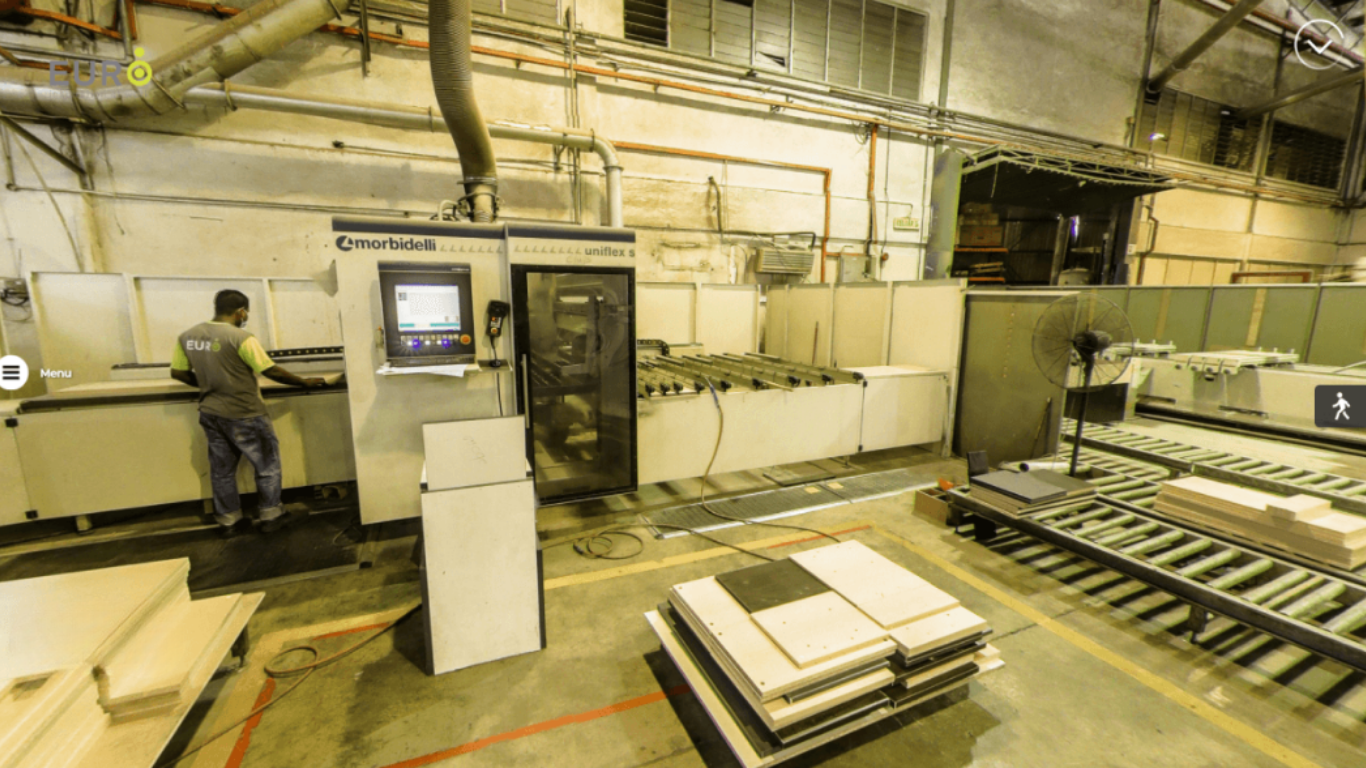
Many established factories:
-
communicate professionally in English;
-
work with international customers;
-
understand ISO frameworks;
-
provide structured documentation;
-
operate modern production equipment.
That can make remote supplier qualification feel sufficient.
For relatively simple sourcing projects, it sometimes is.
For custom products, technically demanding manufacturing or strategic sourcing relationships, however, remote documentation only shows part of the picture.
Manufacturing failures often occur in areas that are difficult to evaluate through presentations.
For example:
-
uncontrolled rework;
-
poor shift-to-shift consistency;
-
weak incoming inspection;
-
incomplete test coverage;
-
undocumented engineering changes;
-
overloaded production lines;
-
uncontrolled subcontractors.
These problems can remain invisible until production begins.
A factory visit allows buyers to compare the supplier’s documented quality system with actual behavior on the production floor.
That distinction becomes particularly important in Malaysia’s strongest manufacturing sectors.
Electronics, semiconductors, medical devices and precision engineering rely heavily on:
-
repeatability;
-
process control;
-
testing;
-
traceability;
-
engineering discipline.
The stronger the supplier claims to be in these areas, the more useful it becomes to verify them physically.
Malaysia’s manufacturing scale makes supplier qualification increasingly important
Malaysia’s manufacturing environment continued expanding strongly into 2026.
Manufacturing sales in Q2 2026 reached RM524.8 billion (approximately US$130 billion), increasing 9.3% from a year earlier.
The sector employed approximately 2.4 million people in June 2026.
Within manufacturing, E&E alone represented 38.9% of total sales, while petroleum, chemicals, rubber and plastics represented another 22.7%.
That industrial structure explains why international factory tours in Malaysia are particularly common for:
-
EMS and PCBA;
-
semiconductor-related suppliers;
-
plastic injection molding;
-
precision machining;
-
industrial equipment;
-
medical devices;
-
metal fabrication.
The purpose of the tour should change according to the industry.
An EMS audit should focus heavily on test, component control and traceability.
An injection molding visit should focus more on tooling, material control and process parameters.
A metal fabrication visit should focus on welding, inspection, material traceability and finishing.
There is no single universal factory-tour checklist.
What’s different about touring factories in Malaysia
Think of Malaysia as a place where the presentation baseline is relatively high.
Floors may be clean.
Documents may be readily available.
Managers may speak confidently about quality systems.
That is the starting point—not the decision criterion.
Your questions should therefore go one level deeper.
Instead of asking:
“Do you have traceability?”
Ask:
“Can you show us a finished product and trace it back to its raw-material or component lot?”
Instead of:
“Do you manage engineering changes?”
Ask:
“Can you show us the last engineering change and explain how you prevented the previous revision from continuing in production?”
Instead of:
“Do you perform incoming inspection?”
Ask:
“Show us a recent incoming-material rejection and what happened afterward.”
Evidence-based questions reveal much more than yes/no answers.
Before you visit: how to plan a Malaysia factory tour that actually works
One of the biggest mistakes is visiting factories before completing preliminary qualification.

A Malaysia factory tour should usually happen after the buyer has already obtained:
-
supplier profile;
-
equipment list;
-
relevant certifications;
-
preliminary quotation;
-
technical capability confirmation;
-
export-market information.
The visit then validates those claims.
Start by defining your supplier model
Before contacting factories, clarify what type of manufacturing partner you actually need.
For example:
Electronics
Do you need:
-
turnkey EMS;
-
consignment EMS;
-
hybrid procurement;
-
box-build;
-
PCBA only?
Plastic injection molding
Do you require:
-
tooling;
-
molding only;
-
secondary operations;
-
assembly?
Industrial manufacturing
Do you need:
-
component manufacturing;
-
complete assemblies;
-
engineering support?
Without this definition, buyers can visit impressive suppliers that are fundamentally unsuitable for the project.
Plan by industrial cluster
Malaysia’s supplier landscape is highly regional.
Penang and Northern Malaysia
Best suited for:
-
electronics;
-
semiconductors;
-
EMS;
-
medical devices;
-
precision machining;
-
automation.
Penang alone recorded RM358.1 billion (approximately US$89 billion) of E&E exports in 2024, representing approximately 60% of Malaysia’s total E&E exports.
Malaysia is also estimated to hold roughly 13% of the global semiconductor assembly, testing and packaging market, with much of this activity concentrated around Penang.
InvestPenang reports an ecosystem of more than 6,500 local suppliers, which is one reason buyers can often combine several specialized factory visits within the same region.
Klang Valley / Selangor
Best suited for broader industrial searches involving:
-
plastics;
-
metal fabrication;
-
machinery;
-
automotive;
-
packaging;
-
general contract manufacturing.
It is also Malaysia’s most diversified industrial region.
Johor
Particularly relevant for:
-
electronics;
-
industrial manufacturing;
-
chemicals;
-
Singapore-linked supply chains.
Johor attracted RM59.4 billion (approximately US$14.7 billion) of approved investment during H1 2026, making it Malaysia’s second-largest investment destination after Selangor.
Meet the people who actually own the process
Do not allow the entire factory visit to be handled by sales.
Ideally, your meeting should include:
-
production manager;
-
quality manager;
-
engineering;
-
project management;
-
test engineer where relevant.
Commercial teams explain what the factory offers.
Process owners explain how it actually works.
What to look for inside a Malaysian factory
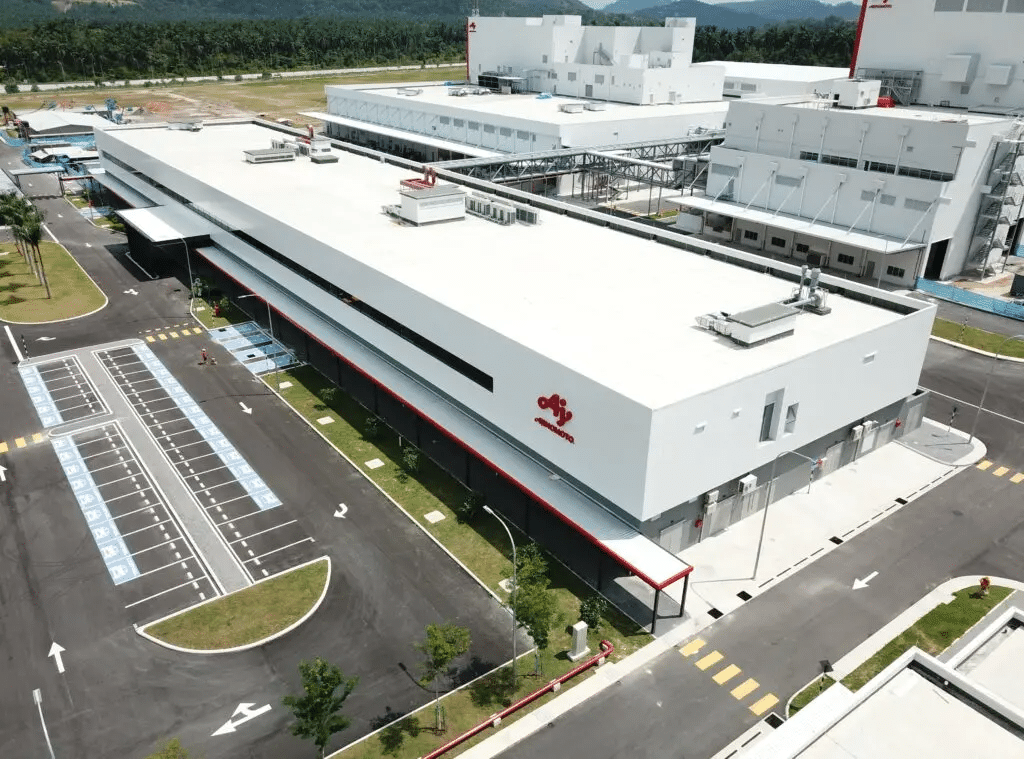
Start with the production flow, not the company presentation
The introductory presentation is useful.
But keep it short.
Ask the supplier to explain how one real product moves through:
Incoming material → production → testing → inspection → packaging → shipment
This gives you an immediate picture of:
-
process ownership;
-
subcontracting;
-
quality checkpoints;
-
traceability.
The most important question: how do they prevent mistakes?
Good factories do not rely on final inspection to create quality.
They prevent mistakes earlier.
Look for:
-
poka-yoke or mistake-proofing;
-
parameter controls;
-
automated inspection;
-
first-piece approval;
-
line clearance;
-
WIP identification.
In electronics, observe:
-
ESD discipline;
-
moisture-sensitive component management;
-
component storage;
-
feeder control;
-
line setup.
In medical manufacturing, observe:
-
segregation;
-
training;
-
cleanroom behavior;
-
documentation;
-
traceability.
Test strategy reveals maturity faster than many certificates
For electronics and electromechanical products, test capability is often one of the strongest indicators of supplier maturity.
Ask:
-
What percentage of products receives functional testing?
-
Who designs test fixtures?
-
Who owns test software?
-
How are software versions controlled?
-
What is the first-pass yield?
-
What happens to failed units?
You should also ask whether the supplier tracks:
-
yield;
-
defect categories;
-
rework;
-
recurring failures.
A factory that only records pass/fail results may have weaker analytical capability than one that actively uses test data to improve production.
Change control is the hidden deal-breaker
Many factories can manufacture the first revision of a product.
The real challenge begins when:
Rev A → Rev B → Rev C
Ask for a recent example.
You want to understand:
-
who received the change;
-
who approved it;
-
when production changed;
-
how old inventory was controlled;
-
how documents were updated.
For long-term manufacturing programs, this can be one of the most important supplier-selection criteria.
Incoming quality reveals how well the factory protects your supply chain
In turnkey manufacturing, your manufacturer’s suppliers become part of your risk.
Review:
-
incoming inspection;
-
sampling plans;
-
quarantine;
-
material identification;
-
supplier quality;
-
MRB.
Ask to see a real rejected batch.
This reveals whether incoming quality operates as an actual control mechanism.
Look at rework areas carefully
Rework is often one of the most informative areas in a factory.
Ask:
-
Who can authorize rework?
-
Are rework instructions documented?
-
Can reworked products be traced?
-
How often does rework occur?
Frequent uncontrolled rework is a warning sign.
Capacity: distinguish installed from available
Ask:
“Which exact production line or machines would manufacture our product?”
Then ask:
-
current utilization;
-
shifts;
-
largest existing customers;
-
available capacity;
-
peak-season constraints.
A supplier may have impressive total capacity while having very little room for your project.
Factory tour scorecard: how to compare Malaysian suppliers
After several factory visits, impressions can blur together.
Use a structured scorecard.
| Area | Suggested Weight |
|---|---|
| Technical capability | 20% |
| Quality system | 15% |
| Process control | 15% |
| Engineering support | 10% |
| Testing / validation | 10% |
| Available capacity | 10% |
| Traceability | 5% |
| Subcontractor control | 5% |
| Communication | 5% |
| Commercial fit | 5% |
The weights should be adapted to the project.
For medical devices, quality, validation and traceability may receive much more weight.
For industrial machinery, engineering and fabrication capability may dominate.
Factory tour vs factory audit: understand the difference
These terms are frequently used interchangeably, but they should not necessarily mean the same thing.
Factory tour
Primarily used to:
-
understand capability;
-
meet management;
-
review production;
-
evaluate fit.
Factory audit
More structured and evidence-based.
It may include:
-
quality-system review;
-
document sampling;
-
traceability;
-
equipment;
-
maintenance;
-
calibration;
-
nonconformance handling;
-
CAPA;
-
capacity;
-
subcontractor management.
For strategic manufacturing programs, the best approach is often:
qualification → joint factory tour → detailed audit of shortlisted supplier
rather than auditing every company from the start.
Industry-specific priorities during a Malaysia factory visit
| Industry | What to Prioritize |
|---|---|
| EMS / PCBA | ESD, SMT control, AOI/SPI, test, component sourcing, traceability |
| Medical devices | ISO 13485, validation, cleanroom, traceability, CAPA |
| Injection molding | Tooling, resin control, machine parameters, mold maintenance |
| Precision machining | Machine capability, CMM, tolerance control, material traceability |
| Metal fabrication | Welding, fixtures, dimensional inspection, finishing |
| Machinery | Engineering, assembly, FAT, electrical integration, project management |
This is why generic audit templates should be used carefully.
The best questions depend on the manufacturing process.
Malaysia-specific risks buyers should watch for
Malaysia generally offers a relatively structured industrial environment.
But sourcing risks remain.
Overconfidence created by professional presentation
Because suppliers often present well, buyers sometimes lower their level of scrutiny.
Do the opposite.
A sophisticated supplier should be able to answer sophisticated questions.
The “brochure factory” effect
Verify that:
-
machines belong to the visited facility;
-
certifications cover the location;
-
processes are actually internal.
Hidden subcontracting
Ask specifically about:
-
heat treatment;
-
anodizing;
-
painting;
-
plating;
-
packaging;
-
sterilization;
-
machining.
Subcontracting is not necessarily negative.
Undisclosed subcontracting is.
Responsibility gaps in contract manufacturing
In EMS and other contract manufacturing models, clarify responsibility for:
-
component shortages;
-
substitutions;
-
scrap;
-
obsolete inventory;
-
nonconforming materials.
Do this before production.
Supplier size mismatch
Some of Malaysia’s strongest factories serve very large multinational customers.
A supplier can be technologically excellent while your project remains commercially unimportant to them.
During the visit, ask:
-
Where would our project rank by customer size?
-
Which team would manage it?
-
Who would be our project owner?
Commercial fit matters.
Medical-device factory tours require additional scrutiny
Malaysia’s medical-device exports reached approximately RM34.54 billion (approximately US$8.6 billion) in 2025, confirming the country’s substantial role in global medtech supply chains.
If visiting a medical-device factory, additional checks should include:
-
ISO 13485 scope;
-
cleanroom management;
-
validation;
-
material traceability;
-
sterilization;
-
packaging validation;
-
CAPA;
-
regulatory-market experience.
Do not assume that because a manufacturer serves one FDA- or EU-regulated customer, your product automatically benefits from the same compliance pathway.
How to debrief after a Malaysia factory tour
After several professional factory visits, it is very easy to conclude:
“They all looked good.”
That is not sufficient.
Complete the scorecard immediately after each visit.
Then write a short narrative answering:
-
What processes were genuinely strong?
-
What was subcontracted?
-
Which weaknesses did we identify?
-
How strong was the engineering team?
-
How mature was quality?
-
Is capacity genuinely available?
-
What requires clarification before the next step?
Also record the supplier’s limitations.
Good suppliers often openly acknowledge what they cannot do.
This can be a positive sign.
Do not move directly from factory tour to mass production
A factory visit validates supplier capability.
It does not validate your product.
The next step should normally be:
Sampling → pilot production → quality validation → scale-up
During the pilot, track:
-
yield;
-
defects;
-
lead time;
-
cycle time;
-
test performance;
-
packaging;
-
communication.
This is where supplier capability turns into actual project evidence.
A grounded conclusion: what a Malaysia factory tour should accomplish
Malaysia continues to expand as an advanced manufacturing destination.
This continued industrial growth creates significant opportunities for foreign sourcing companies.
If you are planning a factory tour or supplier qualification mission in Malaysia, MoveToAsia can help you structure the visit around the right manufacturers, industrial clusters, and technical checkpoints. From pre-qualifying factories before the trip to accompanying your team on-site and consolidating findings afterward, we can help turn factory visits into a practical supplier-selection process rather than a series of introductory meetings.
But it also reinforces an important principle:
A strong manufacturing country does not automatically mean every supplier is strong.
A successful Malaysia factory tour should therefore answer five questions:
-
Can the supplier technically manufacture the product?
-
Can it repeatedly control the process?
-
Does it have the engineering depth to solve problems and manage changes?
-
Does it have real capacity for your program?
-
Can you trust the organization to communicate problems early and transparently?
If you leave the factory with evidence supporting those answers, the visit has achieved its purpose.
You are no longer selecting a supplier because the facility looked professional.
You are selecting it because the manufacturing system has demonstrated that it can support your product.