


If you are exploring Malaysia sourcing for electronics such as EMS, PCBA, box-build or component sourcing, this guide explains how the ecosystem works, where the main manufacturing clusters are located, and what foreign companies should verify before selecting a manufacturing partner.
If you want to find suppliers in Malaysia, a good starting point is not simply searching for factories online. Define your product requirements, BOM risks, expected annual volumes, testing strategy and sourcing model first. Suppliers can then be shortlisted according to their cluster, technical capabilities, industry experience and demonstrated production evidence.
At MoveToAsia (MTA), we have supported foreign companies in assessing Malaysia’s electronics manufacturing ecosystem, conducting supplier audits and organizing joint factory visits to help our clients identify, evaluate, and qualify the most suitable manufacturing partners for their products.
Malaysia’s Electronics Industry: An Overview

Malaysia’s electrical and electronics sector is one of the pillars of the country’s manufacturing economy and one of Southeast Asia’s most internationally integrated industrial ecosystems.
In 2025, Malaysia recorded a historic RM3.061 trillion in total trade, while exports reached a record RM1.607 trillion. E&E products remained the country’s largest export category and an important driver of increased exports to markets including the United States, the European Union, Taiwan and other ASEAN countries.
The scale of the sector is also visible in manufacturing statistics. By March 2026, E&E products accounted for approximately 39.5% of Malaysian manufacturing sales. In June 2026, Malaysia’s total manufacturing sales reached RM177 billion, with E&E sales increasing 18.7% year-on-year. Computer, electronics and optical product manufacturing grew even faster, by 20.7% year-on-year.
This translates into a supplier landscape ranging from global semiconductor corporations and multinational EMS groups to Malaysian contract manufacturers, PCB assembly specialists, precision machining companies, automation specialists and box-build integrators.
Historical Background
Penang’s reputation as the “Silicon Valley of the East” reflects a manufacturing ecosystem that has been developing for more than half a century.
The establishment of the Bayan Lepas Free Industrial Zone in the early 1970s helped attract some of the world’s largest electronics groups. Over subsequent decades, multinational manufacturers created demand for local engineering companies, component suppliers, tooling companies, automation specialists, precision manufacturers, logistics providers and contract manufacturers.
The result is important for buyers today.
Malaysia’s electronics advantage is not limited to the presence of large factories. It comes from the industrial network surrounding those factories.
A PCBA or electronics manufacturer may therefore have relatively easy access to:
-
precision-machined components;
-
plastics and injection molding;
-
metal stamping and fabrication;
-
cable and wire harness manufacturing;
-
PCB suppliers;
-
packaging;
-
automation integrators;
-
testing equipment;
-
calibration services;
-
logistics providers;
-
semiconductor supply chains;
-
engineering talent.
This ecosystem effect is one of the reasons Malaysia continues to attract higher-value electronics manufacturing despite having higher labor costs than some emerging Asian manufacturing locations.
Current State
Malaysia’s electronics sector entered 2026 with particularly strong momentum.
The country’s E&E exports reached approximately RM711.44 billion in 2025, corresponding to 44.3% of Malaysian exports. Malaysia has also become an important global semiconductor manufacturing location, particularly for assembly, testing and packaging activities.
Malaysia is currently estimated to account for around 13% of the world’s semiconductor assembly, testing and packaging market, while Penang represents the core of this ecosystem.
Investment remains substantial. In 2025, Malaysia approved approximately RM28.5 billion of investments in the E&E sector, including RM23.7 billion of foreign investment. Semiconductor projects accounted for approximately RM16.9 billion of those approved investments.
These investments increasingly target capital-intensive manufacturing rather than labor-intensive assembly alone. According to MIDA, capital investment per employee in the E&E sector reached approximately RM0.9 million in 2025, illustrating the growing importance of advanced equipment, automation and technology-intensive manufacturing.
The trend continued into 2026. In January 2026 alone, Malaysian E&E exports increased 39.5% year-on-year to RM70.53 billion, accounting for approximately 48% of total exports that month. Demand related to AI infrastructure and technology upgrading has been an important driver.
For sourcing companies, this means Malaysia should increasingly be viewed not simply as an assembly country, but as an important Asian manufacturing platform for electronics, semiconductors, advanced manufacturing and technology-intensive supply chains.
Major Clusters and Market Logic (Penang, Klang Valley, Johor)
Malaysia’s electronics industry is not distributed evenly across the country. Understanding the different clusters can substantially improve a supplier search.
Penang and the Northern Corridor
For most electronics sourcing projects, Penang should be one of the first locations evaluated.
Penang is Malaysia’s flagship E&E and semiconductor cluster. In 2024, Penang recorded approximately RM358.1 billion of E&E exports, equivalent to around 60% of Malaysia’s E&E exports that year.
The wider ecosystem includes thousands of local suppliers supporting multinational manufacturers and semiconductor companies.
Penang is particularly relevant for:
-
semiconductor equipment and supporting industries;
-
PCB assembly;
-
EMS;
-
industrial electronics;
-
high-mix manufacturing;
-
precision machining;
-
automation;
-
testing equipment;
-
medical electronics;
-
aerospace-related electronics;
-
semiconductor back-end activities.
Bayan Lepas remains the best-known industrial concentration, while the mainland side of Penang and neighboring Kedah increasingly complement the traditional island-based manufacturing base.
For technically demanding EMS or PCBA programs, Penang and the Northern Corridor are usually the first cluster to investigate.
Klang Valley – Selangor and Greater Kuala Lumpur
Klang Valley offers a much broader manufacturing base.
Electronics factories operate alongside plastics, metal fabrication, packaging, automotive suppliers, logistics companies and engineering businesses. For products requiring substantial mechanical content in addition to electronics, this can be attractive.
Typical programs may include:
-
complete box-build products;
-
consumer products combining plastics and electronics;
-
industrial control products;
-
IoT devices;
-
electrical equipment;
-
machinery electronics;
-
automotive electronics;
-
low-to-medium volume contract manufacturing.
Its proximity to Kuala Lumpur also makes commercial coordination, engineering recruitment and regional management easier for foreign companies establishing operations in Malaysia.
Johor
Johor occupies a different strategic position.
Located immediately north of Singapore, the state benefits from cross-border commercial, logistics and technology flows. It can therefore become particularly relevant for companies whose Southeast Asian activities already involve Singapore.
Johor should be considered when the project requires:
-
electronics manufacturing linked to Singapore;
-
regional warehousing and distribution;
-
contract manufacturing;
-
data-center-related equipment;
-
electrical infrastructure;
-
precision manufacturing;
-
industrial components;
-
access to both Malaysian manufacturing capacity and Singapore’s regional headquarters ecosystem.
For foreign companies, the choice between Penang, Klang Valley and Johor should therefore not simply be based on factory quotations.
The location needs to match the product architecture, supplier base, engineering requirements and logistics strategy.
Government Support and Incentives
Malaysia has made advanced manufacturing and semiconductors strategic national priorities.
Investment incentives are managed primarily through agencies such as MIDA and may include tax incentives, investment allowances and other forms of support depending on the nature of the project and the technology involved.
Malaysia also continues to encourage export manufacturing through structures such as Free Industrial Zones and Licensed Manufacturing Warehouses (LMWs).
Under an LMW structure, eligible export-oriented manufacturers may benefit from customs duty exemptions for qualifying raw materials and components used in manufacturing goods for export.
For a foreign buyer, these schemes matter indirectly.
They can affect:
-
component import costs;
-
inventory structures;
-
customs procedures;
-
inbound material flows;
-
supplier pricing;
-
export lead times.
Malaysia’s industrial strategy is also increasingly oriented toward moving the semiconductor sector further upstream and downstream rather than remaining concentrated primarily in assembly and testing.
For sourcing companies, this should gradually expand the range of technologically advanced suppliers available locally.
Benefits of Sourcing Electronics in Malaysia
If you’re evaluating Malaysia vs Vietnam manufacturing or Malaysia against China, Thailand or other Southeast Asian manufacturing locations, the question should rarely be simply: Which country has the lowest labor cost?
Electronics manufacturing costs are increasingly determined by:
-
BOM cost;
-
component procurement;
-
manufacturing yield;
-
automation;
-
engineering;
-
testing;
-
quality failures;
-
logistics;
-
inventory;
-
product revisions.
Malaysia can therefore remain competitive even when its hourly labor cost is higher.
Quality and Process Discipline (when you choose the right supplier)
Malaysia’s E&E ecosystem has decades of experience serving multinational manufacturers and demanding export markets.
This often translates into stronger capabilities in:
-
production documentation;
-
lot traceability;
-
engineering change management;
-
incoming quality control;
-
corrective action;
-
testing;
-
process validation;
-
supplier quality management.
However, “Made in Malaysia” should never automatically be interpreted as a quality guarantee.
When qualifying an electronics supplier, buyers should investigate how the factory actually operates.
Ask to see evidence of:
-
incoming inspection procedures;
-
component traceability;
-
moisture-sensitive device control;
-
ESD management;
-
line clearance;
-
first-article inspection;
-
AOI/SPI processes;
-
functional testing;
-
rework controls;
-
calibration;
-
nonconforming material management;
-
CAPA and 8D reports.
The gap between an average EMS company and an excellent EMS company can be substantial even within the same manufacturing cluster.
Access to Export-Ready Infrastructure (Industrial zones, free zones, customs facilitation)
Malaysia’s industrial development has historically been built around exports.
Major manufacturing clusters therefore benefit from established access to:
-
international airports;
-
container ports;
-
free industrial zones;
-
customs infrastructure;
-
bonded facilities;
-
freight forwarders;
-
component distribution networks.
This becomes important for electronics because inbound supply chains can be complex.
A single PCBA may contain components sourced from Malaysia, China, Taiwan, Japan, South Korea, Europe and the United States.
Efficient customs and logistics processes therefore directly affect production reliability.
Strong E&E Export Orientation (macro signal of ecosystem depth)
Malaysia’s export statistics provide a useful indication of how deeply electronics manufacturing is embedded in the country.
E&E products represented approximately 44.3% of Malaysian exports in 2025, reaching RM711.44 billion. Malaysia’s total exports simultaneously reached a record RM1.607 trillion.
During the first five months of 2026, Malaysia’s overall exports increased another 24.3% year-on-year to RM793.84 billion, with E&E continuing to be one of the major growth drivers.
Those numbers do not guarantee that an individual factory is capable of manufacturing your product.
They do, however, demonstrate that Malaysia has an electronics ecosystem operating at significant global scale.
A Practical Fit for China+1 / Supply Chain Diversification in Asia
Malaysia has increasingly become part of China+1 and broader supply-chain diversification strategies.
Its positioning is somewhat different from lower-cost countries.
Malaysia is particularly attractive when companies need:
-
strong process control;
-
access to semiconductor supply chains;
-
experienced EMS manufacturers;
-
engineering capabilities;
-
English-language business communication;
-
export experience;
-
testing capabilities;
-
traceability;
-
regional supply-chain resilience.
For some companies, Malaysia can also work as part of a multi-country manufacturing strategy.
For example:
-
electronics and PCBA in Malaysia;
-
mechanical components in Vietnam;
-
selected components from China;
-
regional distribution through Singapore.
The optimal structure depends more on total supply-chain economics than on the unit labor rate.
Understanding EMS in Malaysia: How Manufacturing Models Work
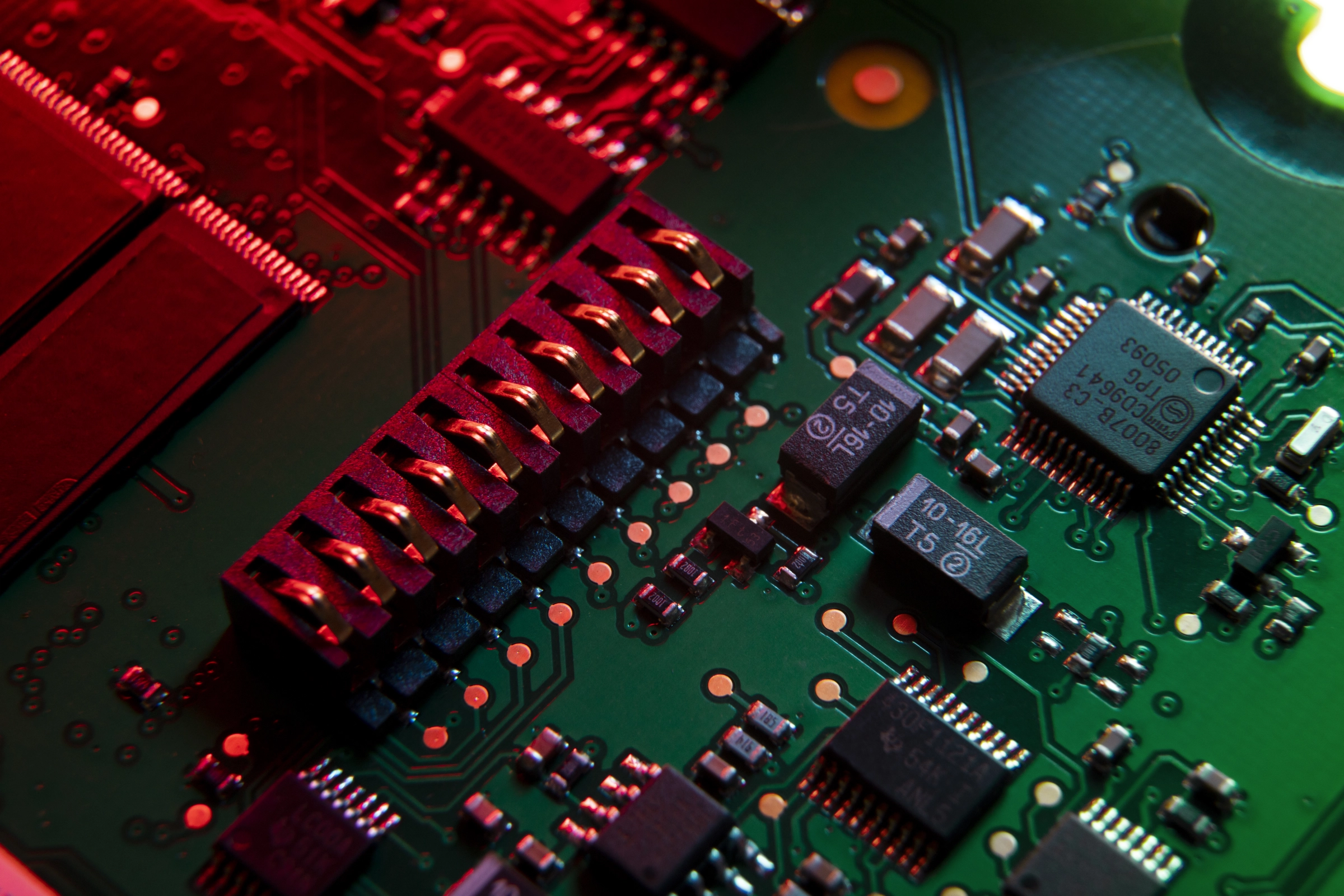
Companies sourcing Malaysia contract manufacturing for electronics will typically work with an EMS — Electronics Manufacturing Services — company.
However, not every EMS operates under the same commercial model.
Understanding who purchases and owns the components is critical because component procurement can represent the majority of your product cost.
Turnkey EMS (supplier procures components)
Under a turnkey model, the EMS purchases the components, manufactures the PCB assemblies, performs testing and delivers the finished product.
Advantages include:
-
simpler purchasing administration;
-
one commercial counterpart;
-
reduced internal procurement workload;
-
easier operational coordination.
However, your dependency on the EMS increases.
Before choosing turnkey sourcing, evaluate the supplier’s:
-
authorized component distribution channels;
-
procurement leverage;
-
counterfeit-component controls;
-
alternative sourcing procedures;
-
inventory policy;
-
liability for obsolete components;
-
component traceability.
A competitive assembly quotation can quickly become irrelevant if component procurement is weak.
Consignment EMS (you supply key components)
Under a consignment model, the buyer procures some or all major components while the EMS provides manufacturing services.
This can be particularly useful for:
-
high-value ICs;
-
allocated components;
-
proprietary components;
-
components negotiated under global contracts;
-
parts requiring controlled provenance.
The model gives buyers greater control over component sourcing but creates additional operational responsibilities.
Contracts should clearly determine:
-
when ownership transfers;
-
responsibility for inventory loss;
-
handling of excess materials;
-
safety stock;
-
scrap allowances;
-
incoming quality responsibility;
-
shortages;
-
obsolete inventory.
Hybrid EMS (shared procurement)
For many electronics programs, a hybrid model offers a practical compromise.
For example:
-
the buyer consigns expensive or supply-sensitive ICs;
-
the EMS purchases resistors, capacitors and standard passives;
-
the EMS sources packaging;
-
mechanical parts may either be purchased locally or nominated by the buyer.
This model can reduce supply risk while keeping the program manageable.
However, purchasing responsibilities must be clearly defined in the BOM and manufacturing agreement.
Substitution rules are particularly important.
No critical component should be substituted simply because the EMS finds a cheaper or faster alternative without an agreed engineering approval procedure.
Finding Electronics Manufacturers in Malaysia
If your objective is how to find suppliers in Malaysia, supplier discovery should be treated as the beginning of the sourcing process rather than the final objective.
Searching for “electronics manufacturers Malaysia” may generate dozens or hundreds of possible factories.
The real challenge is determining which manufacturers genuinely fit your project.
Online Directories (useful, but not sufficient)
Directories, supplier marketplaces and company databases can be useful for building an initial longlist.
However, supplier profiles rarely tell you:
-
whether their SMT line is appropriate for your board complexity;
-
whether they have available capacity;
-
whether their production volumes fit yours;
-
whether they subcontract major operations;
-
how much engineering support they provide;
-
whether they have suitable testing capabilities;
-
whether certifications actually cover the relevant facility;
-
whether they want your type of business.
A supplier claiming “PCBA capability” could mean anything from a relatively basic SMT operation to a highly automated EMS plant.
The initial screening questionnaire should therefore be technical.
Trade Shows and Industry Events
Industry events can be particularly useful in Malaysia because the country’s electronics ecosystem is highly organized.
Events such as semiconductor, manufacturing, automation and electronics exhibitions provide opportunities to meet:
-
EMS manufacturers;
-
semiconductor suppliers;
-
equipment manufacturers;
-
automation companies;
-
PCB suppliers;
-
component distributors;
-
supporting engineering companies.
SEMICON Southeast Asia, for example, has become an important regional semiconductor industry platform. At the 2026 edition, MATRADE reported facilitating 105 business meetings representing approximately RM126.42 million in potential exports.
Trade shows remain a lead-generation channel rather than a qualification process.
Factories identified at an exhibition should subsequently undergo technical evaluation and, for important projects, physical factory verification.
Industry Associations and Public Ecosystem Signals
Government agencies, investment agencies, industrial associations and cluster organizations can also help identify areas of manufacturing concentration.
InvestPenang, for example, reports a network of more than 6,500 diversified local suppliers supporting Penang’s industrial ecosystem.
This is important because sourcing opportunities frequently exist below the level of the large multinational companies.
Local Malaysian companies may specialize in:
-
contract manufacturing;
-
machining;
-
tooling;
-
semiconductor equipment;
-
cable assemblies;
-
automation;
-
electronics assembly;
-
enclosures;
-
precision components.
Industrial Zones, Free Trade Zones, and LMW/Export-Oriented Structures
Industrial zones are another useful starting point.
For electronics, the factory’s location often tells you something about the supply chain surrounding it.
Major concentrations include areas around:
-
Bayan Lepas;
-
Batu Kawan;
-
Penang mainland;
-
Kulim;
-
Shah Alam;
-
Klang;
-
Petaling Jaya;
-
Johor Bahru and surrounding industrial zones.
Export-oriented factories operating under free-zone or LMW arrangements can also have advantages when large volumes of imported components are subsequently re-exported as finished goods.
Sourcing Agents and On-the-Ground Support
For overseas companies without a Malaysian sourcing team, independent local support can help separate promising suppliers from companies that merely appear suitable online.
Typical support can include:
-
supplier identification;
-
preliminary factory screening;
-
technical questionnaires;
-
RFQ coordination;
-
company verification;
-
factory visits;
-
supplier audits;
-
quotation comparisons;
-
sampling follow-up;
-
negotiation support.
The objective should not simply be to produce a long supplier list.
A good sourcing process progressively reduces uncertainty until only suppliers with verified technical, commercial and operational fit remain.
Due Diligence When Sourcing Electronics in Malaysia
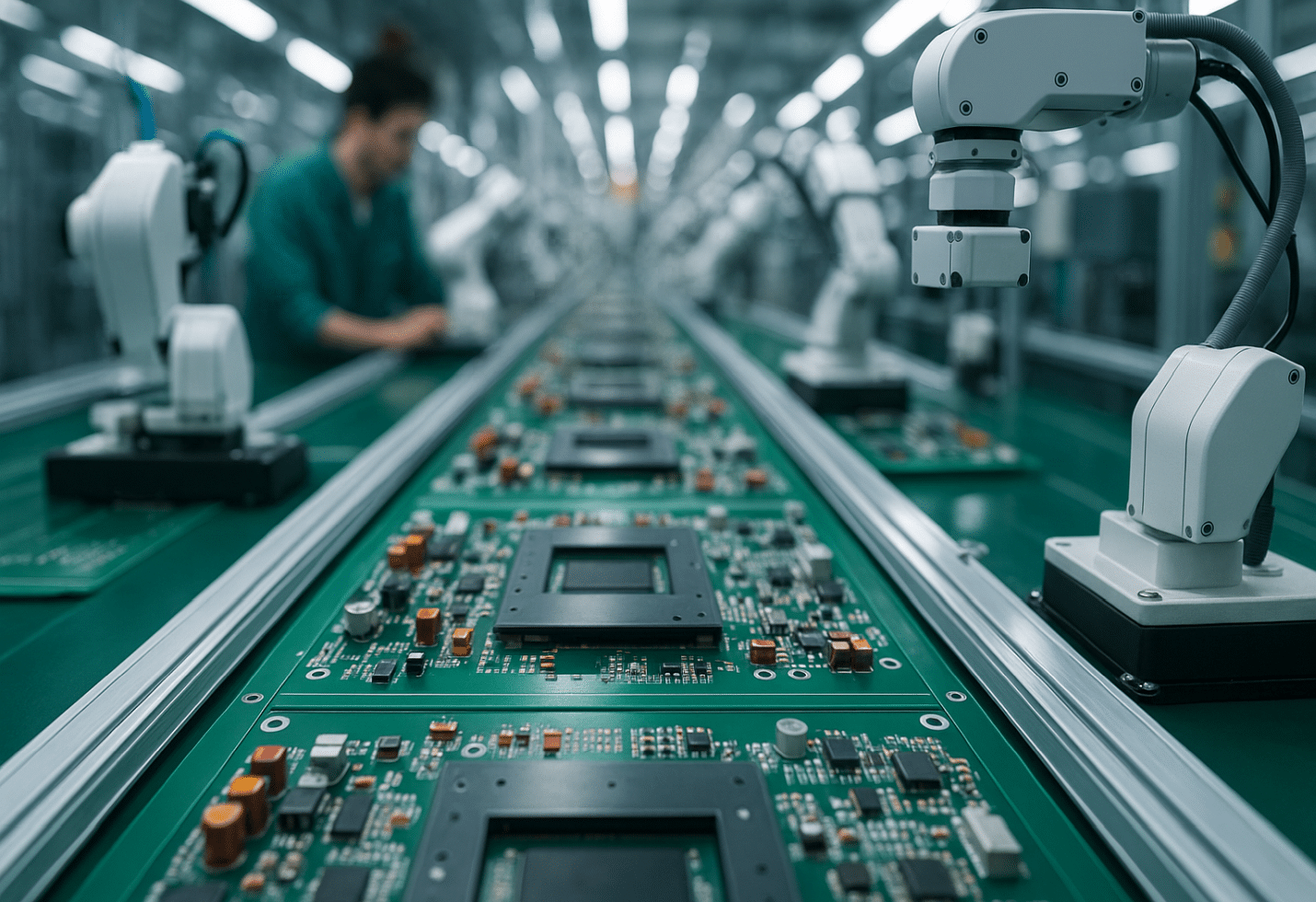
Malaysia contains many sophisticated electronics manufacturers, but electronics production is unforgiving.
Small weaknesses in ESD control, traceability, soldering, programming, testing or revision management can create expensive downstream failures.
Supplier due diligence should therefore go substantially beyond checking ISO certificates.
Factory Inspections (what to look for beyond the tour)
Do not evaluate an electronics factory based simply on whether the workshop looks modern.
Observe the actual production system.
Important areas include:
-
SMT equipment and age;
-
line utilization;
-
stencil management;
-
solder paste storage;
-
SPI;
-
AOI;
-
X-ray capability where required;
-
ESD controls;
-
humidity controls;
-
component storage;
-
MSD handling;
-
traceability;
-
rework stations;
-
testing;
-
calibration;
-
quarantine areas.
One useful technique is to ask scenario-based questions rather than general questions.
Instead of asking:
“Do you inspect incoming components?”
Ask:
“Can you show me the latest case where incoming inspection rejected a component batch and what happened afterwards?”
Evidence is substantially more useful than yes/no answers.
Compliance With Standards and Customer Requirements
The certifications required depend on the product and target industry.
Common frameworks may include ISO 9001, ISO 14001 and industry-specific standards such as IATF 16949 for automotive supply chains or ISO 13485 for medical devices.
But holding a certificate is not enough.
Check:
-
which legal entity owns it;
-
which factory address it covers;
-
its scope;
-
expiration date;
-
whether the processes relevant to your product are covered.
For regulated products, manufacturing certification and product certification should also not be confused.
CE, FCC, UL, RoHS, REACH or other requirements may still need to be managed at product level depending on the destination market.
Supplier Qualification (capacity realism and engineering strength)
Electronics sourcing projects frequently fail because buyers select a factory that can manufacture the product technically but does not fit the program commercially.
Check whether your expected volume matches the supplier’s preferred customer profile.
For example, clarify:
-
annual expected volume;
-
typical batch size;
-
number of SKUs;
-
frequency of revisions;
-
seasonality;
-
forecast requirements;
-
prototype quantities;
-
production ramp-up.
Engineering capability should also be evaluated early.
Send enough information for the manufacturer to provide genuine DFM feedback.
A supplier that identifies potential problems in your design during quotation may ultimately be more valuable than one that simply responds with the lowest price.
Logistics and Shipping Considerations When Sourcing Electronics in Malaysia
Electronics sourcing succeeds or fails not only through production quality but through supply-chain reliability.
Malaysia’s geographic position and infrastructure make it relatively well connected to Asian and international supply chains.
Transportation Modes
Air freight is particularly important for electronics because of the high value-to-weight ratio of many products.
During prototypes and early production runs, buyers often rely heavily on air freight.
As production stabilizes, companies may shift toward:
-
sea freight;
-
air-sea combinations;
-
consolidated freight;
-
regional warehousing.
Supplier location should therefore also be evaluated relative to the ports and airports your program will use.
Shipping Documents and Customs Clearance
Typical electronics export shipments may require:
-
commercial invoice;
-
packing list;
-
bill of lading or air waybill;
-
certificate of origin where applicable;
-
customs declarations;
-
product-specific documentation.
Import regulations at the destination remain the responsibility of the supply chain even when the Malaysian supplier handles exports.
Before production begins, clarify the correct HS codes and Incoterms.
Shipping Insurance
Electronics can be vulnerable to:
-
humidity;
-
electrostatic discharge;
-
impact;
-
vibration;
-
temperature;
-
water exposure.
Packaging should therefore be reviewed technically rather than treated simply as a logistics issue.
For high-value electronics shipments, cargo insurance should be aligned with the agreed Incoterm and the point where risk transfers from supplier to buyer.
Lead Times and Production Planning
One of the most common mistakes in electronics sourcing is treating the EMS production lead time as the total project lead time.
Actual lead time can include:
-
DFM review;
-
component sourcing;
-
bare PCB production;
-
tooling;
-
test fixture development;
-
first article;
-
engineering validation;
-
production;
-
final testing;
-
shipping.
In many cases, component availability is the critical path rather than assembly capacity.
Buyers should therefore request a component-level procurement analysis early in the project.
Pricing and Payment Terms
Electronics quotations should be broken down carefully.
The quoted unit price may contain:
-
PCB;
-
electronic components;
-
assembly;
-
programming;
-
testing;
-
mechanical components;
-
packaging;
-
tooling amortization;
-
logistics;
-
EMS margin.
For larger programs, obtaining a BOM-level cost structure makes negotiations and future cost-down exercises much easier.
Payment terms often improve after the supplier relationship is established.
However, first orders may require deposits or payment against shipment depending on the manufacturer’s policy and the amount of material they need to purchase.
Challenges and Risks of Sourcing Electronics in Malaysia
Malaysia offers a relatively mature manufacturing environment, but this should not lead buyers to underestimate sourcing risks.
Language and Cultural Barriers
English is widely used in Malaysian business and manufacturing environments, which is one of the country’s advantages for foreign buyers.
Nevertheless, technical misunderstandings can still occur.
The greatest risks often concern:
-
drawing revisions;
-
BOM revisions;
-
testing specifications;
-
cosmetic standards;
-
firmware versions;
-
substitution approval;
-
tolerances;
-
acceptance criteria.
Critical specifications should always be controlled through documentation rather than informal email conversations alone.
Intellectual Property Protection
Electronics projects can contain several layers of intellectual property:
-
PCB design;
-
firmware;
-
source code;
-
mechanical design;
-
testing procedures;
-
manufacturing know-how.
IP protection should therefore combine contractual protection with operational controls.
Companies can consider:
-
NDAs;
-
manufacturing agreements;
-
controlled firmware access;
-
limited disclosure during early supplier screening;
-
secure file-transfer systems;
-
restricted programming access;
-
tooling ownership clauses.
Highly sensitive manufacturing steps can also be separated when justified.
Supply Chain Management (BOM volatility)
For electronics companies, one of the largest risks remains component availability.
Semiconductor cycles can create:
-
long lead times;
-
allocation;
-
sudden price increases;
-
minimum order constraints;
-
end-of-life components.
Malaysia’s strong semiconductor ecosystem reduces some supply-chain friction but does not eliminate global BOM risk.
For strategically important components, establish:
-
approved manufacturer lists;
-
approved vendor lists;
-
alternative parts;
-
lifecycle monitoring;
-
safety-stock policies;
-
last-time-buy procedures.
This is one of the reasons hybrid and consignment EMS models can sometimes outperform pure turnkey arrangements.
Quality Control and Inspection
Traditional final inspection is not sufficient for most electronics programs.
Quality needs to be controlled throughout production.
A stronger structure can include:
Incoming Quality Control → SMT process control → AOI/SPI → functional testing → final inspection → shipment verification.
During the first production cycles, buyers should pay particular attention to:
-
first-pass yield;
-
rework rate;
-
defect categories;
-
test failures;
-
root-cause analysis.
The objective should be to identify process instability before production volumes increase.
Labor and Environmental Practices
ESG and supply-chain compliance have become increasingly important for companies selling into Europe, North America and other regulated markets.
Supplier qualification may therefore also include:
-
working conditions;
-
overtime management;
-
worker documentation;
-
health and safety;
-
chemical handling;
-
wastewater treatment;
-
electronics waste;
-
recycling;
-
environmental permits.
This is especially important when suppliers perform processes involving chemicals, surface treatment, PCB manufacturing or other environmentally sensitive operations.
Conclusion: Is Malaysia the Right Place for Your Electronics Program?
Malaysia should increasingly be viewed as one of Southeast Asia’s most mature electronics and semiconductor manufacturing platforms, rather than simply as another lower-cost Asian sourcing destination.
The underlying numbers illustrate the scale of the ecosystem.
For foreign companies, Malaysia can be particularly attractive for:
-
EMS and contract manufacturing;
-
PCBA;
-
industrial electronics;
-
semiconductor-related manufacturing;
-
medical and automotive electronics;
-
precision engineering;
-
box-build manufacturing;
-
higher-value and technically demanding electronics.
But the strength of the country’s ecosystem does not remove the need for supplier qualification.
A successful sourcing strategy should follow three principles:
-
Choose the right manufacturing cluster for the product. Penang, Klang Valley and Johor serve different industrial and supply-chain needs.
-
Choose the right EMS structure. Turnkey, consignment and hybrid manufacturing models create very different procurement risks and responsibilities.
-
Select manufacturers based on evidence rather than presentation. Verify process control, engineering capabilities, traceability, testing, component sourcing, capacity and change-management systems before committing production.
Malaysia may not always provide the lowest quotation in Southeast Asia.
But for electronics programs where quality consistency, engineering support, semiconductor access, export infrastructure and supply-chain reliability matter as much as direct labor cost, it remains one of the region’s most credible manufacturing locations.
If you are looking to identify, qualify, and assess supplier capabilities in Malaysia for your electronics project, reach out to our team at MoveToAsia. We will be happy to share our market expertise and recommend a tailored roadmap to help you identify and qualify the right electronics manufacturing partners in Malaysia.