
Understanding how to establish manufacturing operations in Vietnam has become a strategic priority for foreign companies reassessing their global supply chains. For decision-makers, the question is no longer whether Vietnam is attractive, but under which conditions it becomes a viable and sustainable manufacturing platform.
Rising production costs in China, geopolitical exposure, regulatory uncertainty, and excessive dependence on a single country are forcing executive teams to rethink their manufacturing footprint. In this context, Vietnam has emerged as one of the most credible alternatives. However, successful industrial establishment in Vietnam is not automatic. It requires a clear understanding of cost structures, execution models, regulatory constraints, timelines, and operational risks.
This guide is designed to help foreign companies evaluate when, how, and at what scale manufacturing in Vietnam makes strategic sense.
Why Vietnam Has Become a Global Manufacturing Hub
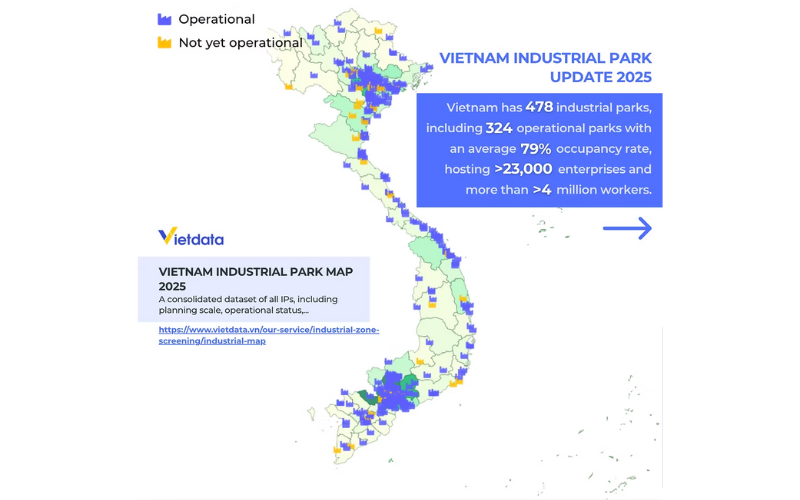
Vietnam is no longer a marginal emerging market in global value chains. Today, it is a fully integrated industrial hub capable of producing at scale for the U.S., European, and Asian markets. Manufacturing now accounts for more than 24% of Vietnam’s GDP, compared with less than 16% in the early 2000s, according to the World Bank, reflecting a structural shift toward export-led industrial growth. For foreign manufacturers, this matters because Vietnam is no longer a peripheral sourcing option, but a core production platform already aligned with global standards, logistics networks, and trade frameworks.
In 2025, Vietnam’s exports exceeded US$475 billion, the vast majority of which came from manufacturing. Key sectors include electronics, textiles and apparel, footwear, furniture, consumer goods, mechanical engineering, and increasingly higher value-added industrial components. Vietnam is now among the world’s leading exporters of furniture, footwear, and textile products, while also becoming a key player in electronics assembly and industrial equipment.
This rise is driven by several structural factors. First, the country’s political stability and continuity of economic strategy provide visibility valued by foreign investors. Second, Vietnam benefits from a strategic geographic position at the heart of Southeast Asia, with direct access to major global maritime trade routes. Finally, the country has developed one of the region’s most extensive networks of free trade agreements, including the EVFTA with the European Union and the CPTPP, facilitating preferential access to many markets.
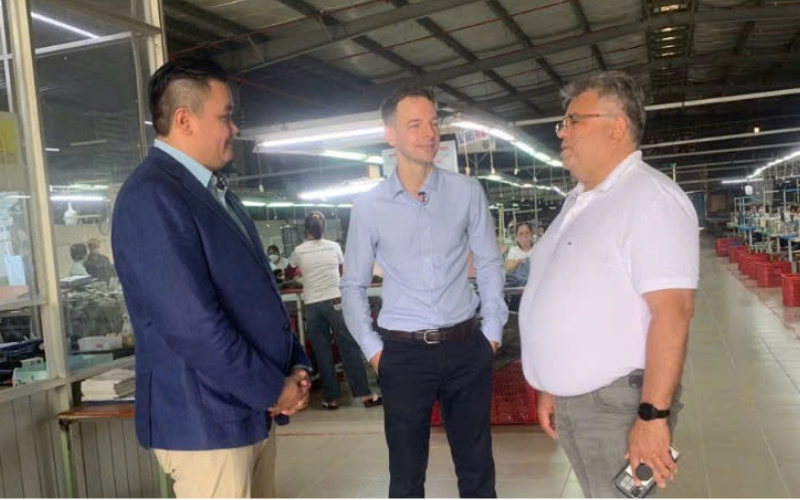
This video takes you inside a real garment factory tour in Vietnam to explore how international manufacturers set up and operate production in the country. It highlights key market entry decisions, local sourcing strategies, and supply chain diversification as companies shift production outside of China
Setting Up a Factory in Vietnam: A Cost Question, But Not Only
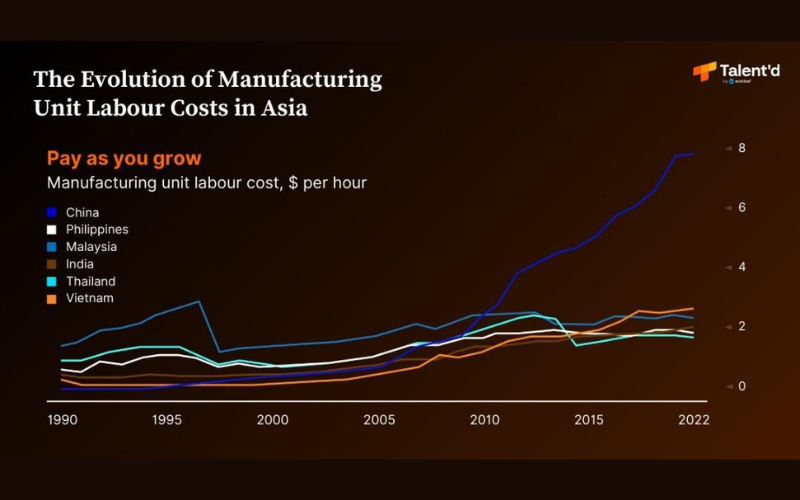
When a foreign company evaluates how to set up manufacturing operations in Vietnam, cost naturally appears as a central criterion. Vietnam retains a significant competitive advantage over China in labor costs. The average monthly wage of an industrial worker typically ranges between USD 280 and 350, depending on the region and skill level. In some secondary industrial zones, costs can be slightly lower, while the most competitive areas around Ho Chi Minh City or Hanoi tend to be higher.
Comparative labor cost (average monthly – 2025 estimates ; source : Trading Economics)
| Country | Factory worker wages |
|---|---|
| Vietnam | USD 280–350 |
| China (coastal) | USD 650–900 |
| Thailand | USD 420–500 |
| Indonesia | USD 300–380 |
According to the data provided by Trading Economics, reducing Vietnam’s attractiveness to a simple cost question would be a strategic mistake. Vietnamese labor productivity has improved significantly over the past decade, driven by rapid industrialization, foreign investment, and the upskilling of local teams. In many sectors, especially assembly, light engineering, and technical textiles, the cost-to-productivity ratio is now extremely competitive.
The Industrial Sectors Best Suited to Vietnam
Not all industries find the same comparative advantages in Vietnam. The country has developed specific strengths supported by local industrial ecosystems, specialized labor pools, and structured supply chains.
Textiles and apparel remain one of the core pillars of Vietnam’s manufacturing economy. Vietnam is now one of the world’s leading textile and garment exporters, with annual exports close to USD 50 billion, and a production base overwhelmingly oriented toward international markets, with more than 80% of output exported. The sector serves a diversified portfolio of destinations, with the United States, the European Union, Japan, and South Korea among Vietnam’s largest end markets, reflecting the country’s deep integration into global apparel supply chains.
Beyond textiles, Vietnam has also become a major global exporter of furniture and home décor, supplying North America, Europe, and Northeast Asia, while electronics and industrial components have emerged as strategic growth sectors, particularly in the northern industrial clusters. Together, these industries illustrate Vietnam’s evolution from a low-cost production base into a diversified, export-driven manufacturing hub serving multiple regions worldwide.
For foreign companies, these sectoral strengths mean that Vietnam is best suited for export-oriented manufacturing models, where scale, cost control, and supply chain integration are critical. Projects targeting purely domestic demand or requiring ultra-short lead times may require a different setup or region.
Different Models for Setting Up Manufacturing Operations in Vietnam
In practice, the choice of manufacturing model in Vietnam is closely linked to a company’s maturity and risk tolerance. Contract manufacturing is typically favored by companies entering Vietnam for the first time or testing volumes. Joint ventures may appeal to investors seeking faster access to local assets, but they introduce governance complexity. Wholly foreign-owned entities are best suited to companies with long-term volume commitments, strong operational capabilities, and a need for full control over quality and intellectual property.
Legal and Regulatory Framework for Industrial Establishment
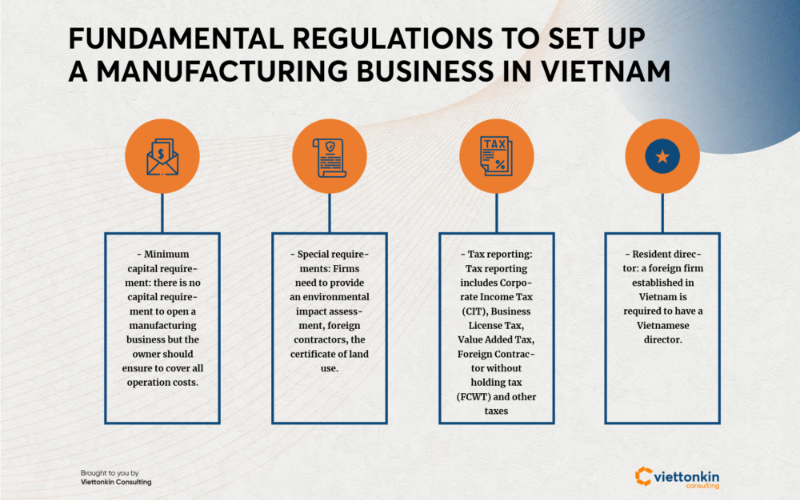
Vietnam now allows full foreign ownership in most manufacturing activities. The regulatory framework is relatively clear, but it remains administrative and requires rigorous preparation.
An industrial project generally begins with obtaining an Investment Registration Certificate, followed by an Enterprise Registration Certificate. Additional steps include leasing land or a factory, securing environmental approvals, meeting fire safety standards, and, where applicable, obtaining construction permits. Under normal conditions, a well-prepared industrial project requires between three and six months to become legally operational.
It is important to note that some industrial activities are subject to stricter environmental requirements. Vietnamese authorities are paying increasing attention to environmental impact issues, particularly in industrial zones close to urban centers.
Choosing the Right Industrial Location in Vietnam
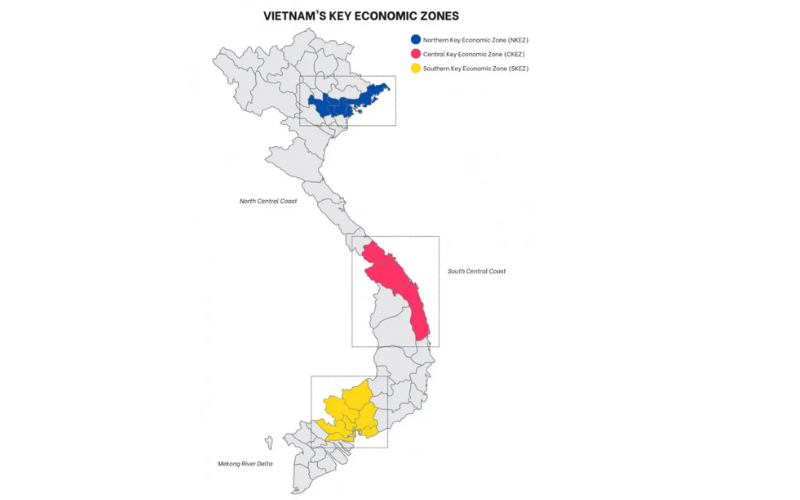
Location choice is a major strategic decision when considering how to establish manufacturing operations in Vietnam. The country is generally divided into three main industrial areas: the south, the north, and the central region.
Southern Vietnam : around Ho Chi Minh City, Binh Duong, and Dong Nai, —is the most mature industrial region in the country. It offers excellent logistics infrastructure, a high concentration of suppliers, and direct access to major export ports. Costs are slightly higher, but operational reliability is often stronger.
The north : around Hanoi, Bac Ninh, and Hai Phong, has specialized in electronics, industrial components, and higher value-added industries. Proximity to China facilitates integration into certain regional supply chains. Central Vietnam, still in a development phase, offers lower land and labor costs but requires a longer-term approach and greater autonomy.
Industrial land lease costs generally range between USD 80 and 200 per square meter for 50-year leases, depending on the region and the industrial zone.
Workforce, incentives, and operating environment
Vietnam benefits from a labor force of more than 52 million people, with a median age of around 32, offering a solid demographic base for long-term industrial development. Vietnamese workers are generally valued for their discipline, adaptability, and ability to meet international production standards. In the most developed industrial zones, however, competition for labor can be intense, making recruitment, training, and retention strategies critical from the early stages of a manufacturing project.
From a financial perspective, Vietnam’s investment framework remains highly attractive for industrial players. The standard corporate income tax rate is 20%, but manufacturing projects can access preferential rates as low as 10%, combined with multi-year tax holidays and gradual reductions. These incentives are typically linked to project size, sector and location, with industrial and economic zones playing a central role in their allocation.
Logistics, execution risks, and realistic timelines
Vietnam’s position as an export-driven manufacturing hub is reinforced by major investments in logistics infrastructure. Deep-sea ports such as Cai Mep–Thi Vai and Hai Phong now offer direct connections to Europe and North America, with transit times broadly comparable to southern China. This level of connectivity allows Vietnam to support large-scale export operations across multiple industries.
However, operational success depends less on speed than on execution quality. Supplier quality gaps, compliance issues, and cultural differences can quickly erode expected cost advantages if not properly managed. In practice, well-structured industrial projects in Vietnam typically require six to twelve months from initial feasibility to production ramp-up. Companies that adopt a phased approach, combining audits, pilot production and on-site follow-up are far more likely to achieve stable and sustainable results.
The Role of Move To Asia in Setting Up Factories
In this context, local support plays a decisive role. Move To Asia helps foreign companies structure, secure, and execute their industrial projects in Vietnam. The approach relies on on-the-ground expertise, independence from suppliers, and a deep understanding of decision-makers’ strategic priorities.
Conclusion: Vietnam as a Strategic Country to Operate
Vietnam is now one of the most attractive industrial platforms in the world for companies seeking to diversify or relocate part of their production in Asia. It offers a rare balance of cost competitiveness, political stability, international openness, and industrial upgrading.
Establishing manufacturing operations in Vietnam is neither immediate nor automatic. It requires rigorous preparation, a clear strategic vision, and disciplined execution. For companies ready to commit with a medium- to long-term perspective, Vietnam represents a major industrial opportunity capable of sustainably supporting international growth.